


Skip TTS playerContinue reading article
Germany is sweating with temperatures around 40 degrees, and many drivers are wondering: can the road really melt in such heat? What temperatures can my tires withstand? And do I really need to deflate because driving in the hot sun increases the tire pressure?
The good news is that the road won’t break down and the tires won’t melt as quickly. However, extreme heat can be dangerous for drivers.
When does the road get soft?
When a road “bursts”: Breakouts occur due to the expansion of concrete and lack of movement in the joints
Asphalt doesn’t melt like chocolate in the sun. However, at surface temperatures around 60 degrees Celsius, the bitumen contained in asphalt becomes soft. Ruts or deformations can then form – especially on busy roads with heavy truck traffic. In the sun, the road surface easily heats up to more than 60 degrees.
Even more dangerous are so-called explosions. This causes old concrete roads to suddenly bulge upward or even collapse. The risk increases significantly when outside temperatures are around 30 degrees. Old sections of highways with concrete surfaces are particularly affected.
Why does the winter service cool the streets with water?
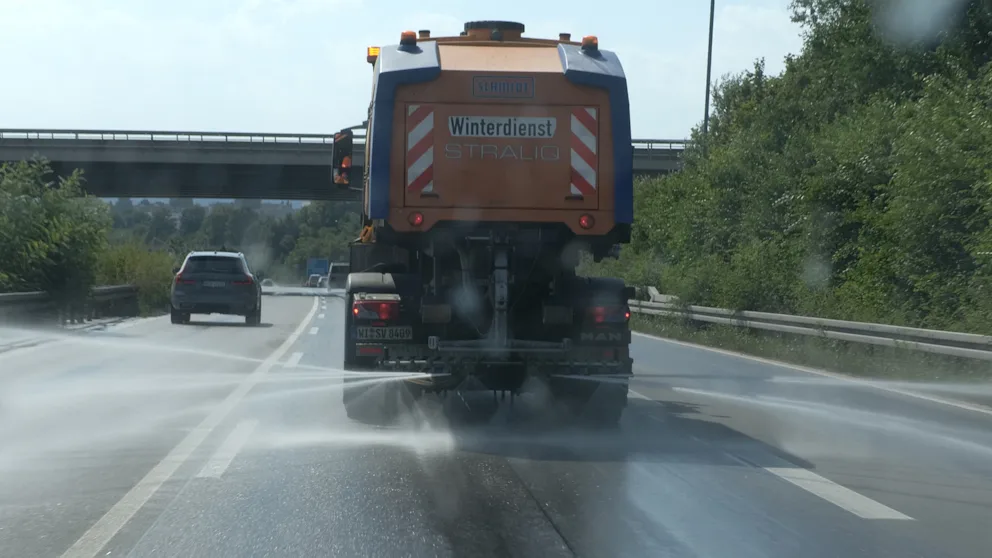
In Hesse in particular, streets are watered in winter to prevent concrete slabs from cracking.
Because extreme heat can damage asphalt, in some places in Germany surfaces are now cooled with water as part of the winter regime.
And why are there almost no explosions in Spain?
In southern countries, roads are usually initially designed to withstand significantly higher temperatures. In addition, other asphalt mixtures and construction methods are often used there. On the other hand, many German concrete highways were built back in the days when heat of up to 40 degrees was still the exception.
Read more on the topic
How much heat can tires withstand?
Car tires are also surprisingly durable. On hot asphalt, tires can heat up to 100 degrees without being damaged. The situation becomes critical only when the air pressure is incorrect. Too little air causes the tire to deform more and cause additional heat. In the worst case scenario, the tire may explode.
Many drivers experience a shock when their tire pressure increases by 0.2–0.4 bar during a long drive on hot days. However, this is completely normal: the air in the tire heats up and expands. Therefore, you should not let a warm tire fail. Manufacturers usually provide recommendations for cold tire pressure. If you let the air out while driving, you may be driving with too little pressure after it cools down – increasing the risk of excessive heat and, in extreme cases, tire damage. Therefore: Before driving, always check the tire pressure when it is cold and adjust it to the recommended value. If you drive on properly filled summer tires, you usually have nothing to worry about, even in extreme heat.