

Houthi attacks on tankers in the Red Sea and reciprocal attacks by the US and Iran are of international concern. The markets also react: the price of oil rises above 100 US dollars.
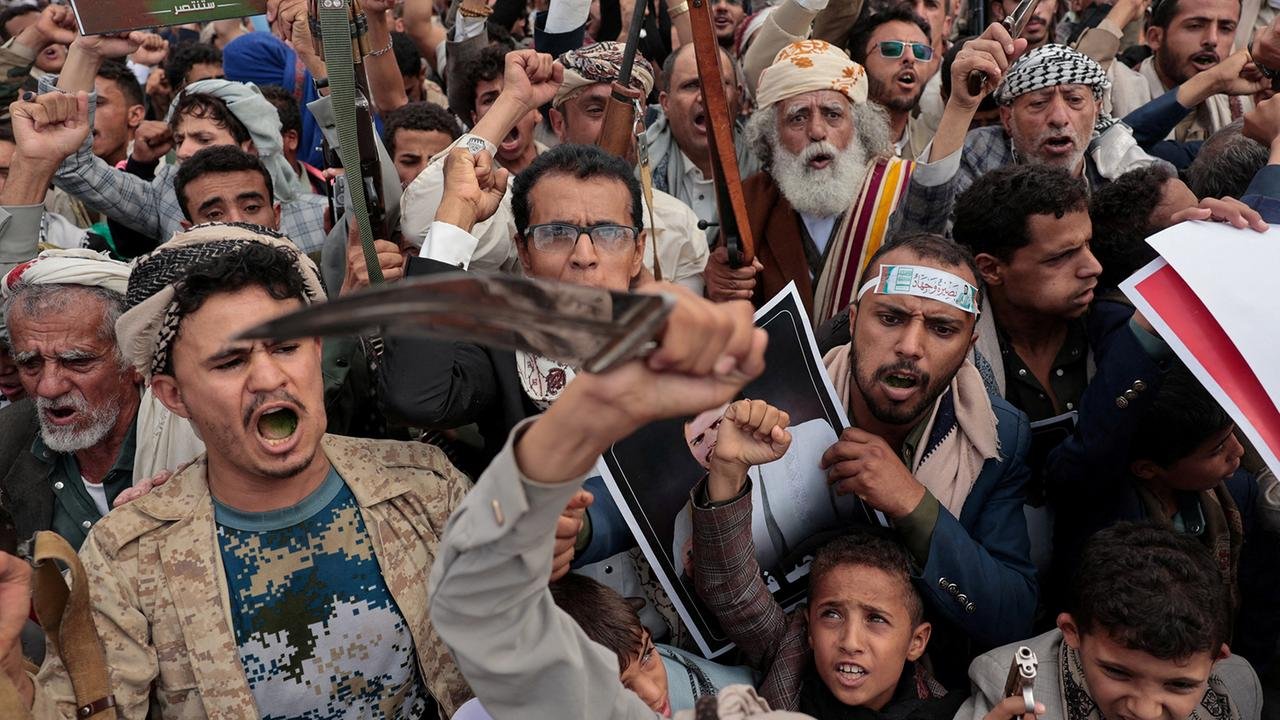
Tensions continue to rise in the Middle East amid increased activity by Yemen’s Houthi militias. US President Donald Trump responded to the events of the past few days and threatened the militias with “significant military punishment” if they attack again. In this case, Iran will also be responsible, since Tehran is considered the closest ally of the Houthis.
The Houthis said they had earlier fired on two Saudi ships after declaring a naval blockade of Saudi Arabia. Riyadh reported the ship was attacked.
Markets reacted nervously to the new arena of the Middle East war: the price per barrel of North Sea Brent exceeded the symbolic mark of $100 – the highest level since the beginning of June.
Rubio: Houthis ‘fell in love with Tehran’
US Secretary of State Marco Rubio said the Houthi militias were lured by Tehran into their latest attacks. “I think the Houthis, frankly, have taken on the Iranians on this issue,” Rubio said on the sidelines of a meeting of foreign ministers of the Community of Southeast Asian Nations (ASEAN) in the Philippine capital Manila. So far, Rubio said, the militias have behaved “in many ways wisely” and stayed out of the conflict.
Rubio accused Iran of systematically violating agreements with the United States. The United States adheres to its commitments while Tehran’s leadership repeatedly violates the agreements, Rubio said. US troops previously attacked targets in Iran for the twelfth night in a row. He said the attacks were aimed at preventing future attacks on merchant ships and civilian sailors.
The Iranian military has repeatedly responded with attacks on US targets in the Persian Gulf and Jordan. According to the Kuwait Ministry of Defense, the border crossing between Kuwait and Iraq was recently attacked by drones.
Iranian Foreign Minister Abbas Araghchi condemned the “irrational, excessive and overbearing” actions of the United States. Iran responded with a “strong reaction,” the foreign minister said on state television. An Iranian army spokesman said retaliatory attacks would “continue as long as US attacks on the country’s infrastructure and coastal areas continue,” state television reported.
International calls for de-escalation in the Red Sea
Oman, acting as a mediator, said it was working to resume talks between the Houthis and Saudi Arabia. The Foreign Ministry in Muscat expressed “great concern” about the situation in the Red Sea. ASEAN countries called for freedom of navigation following a meeting of foreign ministers in Manila. Some member states are suffering from fuel shortages.
EU foreign policy chief Kaya Kallas called on the Houthis to stop threatening international shipping. A naval blockade poses a threat to regional stability and a dangerous escalation, Kallas explained. Callas stressed that the EU’s naval operation “Aspid” remains ready to protect freedom of navigation in the Red Sea and adjacent international waters. France also called on the Houthis to stop attacks.
Federal Defense Minister Boris Pistorius has expressed concern about attacks on oil tankers. “This is clearly going in the wrong direction,” he warned. “All of this has fatal consequences for the people of the region, as well as for all countries around the world that depend on energy and other supplies from the region.”
Are Chinese tank crews negotiating with the Houthis?
US think tank the Institute for the Study of War (ISW) has so far counted seven ships that have changed course to avoid passing through the Bab al-Mandab Strait following recent threats from Houthi militias. The passage between Yemen and the African continent connects the Indian Ocean to the Red Sea and, through the Suez Canal, to the Mediterranean Sea. The militia mainly controls the north and large areas of western Yemen, including coastal areas of the Red Sea.
However, the Chinese oil tanker was allowed to pass through Bab al-Mandab, reports the specialized publication Lloyd’s List. Chinese tankers returning from the Saudi Red Sea port of Janbu may be able to negotiate passage with militias on a case-by-case basis.