
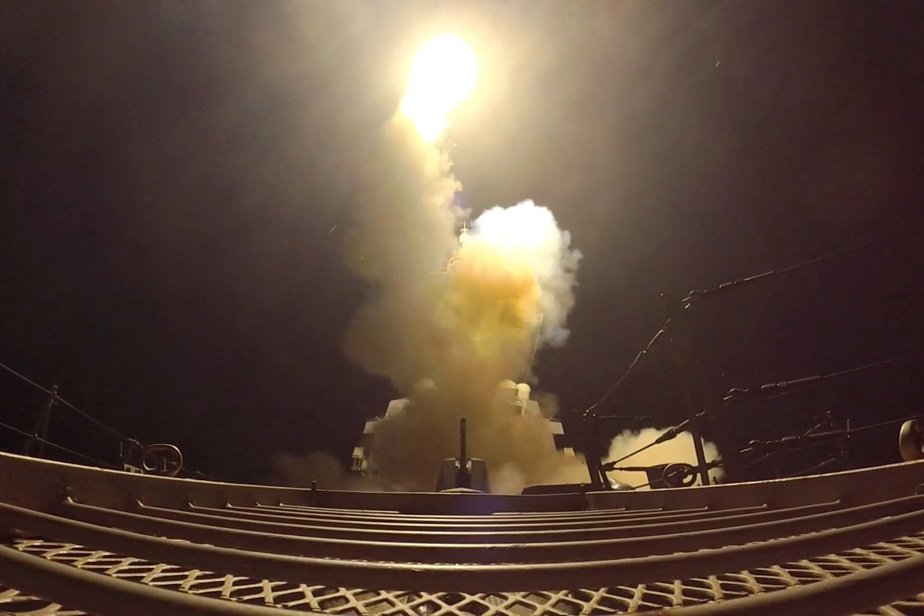
(Tehran) The United States bombed Iran on Monday for a second day in a row, saying it struck “dozens of targets” to undermine control of the Strait of Hormuz, while Tehran says it struck military bases in the Persian Gulf used by Washington.
Updated yesterday at 23:58.
Renewed fighting over the weekend and Iran’s announcement of a new closure of the Strait of Hormuz, a strategic passage for global hydrocarbon trade, sent oil prices soaring again on Monday morning.
From 12:30 pm Tehran time (5:00 pm ET), the US military launched a new series of strikes on Iran. Just over five hours later, she finally announced that she had put an end to it.
US forces “targeted Iranian air defense systems, coastal radars, missiles and drones, as well as small ships,” the US Middle East Command (Centcom) said on X.
According to Iranian state media, the bombings targeted large areas of western and southern Iran, particularly the islands of Qeshm and Bandar Abbas near Hormuz, as well as the Khuzestan province bordering Iraq.
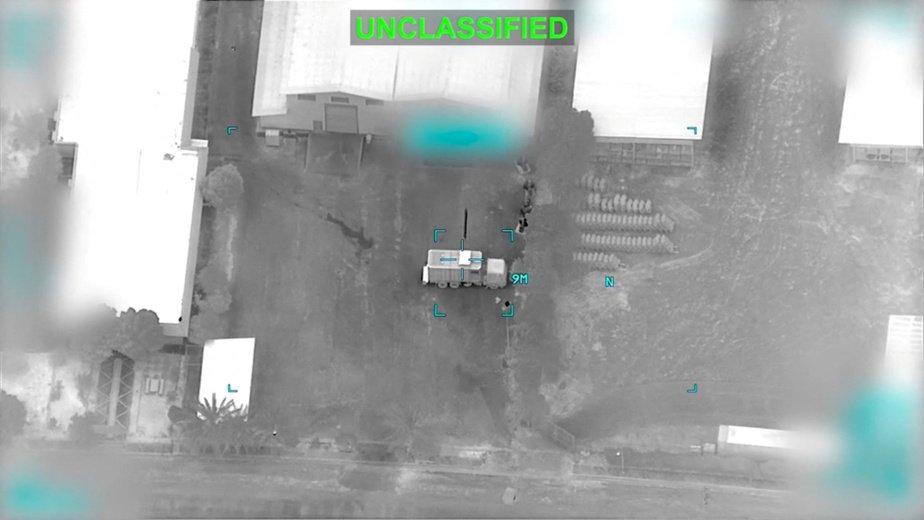
IMAGE CENTCOM COURTESY REUTERS ARCHIVES
In this screenshot from a video posted on July 11, 2026, we see a projectile approaching a truck at an unknown location in what US Central Command says is targeting Iranian military targets.
In Makhchar (southwest), the US strike killed at least one person and wounded four others, a local official said, quoted by the official Irna news agency. Late Sunday, the agency also reported one death and two injuries on Farur Island in the Persian Gulf.
Washington’s stated goal is identical to Sunday’s: to try to stop Tehran from “attacking civilian crews and commercial vessels” in the Strait of Hormuz, according to Centcom.
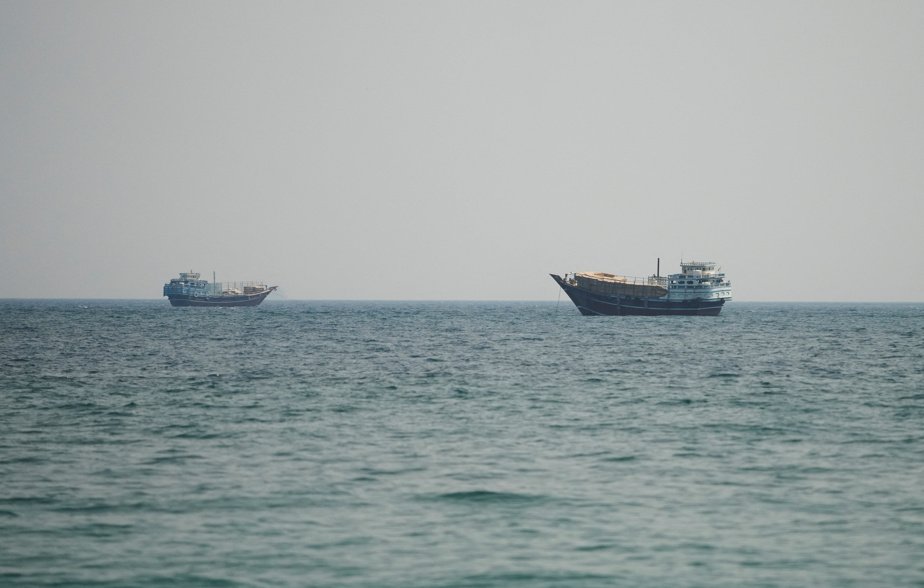
PHOTO REUTERS
Ships in the Strait of Hormuz on Sunday
The United States blames Iran in part for striking the Cypriot-flagged container ship GFS Galaxy in the strait over the weekend. Twenty-three crew members were rescued and one was missing, the Sultanate of Oman said on Sunday, as it continued the search.
Iranian response in the Persian Gulf
Iranian diplomacy “strongly condemned” the latest US bombing and criticized Washington for “destroying all the efforts of recent months” aimed at restoring peace in the region.
In response, the Revolutionary Guard, Tehran’s ideological army, said it had bombed military bases in the Persian Gulf used by the US army in Jordan, Bahrain and Kuwait, Irna news agency reported.
The official agency reported attacks on Prince Hassan airbases in Jordan and Ali al-Salem and Ahmad al-Jaber airbases in Kuwait, as well as a US drone control center in Bahrain.
Air raid sirens sounded in Bahrain early on Monday, as they had the day before, with the Interior Ministry urging residents to “go to the nearest place of safety” without providing further information.
According to the kingdom’s army, on Sunday the Iranian army fired three missiles at Jordan. As for Kuwait, three border posts and an offshore oil platform were attacked, according to local authorities, who did not give a reason for the attack.
UN Secretary-General Antonio Guterres on Sunday called on Washington and Tehran for “utmost restraint” and to “urgently resume negotiations,” in a press release.
“The Return of Uncertainty”
Iranian diplomacy accuses the United States of “openly violating almost all the terms” of the memorandum of understanding signed on June 17 and causing a “return of instability” in the Strait of Hormuz.
The memorandum of understanding called for the opening of the strait, through which a fifth of the world’s oil typically passes, but Tehran allowed only one navigation corridor along its coast, threatening ships that bypassed the route.
FRANCE PRESS PHOTO AGENCY
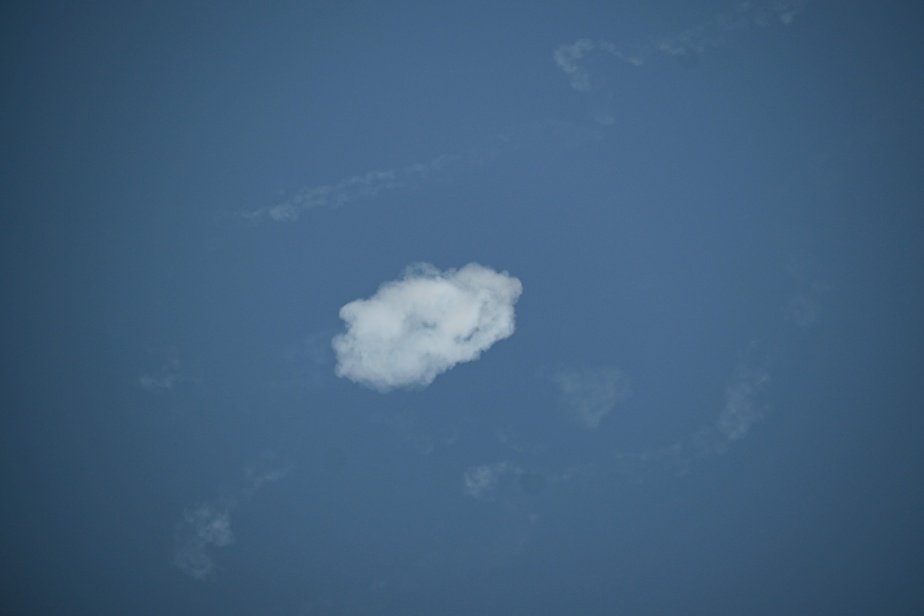
Air defense intercepts are seen in the skies over Doha, Qatar, July 12, 2026.
But on Sunday Iran announced it would close the strait until further notice.
“This strategic corridor is more important than dozens of atomic bombs, and the Islamic Republic of Iran will defend it,” said military adviser to the Iranian Supreme Leader Mohsen Rezai, as quoted by ISNA.
Sentome assured that it remains open: “Iran does not control the strait” and maritime communication, according to him, is carried out.
As a result, the price of oil jumped on Monday morning, with a barrel of North Sea Brent for September delivery, the international benchmark, rising more than 4% to $79.06 shortly after 11 p.m. (Eastern Time).
Early in the war, Tehran’s closure of the strait caused prices to rise and supply tensions: at the height of the conflict, a barrel of Brent was priced at more than $110.