


The farthest distance humans have ever traveled from Earth used to be a record born out of misfortune. Apollo 13 did not intend to be the benchmark for human spaceflight. He intended to land on the moon.
Instead, the explosion of an oxygen tank in April 1970 turned the mission into a fight to bring James Lovell, Jack Swigert and Fred Hayes home. The crew circled the far side of the Moon on an emergency return trajectory, reaching 248,655 miles from Earth. For more than 55 years, no person has traveled further.
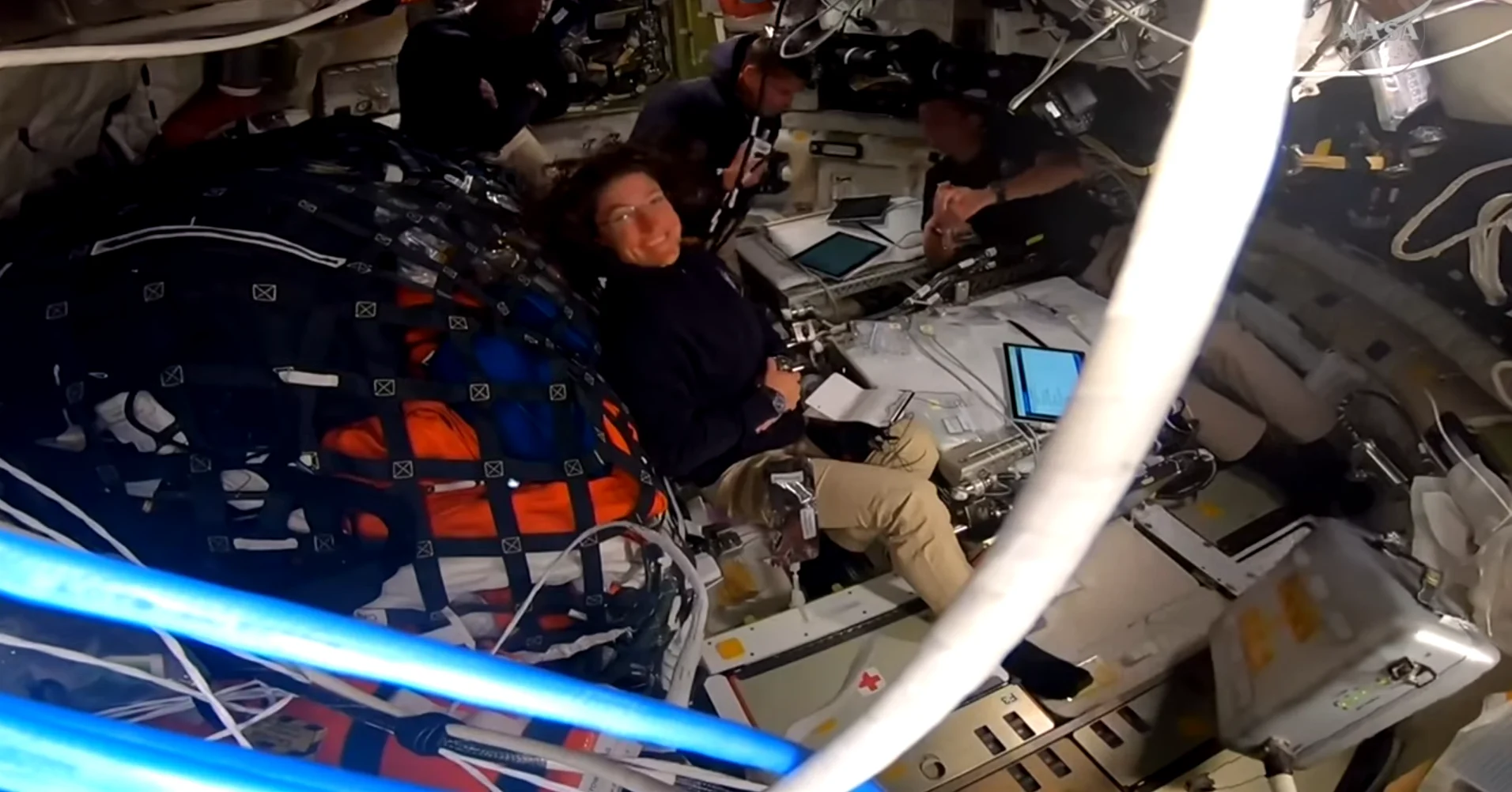
On April 6, 2026, Artemis II passed this mark. NASA astronauts Reed Wiseman, Victor Glover and Christina Koch, along with Canadian Space Agency astronaut Jeremy Hansen, crossed the Apollo 13 distance as Orion headed toward the Moon. NASA’s record-breaking announcement said the crew traveled 248,655 miles from Earth at 12:56 pm CST, six days after the first manned Artemis mission.
The moment was quiet by design. There was no explosion, no damaged service module, no makeshift carbon dioxide scrubber, no desperate power rationing. Artemis 2 was a test flight that did what it was designed to do: send a crew around the Moon, stress the Orion spacecraft in deep space, and return the astronauts safely to Earth.
Emergency recording
Apollo 13’s range record had a strange moral significance because it was inseparable from the disaster. After an oxygen tank explosion, the planned landing at Fra Mauro was abandoned. Mission controllers and crew had to use the lunar module as a lifeboat as the combined spacecraft circled the Moon and headed back to Earth.
The path of free return solved one problem and created another story. It used the moon’s gravity to steer the spacecraft home, but in doing so it also carried the three astronauts farther from Earth than anyone before them. This was never the purpose of the mission. It was a byproduct of survival.
NASA’s preview of Artemis II made that context clear. In a report on the sixth day of the flight, the agency noted that Orion will break the distance record set by Apollo 13 during its emergency return to Earth. The comparison is not just numerical. It links two distinct eras of lunar missions: one defined by improvisation under pressure, the other by a deliberate return to manned testing in deep space.
How did Artemis II go?
Artemis II was launched on April 1, 2026, by NASA’s Space Launch System, carrying Orion and four astronauts on a flyby of the Moon. Unlike Apollo 13, the mission never planned to land on the Moon. His job was to test the transport system on which the crews of the Artemis would later depend.
On the sixth day of the flight, Orion was quite close to the Moon for an extended period of observation. The crew was briefed on geological targets, communication times, and a planned power outage as the spacecraft passed behind the Moon. Before this long pass, the spacecraft crossed the old Apollo 13 distance.
NASA said in a post-flyby post that the record was set at 1:56 p.m. ET and then extended later that evening. During the planned 40-minute signal loss, Orion passed at an altitude of about 4,067 miles above the lunar surface. Two minutes after closest approach, the crew reached the mission’s maximum distance from Earth: 252,756 miles.
This was only about 4,100 miles from the Apollo 13 mark, which is a small gap on the scale of the solar system. However, for human spaceflight this line has not changed since 1970.
Why did the landing mission go further?
The intuition is that the Moon landing mission should be the furthest lunar mission. The records of Apollo and Artemis show why this is not necessarily the case.
The distance from Earth depends on the trajectory, not whether the crew touches the surface of the Moon. Apollo 11 landed, but it didn’t have to go as far around the far side of the Moon as Apollo 13 did after the accident. Artemis 2 did not land, but its planned flight path took Orion beyond Apollo 13’s Earth distance mark before the spacecraft turned back toward home.
This is why the phrase “no moon landing” is central to the story. Artemis II did not surpass Apollo 13 in terms of surface exploration. This occurred, proving that a crewed Orion could operate in the deep space geometries required for future lunar missions.
This report also highlights the difference between flight goals and social memory. Apollo 13 is remembered for its survival. Artemis II may be remembered for restoring manned flight to the Moon more than half a century later, but much of its value was procedural: navigation, communications, life support, human exploration, radiation monitoring, and control of a small crewed spacecraft far from Earth.
Message from an old record holder
There was also a living bridge between the two missions. A NASA report on the sixth day of the flight said the Artemis II crew received a recorded message from Jim Lovell, who flew on Apollo 8 and commanded Apollo 13. Lovell recorded it before his death in 2025.
In this message, Lovell welcomed Artemis II to what he called his old neighborhood and advised the crew to remember to enjoy the view. NASA cited him as the man who passed the torch as astronauts orbited the Moon and prepared the way for missions to Mars.
The symbolism was hard to miss. The commander of Apollo 13, whose flight accidentally set the old distance record, was addressing the crew who were supposed to complete it as planned.
New brand
NASA’s record announcement came before Orion had reached its farthest point, but it had already set the expected maximum mark at approximately 252,756 miles. A later mission update reported that the maximum distance had been reached, setting a new record for human spaceflight.
The exact number matters, but a larger shift is in effect. Artemis II showed that four people could fly Orion through the deep space portion of the lunar flyby and return with data for future missions. This did not erase the significance of Apollo 13’s records. It changed what this record was.
For 55 years, man’s longest voyage has been a reminder of how close the lunar mission came to disaster and how well the crew and ground teams responded. Since Artemis II, the furthest human travel has been a sign that NASA has finally sent humans beyond that old emergency boundary again.
The old record was a survival maneuver. The new one was a test flight. This difference is the quietest part of the story and probably the most important.