

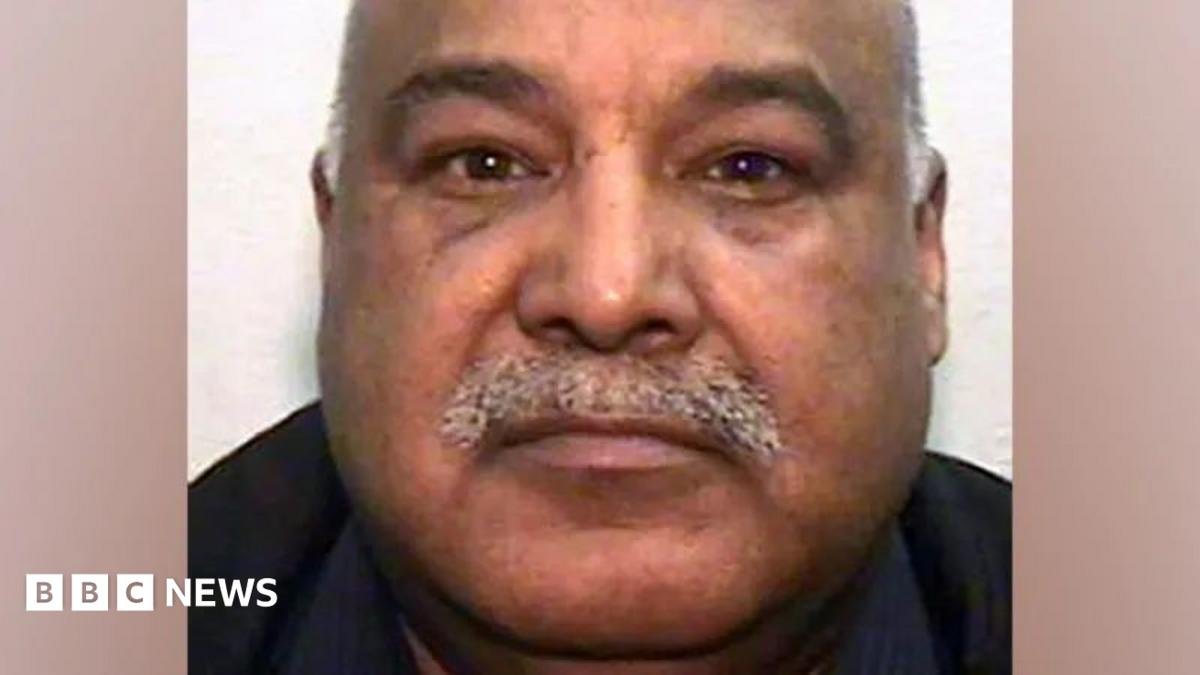
Home Secretary Shabana Mahmood will on Monday set out the legal steps she will take to deport the freed Rochdale grooming gang leader.
Shabbir Ahmed, jailed for 22 years in 2012 on multiple charges of child sex offenses including rape, was released from prison on license earlier this month.
There are calls across the political spectrum for the deportation of Ahmed, who was stripped of his British citizenship after his conviction, leaving him with only Pakistani citizenship.
But he cannot be deported due to a 1971 law that prevents the removal of a small group of Commonwealth citizens who arrived in the UK more than 50 years ago.
It is unclear how Mahmoud will change the law.
It also appears that Pakistan has no intention of accepting Ahmed, who claims to have renounced his Pakistani citizenship.
Ahmed was one of nine men from Rochdale and Oldham found guilty of exploiting 13-year-old girls at two takeaway restaurants.
Upon his release from prison, Ahmed was placed in a 24-hour staffed facility and equipped with an electronically monitored GPS tag.
While he is in the UK, the government has said he will be returned to prison if he breaches a series of strict license conditions.
Some of his victims said they were “scared” and felt “unsafe” after his release.
At the time of his release, his victims were told he could not be deported to Pakistan because of the 55-year-old Immigration Act, which bars the removal of any Commonwealth citizen who arrived in the UK before 1973 and has been in the country for five years.
Ahmed has been spared deportation despite having his British citizenship revoked during his imprisonment.
The Home Secretary will outline the legal steps she will take to rectify this.
It is unknown how long it will take to change the law, but one government source previously suggested it could potentially take up to a year.
Dr Farzana Sheikh, a Pakistan expert based at Chatham House, told BBC Radio 4’s Today program that negotiations over the issue had led to Pakistan demanding the extradition of two political dissidents from Britain.
“We know that negotiations are taking place through unofficial channels – they are fraught and point to a real diplomatic crisis between the two countries,” she said.
Sheikh said Pakistan was informally seeking the extradition of a former cabinet minister and adviser to former Prime Minister Imran Khan, as well as a retired major.
She added: “Pakistan’s official position is that it will not return Shabir Ahmed under any circumstances, and that Britain’s attempts to force Pakistan to do so smack of colonial arrogance and colonial thinking.”
Shadow Home Secretary Chris Philp suggested sanctions could be imposed on Pakistan if it refuses to accept Ahmed.
“If they don’t take it back, we can say, well, we’ll just stop or restrict visas for people from Pakistan to come here,” he told BBC Radio 4’s Today programme.
“By the way, this should apply to any country in the world that does not take back its citizens who are criminals or who are here illegally.”
The Conservatives are pushing for emergency legislation or an amendment to the current immigration bill going through Parliament because they believe changing the 1971 Act will take too long.
Philp said such emergency legislation could lead to a change in the law “within weeks.”