

There is a saying about submarine warfare: “There are two types of warships – submarines and targets.” Nuclear submarines, SSNs, are the true predators of the oceans during war.
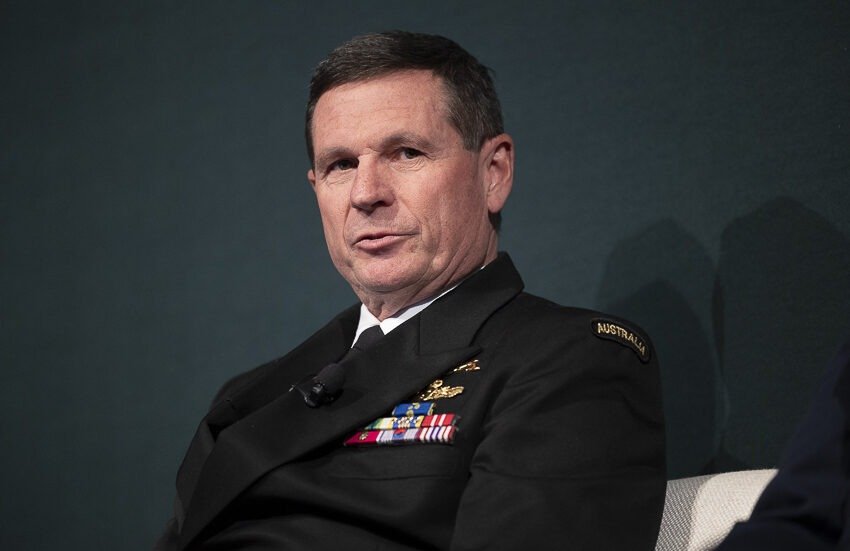
Chief of the Royal Australian Navy and incoming Chief of Defense Vice Admiral Mark Hammond introduced the SSN during a discussion on multi-domain deterrence at the ASPI Defense Conference on June 25.
For those who don’t know, nuclear submarines have actually only seen combat twice. For the first time, during the Falklands War of 1982 (when the British Navy) HMS Conqueror sank the flagship of the Argentine Navy, the cruiser General Belgrano, with the release of straight-line torpedoes. After this battle, the Argentine surface fleet did not return to sea.
The Vice Admiral continued:
Just recently, earlier this year, an American nuclear submarine (sank) an Iranian frigate. At the conclusion of this engagement, other Iranian surface ships in the Indian Ocean departed for neutral ports and remained there.
And he ended with the words:
The disproportionate impact of a nuclear submarine in combat is remarkable. Defusing, let alone locating, is extremely difficult and extremely expensive. Thus, in the context of a denial strategy for an island nation whose approach requires crossing oceans, this is an extremely important deterrent capability. It says: “If you are determined to approach the coast of Australia with lethal intent, we will have the capability to deal with it.”
Australia’s acquisition of conventionally armed but nuclear-powered submarines through the AUKUS Pillar One Optimal Pathway will significantly enhance the Department of Defense’s ability to implement the denial strategy outlined in the 2026 National Defense Strategy. The “best path” assumes that the Navy will receive a powerful fleet of nuclear submarines – first three Virginia-class submarines in the 2030s (possibly two more later), and then SSN-AUKUS-class submarines starting in the 2040s. The Australian boats SSN-AUKUS will be built at Osborne in South Australia. The transition to SSN will enhance the Australian Navy’s ability to create uncertainty for an adversary seeking to project power against our continent, and thus enhance the Australian Defense Force’s ability to carry out deniability.
The ability of Australian submarines to keep enemy naval forces at risk on or below the surface increases the potential cost to any potential aggressor. Any adversary will be challenged by lethal firepower if it attempts to deploy forces against Australia’s air and sea approaches. SSNs will be combined with other long-range power projection capabilities, including long-range strike capabilities from the Royal Australian Air Force, possibly Australian Army littoral operations, supporting sovereign space capabilities, and Navy surface combatants.
China’s deployment last year of two naval task forces – the first of which sailed around Australia and conducted unannounced live-fire exercises in the Tasman Sea, off Australia – sent a clear signal of Beijing’s intent to turn its military power against us. This highlighted the risk of failure of deterrence through denial and emphasized the need to be able to defeat such deployments in wartime.
There is also the risk that an adversary may instead decide to coerce Australia from a distance by threatening our economic lifeline to the world along maritime trade routes.
Once again, SSNs can play a key role in solving this problem. While SSNs are not a complete solution in themselves, they take advantage of high speed travel, much greater maneuverability and speed in any tactical engagement compared to diesel-electric submarines such as the Collins class, and much greater endurance when stationary. They will be well equipped to provide maritime surveillance and use secure communications to provide information to other air defense units operating in the air and at sea or ashore as part of a joint integrated force. The ability to work in collaboration with semi-autonomous unmanned submarines such as Ghost Sharks and Speartooths allows the SSN to play a key role in countering adversary attempts to compromise our vital sea lanes – or even thwart any attempts to attack undersea cables passing through sea chokepoints.
Opponents of AUKUS choose to ignore the operational and tactical advantages offered by SSNs introduced under the First Pillar Optimal Path, as well as the key role that SSNs will play in both supporting the denial strategy and protecting our vital sea lanes of communication. However, given Australia’s vast marine environment, the case for SSN is very clear. Again Hammond put it well at the conference:
Then again, if I go back to a conventionally armed nuclear submarine, it could be anywhere. Very quickly it can be anywhere. But this in itself is not enough. That’s why we also go after unmanned underwater vehicles like Ghost Shark, which can be everywhere in large numbers, which makes a difference.
So, having that balance of responsiveness and the most survivable capabilities available to us, backed by massive and unmanned systems capable of carrying out dangerous, dirty and boring missions, is absolutely important, especially since we are the custodians of the third largest exclusive economic zone in the world, and we are both the beneficiaries of and somewhat constrained by the most extreme maritime approaches on the planet.