

German political scientist Jürgen Falter devoted much of his career to the study of Nazi Party membership and wrote extensively about the rise of Adolf Hitler and his party.
He had previously searched for his mother’s denazification records, which are kept in local German state archives and typically contain post-war questionnaires taken during the Allied-led process that followed World War II.
He discovered that she had been classified as “rehabilitated,” meaning she had been cleared of charges of complicity with the regime. False statements on this form could result in penalties.
So when German newspapers launched searchable databases earlier this year allowing people to check whether their ancestors were members of the Nazi Party, Falter told CNN he was “more than surprised” to discover his mother’s name appeared among old party records – a secret she had apparently kept even from her family.
“Given the whole character, mentality and political beliefs of my mother as a liberal Catholic, it was virtually inconceivable that she would have joined the NSDAP (National Socialist German Workers’ Party) in 1940 at the age of 23. But it is documented in the card index, which indicates that she was probably indeed a member,” said Falter, senior research professor at Johannes Gutenberg University Mainz.
“She never mentioned it to the family, and if my father, who was engaged to her at the time, had found out about it, he – as an ardent anti-National Socialist imprisoned by the Gestapo – would presumably have broken off the engagement.”
Falter’s shocking discovery underscores how the newly available archives are changing the way Germans understand their family history, but it also comes as support for far-right forces remains high in the country as they seek to push the country away from Nazi history.
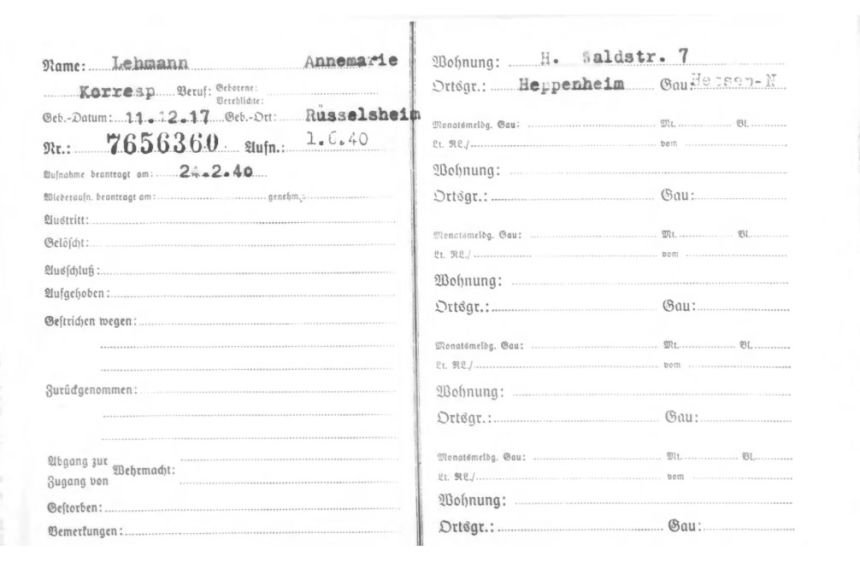
Millions of membership cards that were once restricted by German privacy laws and required a lengthy process to obtain are now directly searchable in German media, as of several months ago, after the US National Archives published surviving membership card files online.
“What did your grandparents do during the Nazi era?” – the German news magazine Der Spiegel asks its readers. “Study the history of your family in the NSDAP here,” Die Zeit implores.
The promotion of these online search engines comes at a time when Germany’s far-right Alternative for Germany (AfD) party continues to enjoy strong support. Prominent voices within the AfD rejected Germany’s post-war policies. Culture of memoryor “culture of memory”, arguing that the country should abandon its history of guilt and focus on national pride.
On the other side of the Atlantic, billionaire Elon Musk, then a senior adviser to US President Donald Trump, told an AfD rally last year that the country was “focusing too much on past guilt” and that children should not be held responsible for the “sins of their great-grandparents.”
New searchable databases are working against these calls, encouraging Germans to look more closely at their families’ connections to Nazism and prompting fresh thinking about how ordinary citizens came to normalize extremism.
The records do not indicate a reason why a person might have joined the Nazis. However, the researchers say the date a person joined an organization may indicate whether it was ideologically motivated.
“Before 1933 it was probably more of a condemnation; after 1933, after the creation of the Third Reich, there were a lot of opportunists who joined the party for more selfish reasons: to get a promotion, to gain economic advantages or also to protect a family member and so on,” Falter told CNN, referring to the year the Nazis came to power. His book Hitler’s Party Comrades analyzes the development of Nazi Party membership and possible motivations for joining.
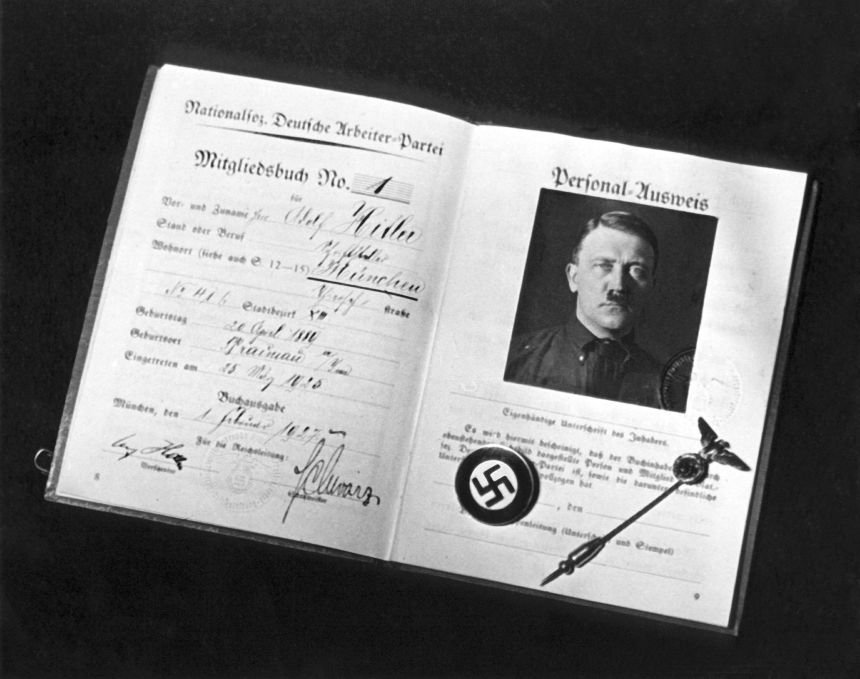
In the last days of the war, the Nazis tried to destroy a huge collection of party membership cards and for this reason took them to a pulp mill near Munich. They were rescued at the last minute by the mill owner, who convinced the arriving American army of their value.
Der Spiegel’s search engine has been featured prominently on the organization’s home page for weeks, and the publication said it had received several thousand emails from readers who found family members in the records.
Some experts believe that databases help us move to a new stage of development. Make peace with the past in Germany the word means “to come to terms with the past.” Germany has gone through several such stages since the fall of the Third Reich. However, this latest conversation focuses specifically on family memory and challenging outdated stories that families may have passed on about what their ancestors did under Nazism.
“For decades, millions of Germans wanted to believe that their families were not involved in the violence, war crimes and murders of Jews committed by the Nazis. Now, 80 years after the end of the war, many have begun to question taboos and family legends anew,” a Der Spiegel journalist who worked on the project told CNN.
Mikkel Dack, assistant professor of German history at Rowan University in the US, said that after World War II and in the 1960s and 1970s, there were significant efforts at historical recording at the national level, including memorializations such as stumbling blocks, concrete blocks etched into sidewalks on streets in Germany and Europe that mark the last known location of Jews and other victims of the Holocaust. However, at the individual and family level this was not enough.
“Many German families relied on the protective barrier of what is often called ‘communicative memory,’ or stories passed down orally by grandparents and parents,” Duck told CNN. “These stories often said that their ancestors were completely untainted by Nazism.”
He continued: “These stories directly contradict the empirical evidence that is currently available.”
This phenomenon of altered narratives is explored in a 2002 non-fiction book entitled Grandpa Wasn’t a Nazi. A case study, the book explores how modern families remember the war and reveals a sharp gap between historical reality and family memory. While younger generations were taught about the atrocities of the Holocaust in school, the book shows that family lore continues to sanitize the past, with grandparents often portrayed as heroes, rescuers, or victims themselves.
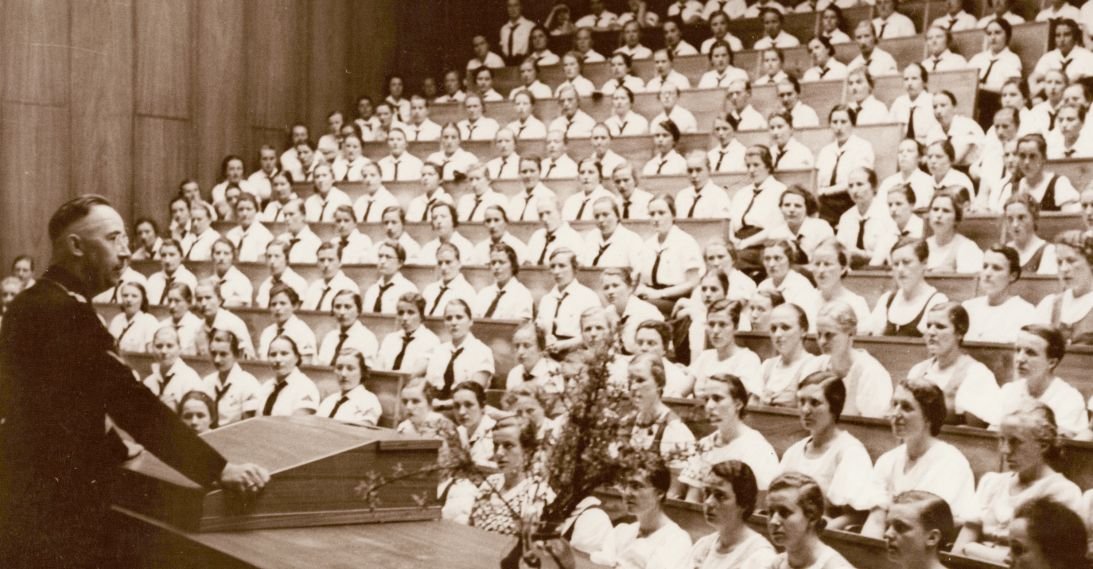
“There was silence in the family, there was storytelling, there were embellished stories. I think now, finally, thanks to these search engines, that’s changing,” Duck said.
Another contributing factor is the gradual passing away of the last generation with lived experience of the Third Reich, meaning that the crimes of the Nazis are fading from living memory into history and formal education. This growing distance may help the younger generation separate family traditions from the realities of the regime.
While there are circumstantial reasons why polls are being released now, Duck believes the current wave of historical reckoning is also acting as a civic and institutional response to the political rise of the far right. The party won a significant 20.8% of the vote in last year’s national elections, making it the second largest party in the German parliament, where it has 152 seats.
“The public promotion of these membership files carries with it a clear institutional warning… And that is that democratic institutions are fragile and radicalization is a gradual process.”
Falter said he doesn’t see how the current conversations will ultimately serve as a barrier against the far right in Germany or against demands that Germany free itself from its Nazi past.
“However, it will make people think again about how it could be that there were so many NSDAP members among our ancestors.”