

Tuesday marks the 10th anniversary of International Asteroid Day.
In the decade since the United Nations established the holiday, scientists say the Earth is better prepared to protect itself from the dangerous effects of one of the celestial bodies, which can range in size from a few feet across to several hundred miles.
But experts also warn that more needs to be done to protect us, including raising awareness of space.
“There is a 100% chance that if we don’t do anything, there will be a collision with a dangerous asteroid and people will be injured and killed,” Bruce Betts, chief scientist and director of the Planetary Society’s LightSail program, told ABC News. “And it could be tomorrow, or it could be 100 years from now.”
The UN established Asteroid Day in 2016 to mark the anniversary of the 1908 Tunguska event, when an asteroid exploded over Siberia, toppling trees and causing destruction up to 22 miles from the explosion’s epicenter, considered the largest impact event in modern history.
According to NASA, the estimated size of the Tunguska asteroid was about 130 feet in diameter. Today, scientists are scanning the sky for much larger asteroids.
“I think one of the biggest risks for us in planetary defense is that we don’t know where all these objects are,” said Kathy Kumamoto, leader of the planetary defense group at Lawrence Livermore National Laboratory. “And we’re doing a lot of work to find them.”
What is an asteroid and how to find it?
As of April 2025, astronomers had identified about 40,000 near-Earth objects, or NEOs, which are asteroids and comets whose orbits are close to Earth, according to a report from NASA’s Office of Inspector General.
NASA has classified a subset of these NEOs as “potentially hazardous asteroids,” a category that includes space rocks that come dangerously close to Earth’s orbit and are large enough to cause significant regional or global damage if they hit the planet.
While not every space rock is guaranteed to pose a real threat, scientists say finding them is the first step.
“It’s more important to find them because you can’t do anything about it if you don’t know they’re there,” Betts said.
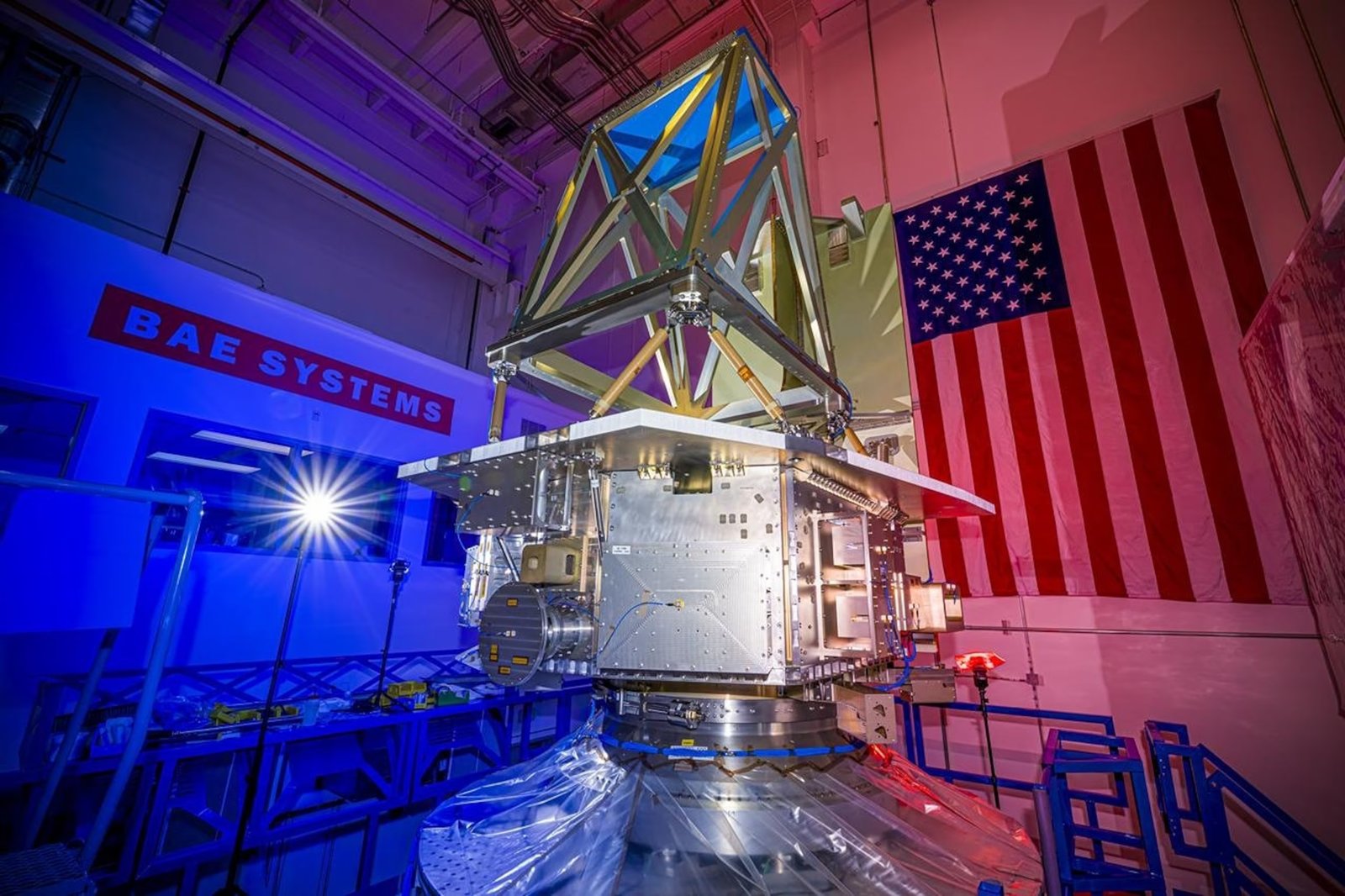
A tire structure for NASA’s Near-Earth Object (NEO) Research Facility is mounted on a “shaking table” at BAE Systems Space & Mission Systems in Boulder, Colorado, during vibration testing conducted in August 2025.
NASA
For years, astronomers and space agencies have been trying to detect and track asteroids. But with the development of programs like NASA’s Near-Earth Object Observation Program in the late 1990s, planetary defense has evolved from simply tracking space rocks to modeling their trajectories and even testing whether they can be knocked off course. NASA’s Double Asteroid Redirection Test (DART) program was the first mission to demonstrate that asteroid redirection was actually possible.
“We just haven’t visited that many asteroids in human history,” said Kumamoto, who worked on NASA’s DART mission. “The number of asteroids we’ve actually touched can be counted on our fingers.”
In September 2022, an autonomous spacecraft was deliberately sent to collide with the asteroid Dimorphos as it orbited its moon Didymos, almost seven million miles from Earth.
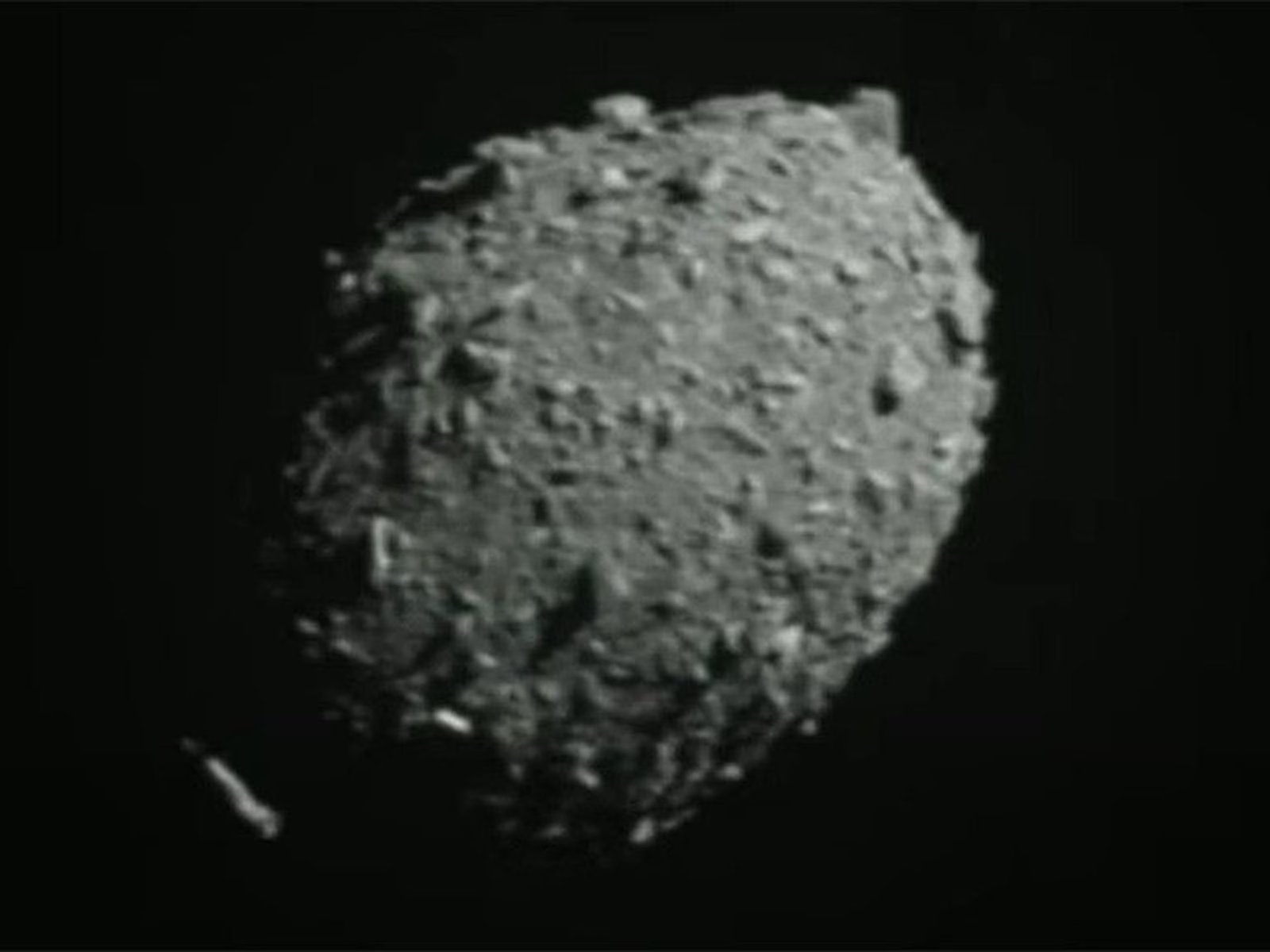
DART’s last full image of Dimorphos before impact. The image was taken when the spacecraft was about 7 miles (12 kilometers) from the asteroid and 2 seconds before impact.
NASA/Johns Hopkins APL
Post-mission analysis by NASA found that Dimorph’s successful collision with DART altered the shape of Didymos and altered its orbital path around the Sun, as well as the trajectory of a nearby asteroid.
Despite the scientific community’s progress in planetary defense, it’s still not enough, according to experts, who say we don’t have enough telescopes designed to detect and track all potentially dangerous space objects.
“The main reason we, humanity and NASA, haven’t encountered this is because we don’t have telescopes sensitive enough to detect all these asteroids, especially when they’re far away from Earth,” Betts said.
Asteroids are notoriously difficult to spot from Earth against the endless darkness of space.
“We’re looking for something that won’t reflect a lot of light—it won’t generate its own light because it’s just a rock,” Kumamoto said.
To help NASA search for more potentially hazardous asteroids, the agency is preparing to launch the Near-Earth Object Surveyor, a space telescope designed to detect asteroids and comets that could pose a threat to Earth. Using sensitive infrared detectors, Surveyor can detect the heat that asteroids and comets absorb from the Sun, making them easier to identify.
The Surveyor spacecraft, which will launch as early as fall 2027, is expected to find at least “two-thirds of potentially hazardous asteroids” during its five-year mission, NASA said.
Kumamoto was also involved in the response when asteroid 2024 YR4 briefly became the most serious impact threat in modern history. The probability of the asteroid colliding with Earth was estimated at 3.1% before additional observations ruled it out.
“Zero is where we want to be,” Kumamoto said.
Once NEO Surveyor starts detecting more asteroids, “we’ll have more and more cases like this where we might break that 1% probability threshold,” she added. One percent is the threshold at which scientists begin to pay closer attention to risk.
The next big thing
One of the most striking examples of the celestial threats facing Earth is an asteroid named Apophis. Roughly 1,500 feet across and taller than the Empire State Building, it is scheduled to pass about 20,000 miles from Earth in April 2029, according to NASA.
Hundreds of miles closer to us than the Moon, the massive asteroid will be visible to the naked eye.
“Although Apophis was identified as one of the most dangerous asteroids likely to impact Earth, astronomers have since ruled out its impact within the next 100 years,” NASA’s Office of Inspector General wrote in a June 2025 report. “It has the potential destructive power to destroy an entire metropolis.”
Besides the fact that Apophis is rare and surprisingly large, Betts says its proximity makes it an almost unprecedented opportunity for scientific research.
“This happens once every thousand years for an object this size, the width of three football fields, to fly this close to Earth,” Betts said. “You go partly because you don’t know what we’ll see.”
However, NASA likely won’t have a spacecraft there for the main event. The agency’s budget requests for fiscal years 2026 and 2027 proposed ending the Apophis flyby mission. The repurposed OSIRIS-APEX spacecraft will now only arrive after its closest approach, according to the space agency’s website.
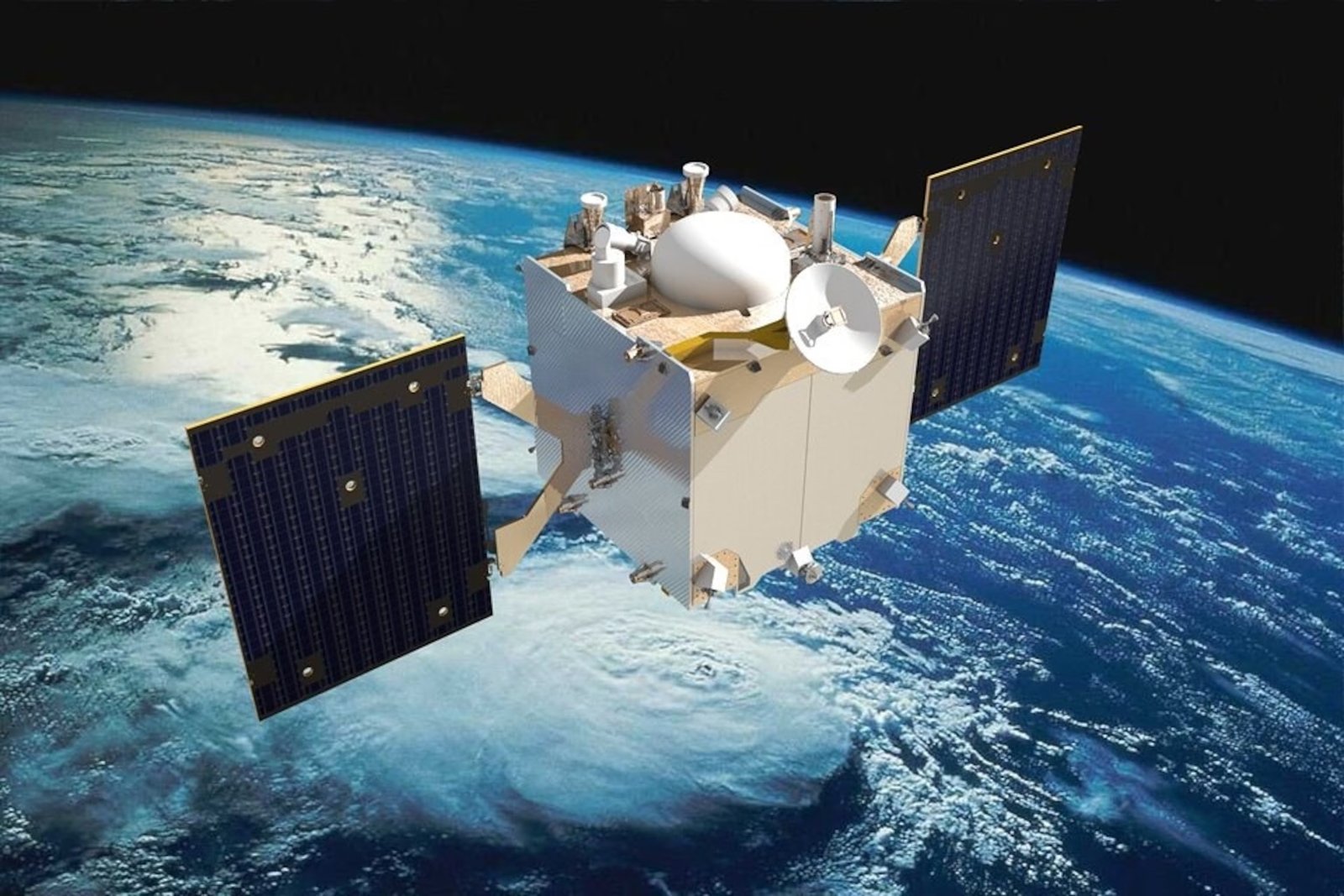
Ramses mission concept.
NASA
In a report, NASA OIG called it a missed opportunity, noting that restoring the mission “could become a goodwill benchmark for NASA and the Agency’s Planetary Protection efforts.”
The European Space Agency’s Ramses mission is still on track to be present during the massive asteroid’s closest approach to Earth.
“Asteroids are central to this interesting keystone,” Kumamoto said. “There’s all this science about what they tell us about the early solar system, but also the applied science that these rocks are just floating around in space, and someday we’re going to have to deal with one of them if we don’t want to go the way of the dinosaurs.”