

NOS Newstoday, 17:13Updated today, 18:39
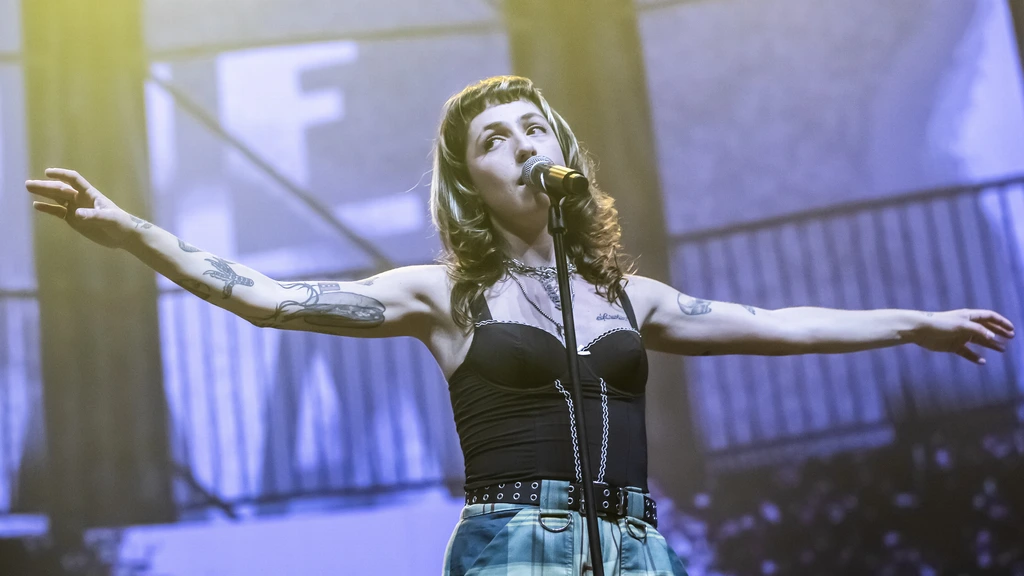
Discrimination hotlines in the Netherlands and Belgium believe that there was no discrimination in Sophie Straat’s speeches. On Monday, speaking in front of a mosh pit in Ghent, she asked to once again make space for women, queer people and people of color. As she did during her Best Kept Secret appearance last month, she asked “all white men to back off.”
Straat says she didn’t want to exclude anyone, but wanted to make room for people who feel less safe in a mosh pit. “Whatever her intentions, people may feel discriminated against because of this,” says Discriminatie.nl. The hotline received “many hundreds of complaints” regarding this matter. “We understand this, but at this time we do not see sufficient grounds to believe that discrimination based on skin color or gender occurred.”
The hotline clarifies that the artist did not make any offensive statements towards white men. “The call was only about one short one-time mosh pit for these bands. Therefore, visitors were not denied the concert.”
In this video from Nieuwsuur you can see what a mosh pit is and what Straat said in Ghent last month:
Discriminatie.nl states that it will not take any further action regarding the reports. The West Brabant prosecutor’s office has received several reports. The spokesman did not provide any additional information. The representative was also unable to answer the question whether all applicants were present at the concert.
This is also happening in Belgium. During the holidays in Ghent, Straat elaborated on her previous call and asked visitors to put themselves in other people’s shoes more often. According to Belgian media, after her call there was applause.
“Although this statement may be perceived as polarizing or offensive, in this context it should be seen as a symbolic and artistic expression,” a spokesman for the Belgian discrimination hotline Unia told a Flemish television channel. VRT. The expert center received about two hundred messages about the action. They were investigated, as were Straat’s claims.
“Context is critical”
The context of the statements was critical, the spokesman said. “The statement was made at the end of an artistic performance with a social and political message about inequality.” According to the Union, there was also no indication that white men were actually excluded from the concert or participation in the events.
“According to the case law of the European Court of Human Rights, artistic and political expressions enjoy broad protection under freedom of expression, even if they provoke, shock or offend,” the spokesman said.
According to the Union, this protection can only be limited in the case of genuine calls for discrimination, exclusion or hatred. There were no elements limiting this protection.
Target of Hate Messages and Death Threats
Since his first statement, Straat has been subjected to a torrent of hate online. In one Instagram post Earlier this month, she wrote about “a wave of sexist, anti-Semitic hate messages and (death) threats, some more explicit and creative than others.”
According to Straat, this isn’t just happening online. “Online and in the form of letters, including declarations and legal charges against me, the people I work with, and all the venues and festivals I will be performing at this summer.”
The singer also criticized the lack of social solidarity in her message. “Where is the (left-wing) media? Where are the statements from major festivals? The only public narrative that can be found is that of the right-wing media, such as Johan Derksen screaming on national television, “I won’t let that bitch piss me off” and “that bitch won’t get away with this.”