

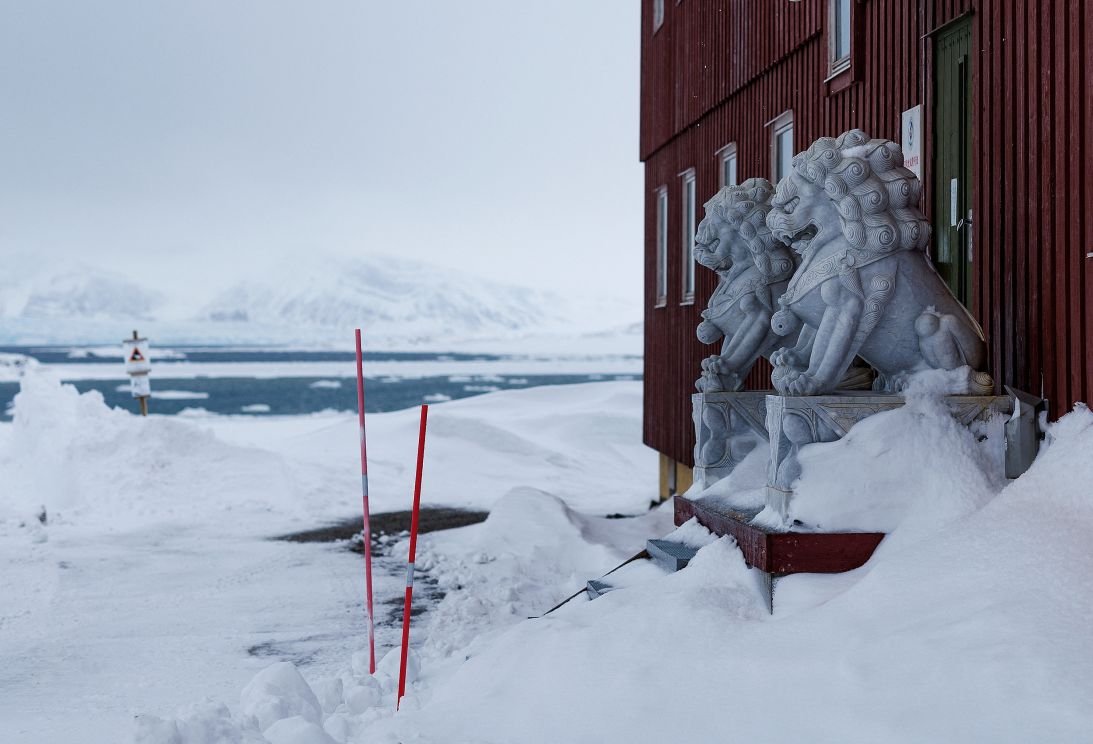
For more than two decades, a pair of imposing granite lions adorned the entrance to the rust-red building deep within the Arctic Circle. Not anymore. They disappeared last month, and their absence speaks to increasingly tense geopolitics at the top of the world.
The vanished lions once guarded a Chinese-run research station in the settlement of Ny Ålesund on Svalbard, an archipelago located between mainland Norway and the North Pole. They were removed in May by the Norwegian state company that runs the settlement; in June they removed the sign from the building, which had read Yellow River Station.
Some experts see Norway’s move as part of an effort to bolster its sovereignty over this swath of the Arctic in the face of seismic geopolitical and climate change.
🌊 Explore stories like this and get your forecast with the CNN Weather app.
Greenland could dominate Arctic issues as President Donald Trump has repeatedly tried to give it to the United States, citing the need to counter the growing influence of Beijing and Moscow. but another potentially explosive fight is playing out in Svalbard, where China and Russia are already present.
Some fear that the world is not paying enough attention to this.
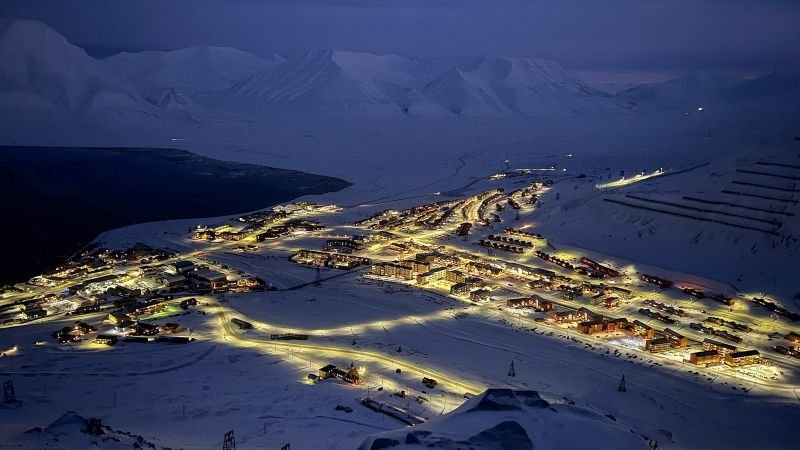
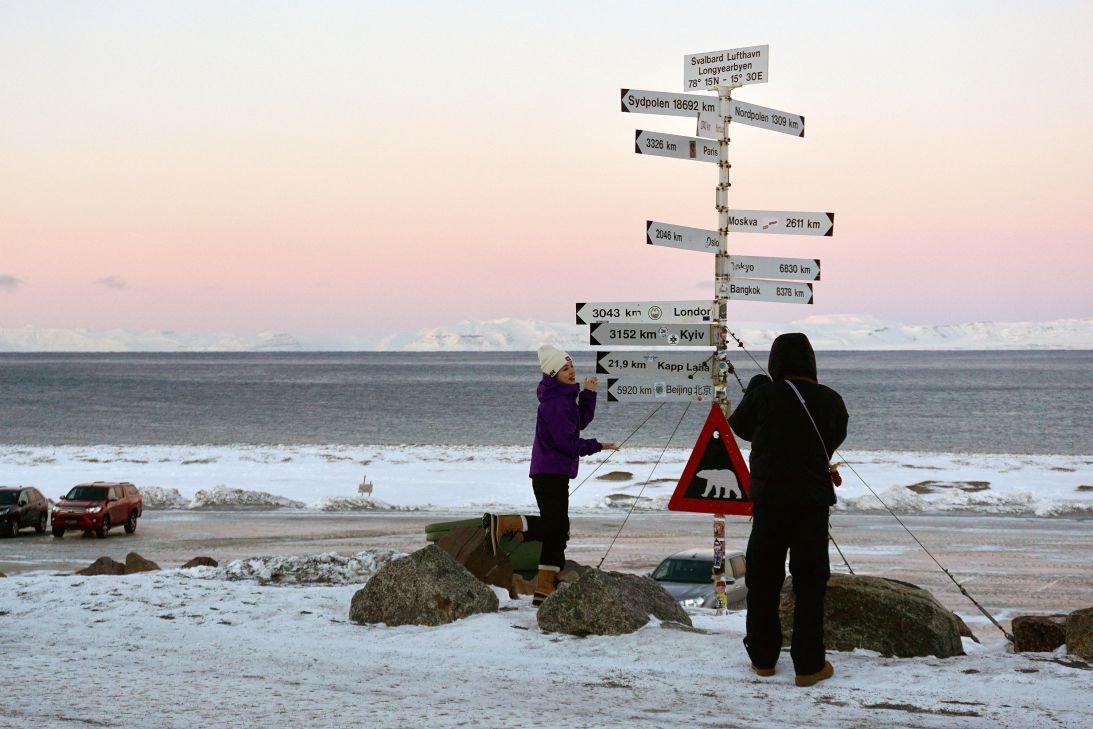
Spitsbergen is a unique collection of islands. It has only about 3,000 inhabitants, but there is no indigenous population and women cannot give birth there. Home to the world’s northernmost permanently inhabited city, Longyearbyen, it is the fastest-warming place on the planet, warming at about six to seven times the global average.
The century-old agreement gives Norway full sovereignty but also allows people from nearly 50 signatory countries, including China and Russia, to live and work in Svalbard without visas.
Over the past decades, it has become the leading center of Arctic science on the planet and a rare site of international collaboration. “People from all over the world with huge, huge cultural differences… come together to collaborate,” said Hedda Andersen, a glaciologist working at the Ny-Ålesund research station.
But that harmony is eroding as Svalbard’s unique structure clashes with increasingly fragmented international relations and countries’ quest for influence in a rapidly warming Arctic.
“You’re seeing the broader geopolitical context spill over into the territory in a way that hasn’t happened in previous decades,” said Otto Svendsen, a fellow at the Center for Strategic and International Studies.
The geography of Svalbard is largely what makes it so attractive. Its ocean boasts rich fishing grounds and vital seabed minerals. It is in an excellent location for managing and downloading data from polar-orbiting satellites used in science, weather forecasting and defense.
It is also located near Russia’s Kola Peninsula, one of the country’s most strategically important military regions and home to most of its sea-based nuclear arsenal.
The archipelago is easy to reach. Regular flights from mainland Norway allow people to reach the high Arctic in a matter of hours. Dozens of countries are present on Svalbard, including Russia, China, Great Britain, Italy, Japan and Poland. Their research stations provide a gateway to Arctic influence, “almost like a geopolitical currency,” said Serafima Andreeva, a researcher at the Arctic Institute, a think tank.
For decades, the slogan in the region has been “Far North; low tension,” said Eivind Vad Petersson, Secretary of State at the Norwegian Ministry of Foreign Affairs, but “this is no longer an accurate description of the reality.”
Russia’s full-scale invasion of Ukraine in 2022 dealt a huge blow to the idea that the Arctic is immune to geopolitical obstacles and highlighted the dissonance of Russia having a settlement on NATO territory.
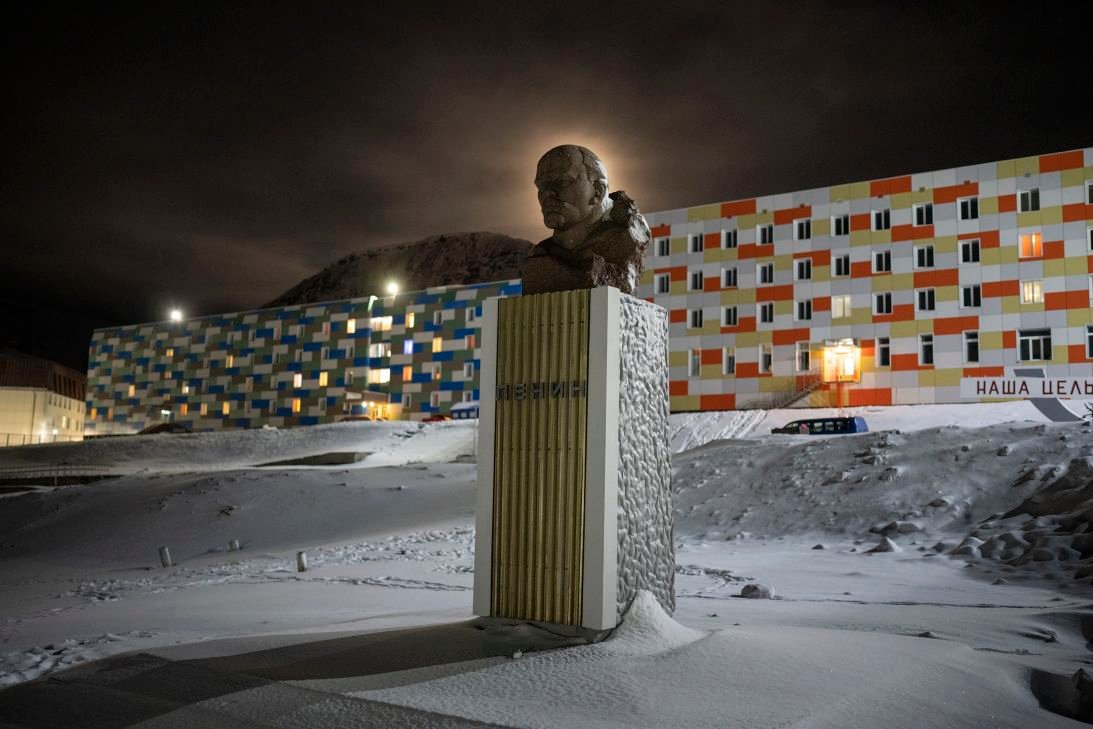
Barentsburg, a mining and research outpost on Svalbard, is almost entirely populated by Russians and is dominated by a huge bust of Vladimir Lenin.
Russia’s actions in Svalbard have further escalated tensions. In 2023, a military-style parade was held in Barentsburg with a convoy of trucks and snowmobiles carrying Russian flags and a low-flying helicopter, for which the Norwegian aviation authority fined Russia.
Last year, Russian lawmaker Sergei Mironov proposed renaming Spitsbergen the Pomeranian Islands, referring to a group of Russian hunters and trappers who were present on the archipelago centuries ago.
Russia is also using the same language it uses to justify its actions in Ukraine, arguing that it needs to protect Russian speakers on Svalbard, CSIS’s Svendsen said. And it has repeatedly accused Norway of attempting to militarize the islands.
Nikolai Korchunov, Russia’s ambassador to Norway, said Norway was “blurring the boundaries” of the Svalbard Treaty’s provision that the islands should not be used for “military purposes.” Russia has never questioned Norway’s sovereignty, Korchunov added, but is instead “trying to clarify” how it exercises that sovereignty.
Norwegian Secretary of State Petersson rejected claims of militarization, telling CNN that the Svalbard Treaty prohibits the establishment of NATO bases on the islands or their use for military purposes, but that this is “much less the same thing as a demilitarized zone.”
“Svalbard is part of Norway; Svalbard is part of NATO; Svalbard is part of Norwegian defense plans,” he said.
Few believe Russia is paving the way for direct military action. They already have almost everything they want in Svalbard, and they are stretched out in Ukraine, says Andreas Ostagen, a senior researcher at the Fridtjof Nansen Institute in Oslo.
Instead, Russia appears to want to use Svalbard as a place “to show that it will not be pushed aside by Norway or NATO as a whole,” he said.
But it’s not just Russia’s actions in Svalbard that are causing concern. There is also China.
Unlike Russia, China is not an Arctic power, but it has ambitions. In its 2018 Arctic strategy document, it described itself as a “near-Arctic state” and repeatedly mentioned Svalbard. He also has plans to create a “polar silk road,” an infrastructure and shipping corridor across the top of the world.
In 2024, when China celebrated the 20th anniversary of its Ny-Ålesund research station, a Chinese tourism company brought more than 100 tourists to Svalbard. Some waved flags; one of them was wearing a camouflage uniform with a Chinese military emblem.
The development has raised alarm bells in Norway, where there is growing concern about what China wants from Svalbard. Ostagen said there were “warnings from police security and military intelligence about China’s intentions.”
A spokesman for the Chinese Embassy in Norway said China is involved in Arctic affairs “in accordance with international law” and its intentions in the region are to “protect the common interests of all countries.”
There is another important aspect of the growing tension: human-caused climate change.
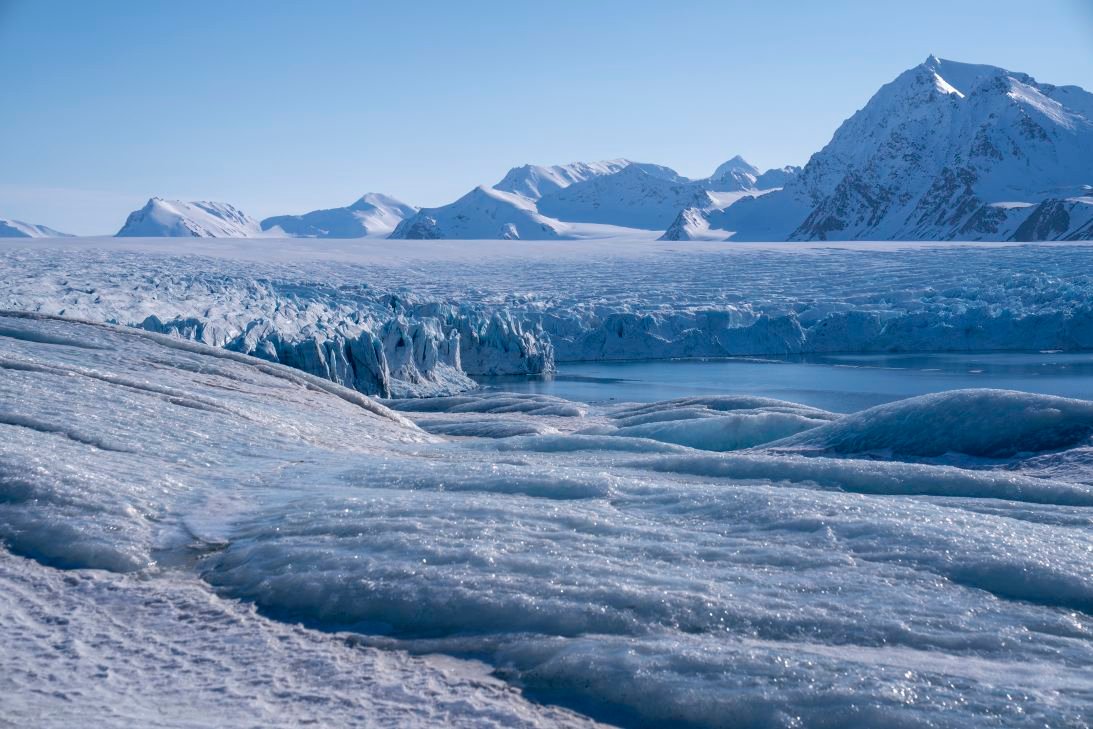
In the summer of 2024, Svalbard shattered previous ice melt records, losing more than 60 gigatons of ice, about 1% of its total, as temperatures rose 7 degrees Fahrenheit above average. Four of the last five years have set new ice loss records.
Climate change is “in many ways the driving force behind the overall interest in the Arctic,” Ostagen said. There is a theory that melting ice will open up economic and strategic opportunities.
The reality is more complex; people have been expecting a flood of ships across the Arctic Ocean and an influx of oil, gas and minerals from beneath its frigid waters for decades, but it hasn’t happened yet. The region remains harsh and inhospitable.
“It doesn’t matter whether melting ice eventually opens up the region,” said Thorbjörn Pedersen, a professor at Nord University’s department of social sciences. Countries’ “fear of missing out” is driving them to have a presence in the Arctic and exert political influence, he added.
And as they do, Norway appears to be tightening its grip on Svalbard.
In 2022, the government changed voting rules to prevent non-Norwegians from voting in Longyearbyen elections unless they had lived on the Norwegian mainland for three years. “This was part of the necessary clarification: Svalbard is not an international zone,” Secretary of State Petersson said.
Norway has also made clear its ambitions to mine the vast stretch of Arctic seabed around Svalbard and beyond. Russia opposed the plan: “We would like to remind the Norwegian side once again that it does not exercise unconditional sovereignty” over Svalbard, Russian officials said at a 2023 briefing.
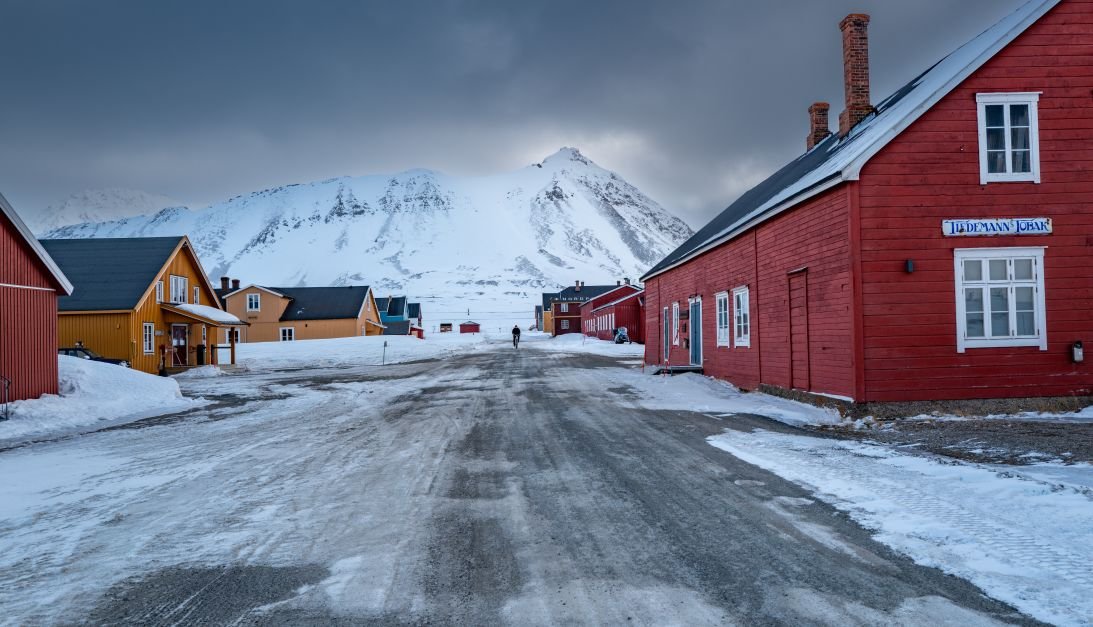
This was followed by the removal of Chinese lions, along with national symbols, from other countries’ buildings in Ny-Ålesund. “There is no Chinese research station on Svalbard,” Petersson said. “There’s a Norwegian research station there with Chinese tenants,” he said. “It’s a difference with a difference.”
For now, Norway is confident it can “maintain a certain level of stability in this region,” Petersson said.
But the world is changing quickly. As Trump repeats his claims that the US should own Greenland, the NATO alliance comes under increasing pressure and countries increasingly seek to position themselves as strong Arctic powers in a rapidly changing region, the future appears less and less certain.
Countries may begin to think that “what matters now is power and your ability to assert that power,” Ostagen said, “not necessarily the norms and laws that we have established over the last century.”
CNN’s Julian Quinones contributed to this report.