


image source, Getty Images
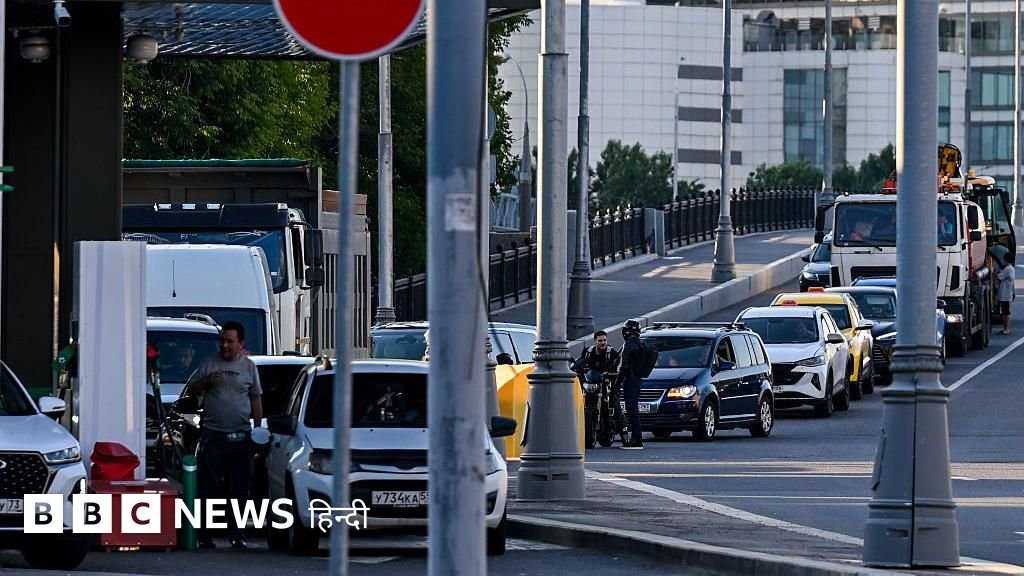
image caption, This photo shows a gas station in Moscow, where there is a long line.
published 2 hours ago
Reading time: 6 minutes.
Russia sells oil to many countries around the world, but is currently facing an energy crisis itself.
According to the AP news agency, long lines at gas stations in Russia are constantly growing. At the same time, there is also growing frustration and uncertainty among people as months of Ukrainian attacks have targeted oil refineries and affected fuel supplies across the country.
Fuel rationing has begun in many regions. There are hours-long queues of cars on the roadsides.
A viral video on social media shows drivers expressing surprise at seeing these long queues. Many people are also expressing anger over empty gas stations and rising prices.
Continue reading
The mayor of the Siberian city of Irkutsk even had to order portable toilets for the convenience of people standing in line.
This fuel crisis is considered unprecedented for Russia, one of the world’s largest energy-producing countries.
Russian President Vladimir Putin also admitted that “problems remain for both motorists and businessmen. There are still queues at gas stations.”
According to the Russian government news agency TASS, Russian oil companies keep fuel prices at their gas stations within inflation limits, but there is some variation in prices at private gas stations. Deputy Prime Minister Alexander Novak said that this situation will be brought under control in the near future.
image source, Getty Images
image caption, Motorists in Russia openly complain about oil shortages
Prices are rising
“If we talk about the impact of these problems on prices, we see that our vertically integrated companies keep prices under control,” he said at the Financial Congress of the Central Bank of Russia.
Farmers in Russia’s grain-producing regions are worried about whether they will be able to harvest their crops as a fuel crisis caused by drone attacks in Ukraine has hit oil refineries and warehouses and disrupted daily life, according to news agency Reuters.
Ukraine is trying to put pressure on Moscow for peace by attacking Russian energy infrastructure.
The damage caused by the attacks has increased pressure on fuel supplies to oil-rich Russia.
This situation has forced drivers to come together to prepare such maps and share information about which gas stations have fuel and where the short lines are.
Videos going viral on social media even show fights between drivers while waiting to refuel.
One video, titled “The Ultimate Luxury 2026,” shows a man slowly pouring gasoline into his lawn mower from a can.
He jokingly says: “What wealth. Who can afford it now?”

image source, Getty Images
image caption, Reuters news agency reported that Russia also imports oil from India.
oil import from India
Reuters said in another report that Russia is importing oil from India to cope with this crisis.
According to Reuters, “To cope with the fuel crisis, Russia has begun importing gasoline from India by sea. Two industry sources provided the information Wednesday.
The Kremlin said on Tuesday that Russia was maintaining contacts with other countries and negotiating fuel imports at reasonable prices.
Reuters in its report writes that the Russian Ministry of Energy and the Indian Ministry of Oil did not immediately respond to a request for comment on this.
An oil industry source told Reuters that at least 60,000 tons of gasoline were sent to Russia from India. Another source told Reuters that two tankers with a capacity of between 30,000 and 40,000 tons had been sent.
According to a third source, Russia plans to import a total of four million tons of gasoline monthly from different countries.
This also includes neighboring Belarus, which already exports fuel to Russia.
Daily gasoline consumption in Russia in summer is at least 1,100,000 tons, since the demand for fuel is very high at this time of year.
Belarus nearly tripled its gasoline shipments to Russia by rail to more than 70,000 tons in the first half of June compared with the first half of May, according to Reuters.
The American newspaper Wall Street Journal wrote in one of its reports: “Ukraine has been attacking Russia’s energy infrastructure for years, but now the number and firepower of Ukrainian drones and missiles has increased. Thanks to this, Ukraine can now attack even distant oil refineries such as Tyumen in Siberia, which is about 1,200 miles away. These increased capabilities made possible a major attack on June 18, in which Ukraine destroyed Moscow’s main oil refinery, breaching several layers of air defenses.”
image source, Getty Images
image caption, Kremlin spokesman Dmitry Peskov said on Tuesday that Russia is preparing to begin importing fuel for the first time in decades.
How did the crisis worsen?
In its report, the WSJ wrote: “This is seen as the turning point of the current fuel crisis.” As of June 20, about 28 percent of all Russian oil refining capacity was closed. This assessment was made by Sergei Vakulenko, the former head of strategy at the Russian oil company Gazprom Neft, and now a senior fellow at the Carnegie Russian Eurasian Center in Berlin.
He said: “All of this has happened because of the increase in the number of drones that Ukraine can launch. Now the problem is not only logistics or market imbalance. Now the real problem is the actual shortage of fuel.”
Kremlin spokesman Dmitry Peskov said on Tuesday that Russia was preparing to start importing fuel for the first time in decades. He said Moscow was negotiating with many countries, but did not name the countries.
Analysts say only remote but large refining centers such as India can meet this huge shortfall. However, delivery of such imports to Russia by sea will take several weeks.
This will put additional pressure on Russia’s budget, which is already under severe pressure from military spending.
Russia, once one of the world’s leading exporters of petroleum products, banned the export of gasoline and jet fuel for months after Ukrainian attacks intensified.
On Sunday, President Putin said he was also considering banning diesel exports.
Kyrgyzstan late on Wednesday asked Kazakhstan, Belarus, Azerbaijan, Uzbekistan and Turkmenistan for help in ensuring stable fuel supplies.
Kyrgyzstan, with a population of about 7 million, imports more than 90 percent of its gasoline from Russia. But Russia itself is now facing a serious fuel crisis.
image source, Getty Images
image caption, India has not officially said anything about oil sales to Russia.
How long will the crisis last?
President Vladimir Putin said that gasoline reserves in Russia are only four percent less than in the same period last year.
Analyst Chris Weafer says: “They say there is ample fuel supply across the country. The problem is that the fuel is in the wrong place.”
This means that there is a need to replenish supplies in areas where there is a shortage of fuel.
Weafer said that in such a huge country as Russia, this work cannot be done overnight. “There should be enough fuel, but it may take weeks to get it to where it is needed,” he said.
“That’s a huge logistics operation in itself,” he said.
According to the AP news agency, repairs to the Moscow refinery, which previously provided 40 percent of the capital and region’s fuel needs, could take at least three months.
Published by the BBC News Team.