

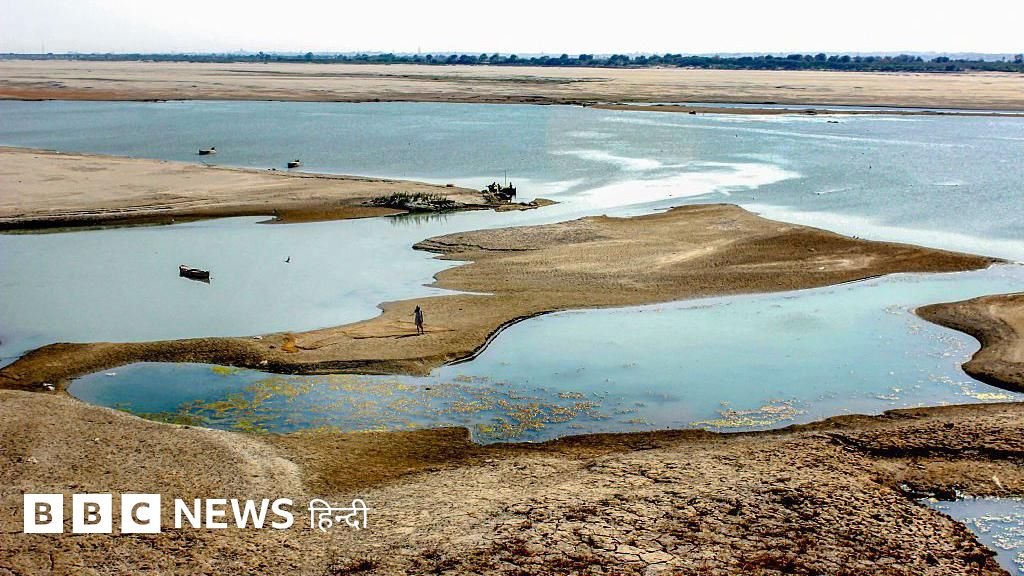

image source, Getty Images
image caption, After the attack on Pahalgam, India unilaterally suspended the Indus Water Treaty (file photo)
published June 30, 2026
Reading time: 6 minutes.
Pakistan has warned that it does not want any “confrontation” or “disputed” situation with India, but any attempt to limit the country’s water resources under the Indus Water Treaty will be considered an “action of war”.
Addressing an international seminar organized in Islamabad on the Indus Water Treaty on Tuesday, Deputy Prime Minister and Foreign Minister of Pakistan Ishaq Dar said that India has no grounds for unilateral suspension of the Indus Water Treaty and there is no scope for it in international law.
India has not yet responded to Ishaq Dar’s latest statement.
Notably, in April 2025, the Indian government unilaterally suspended the Indus Water Treaty as a retaliatory move, accusing Pakistan of attacking Pahalgam.
Continue reading
Pakistan rejected India’s move and approached the International Court of Arbitration.
The arbitral tribunal, located in The Hague, Netherlands, clarified that India cannot unilaterally suspend the treaty.
But India rejected this decision and announced a continued suspension of the Indus Water Treaty.
Following the attack on Pahalgam and India’s suspension of the Indus Water Treaty in April last year, Pakistan’s National Security Committee said that any attempt by India to stop or divert water supply to Pakistan would be considered a “military action.”
On June 5, an Indian Foreign Ministry spokesman said in a statement that the Indus Waters Treaty would be suspended until Pakistan “completely ceases cross-border terrorism.”

image source, Getty Images
image caption, Ishaq Dar said that any attempt to deprive Pakistan of water rights will affect regional peace.
What did Ishaq Dar say?
Pakistani Deputy Prime Minister Ishaq Dar, quoting a statement by the National Security Committee, said that Pakistan still stands on the same position and “will ensure that its rights are not violated.”
He said: “Pakistan has always talked about choosing the path of dialogue, diplomacy and mechanisms agreed upon by both sides to resolve differences. However, there should be no misunderstanding in this matter that any attempt to deprive Pakistan of the water rights granted under the Indus Water Treaty will have profound and far-reaching consequences for regional peace and security.”
Apart from representatives of the Pakistani government, leaders and experts from other political parties also participated in the seminar held on Tuesday.
On this occasion, Pakistan’s Indus Water Commissioner Syed Mohammad Mehar Ali Shah said that since April last year, he has written four letters to his Indian counterpart on the issue of changes in the flow of Chenab River, but no response has been received from them so far.
He also said that fluctuations in water flow in the Chenab River are not a “technical problem” but a “strategic threat”.
Pakistan at risk due to suspension of Indus Waters Treaty
In his address, Deputy Prime Minister of Pakistan Dar said that “since April 2025, Pakistan has witnessed a number of activities that have caused grave concern. These include sudden and unusual fluctuations in water flow in the Chenab and Jhelum rivers, as well as efforts to continually expand infrastructure capable of controlling the waters allocated to Pakistan under the Indus Water Treaty.”
He said: “We must also be aware of the price that may have to be paid if the international agreement regarding rivers passing through international boundaries is undermined, shared water resources are used as weapons, the path of confrontation is taken and international agreements are violated.”
He said this is not just a legal debate for Pakistan: “Water is the basis of life for more than 25 million people. Our agriculture, our security, our energy production and our economic development depend on the uninterrupted flow of water.”
Ishaq Dar said protecting rivers is “important to our national security.”
He said, “We seriously advise India to refrain from creating conditions of war, from using shared water resources as a means of dispute and from threatening the peace and security of our region.”
image source, Getty Images
image caption, The Chenab Bis tunnel project was recently announced.
India’s river plans
India recently announced the Chenab Beas Tunnel Project, under which around 19 lakh acre feet of water from the Chenab River can be diverted into the Indian Beas canal system.
India has also invited tenders to companies for this project.
On May 22, the BJP wrote on its Facebook account that “after the suspension of the Indus Water Treaty, India will finally harness the potential of its western rivers for hydropower, water security and strategic purposes.”
According to the BJP, the length of this tunnel will be 8.7 kilometers, which will allow excess water to be diverted from the Chandra river towards the Beas.
Indian government body National Hydro Electric Power Corporation announced a tender last month to build a tunnel in Himachal Pradesh.
This tunnel will be constructed in Koksar district of Himachal Pradesh.
According to Indian news agency ANI, the Chenab Bees Link project will be built at a cost of Rs 2,620 crore.
A few days ago, Himachal Pradesh Governor Kavinder Gupta also spoke about this project and said that this project is in the national interest of India and through this the country will be able to fully utilize its water resources.
According to ANI, while talking to reporters in Shimla, Governor Gupta said that “The Chenab-Bis Tunnel Project is an important step for national interest. India’s water should be primarily used to meet the needs of its people and states.
Pakistan filed a case before the relevant tribunal, calling these projects a serious violation of the Indus Water Treaty.
On the other hand, India seems to be firmly in its position.
Indian Water Resources Minister C.R. Patil had said a few weeks ago that “this treaty has been suspended and ever since Prime Minister Modi took this decision, all possible efforts are being made to ensure that not a single drop of water reaches there (Pakistan).”
C.R. Patil said, “As per the instructions of the Prime Minister, Home Minister Amit Shah is himself monitoring the issue and actively ensuring its implementation.”
Published by the BBC News Team.