

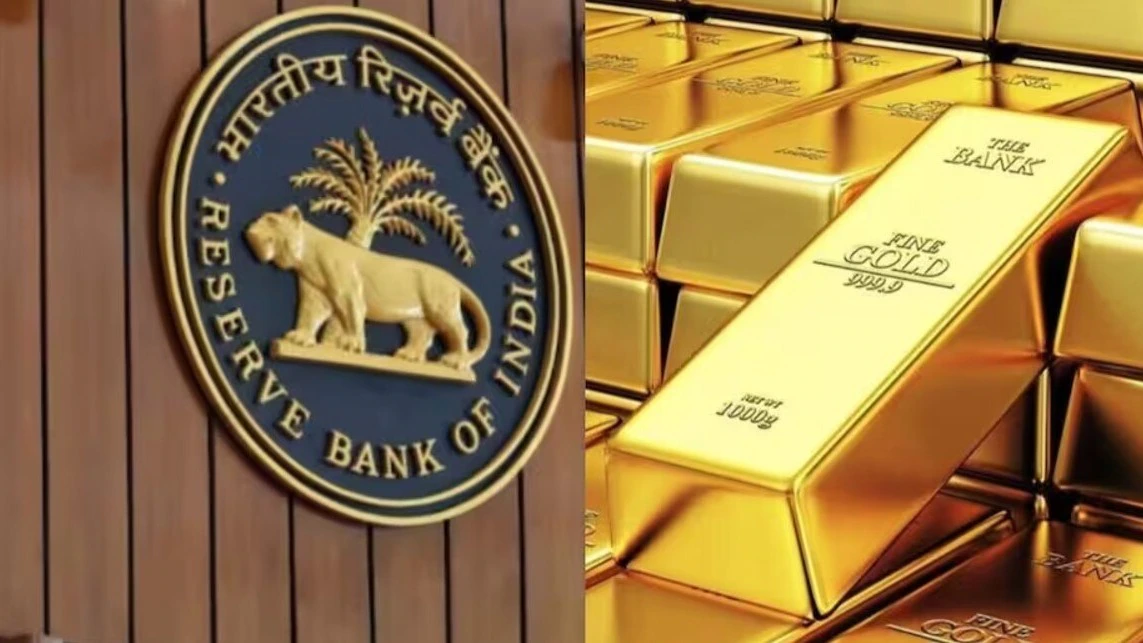
There was a huge decline in India’s foreign exchange and gold reserves. The country’s foreign exchange reserves fell by $5.654 billion to $666.933 billion in the week ended June 26, 2026, while foreign exchange reserves increased by $963 million to $672.587 billion in the previous week, according to new data from the Reserve Bank of India (RBI).
read more
The RBI said foreign exchange assets, which make up the bulk of foreign exchange reserves, fell by $150 million to $541.067 billion. In foreign currency assets, fluctuations in the value of non-US currencies such as the euro, pound and yen also impacted foreign exchange reserves.
Huge decline in gold reserves
In addition, the largest decline in gold reserves was recorded in a week. Gold reserves fell by $5.394 billion to $102.536 billion. At the same time, the value of Special Drawing Rights (SDR) decreased by $89 million to $18.558 billion. Moreover, India’s reserve position with the IMF also decreased by $21 million to $4.7772 billion.
Foreign exchange reserves reached record high in February
It is worth noting that in the week of February 27, 2026, India’s foreign exchange reserves stood at a record level of $728.494 billion. However, following this, due to increased tensions and conflicts in West Asia, the rupee came under pressure, following which the RBI took a number of measures to curb the fall of the rupee, including selling dollars. Because of this, there was a reduction in foreign exchange reserves.
Why did they reduce the gold reserves?
Apart from this, Prime Minister Narendra Modi on May 11 appealed to the people to reduce foreign travel to reduce the crisis in the country. Reduce the use of petrol and diesel vehicles and also stop buying gold so that foreign spending can be reduced as much as possible and import costs can be reduced. After this, there was a huge increase in the import duty on gold, due to which the import of gold decreased and there was a decrease in gold reserves.
—- End —-