

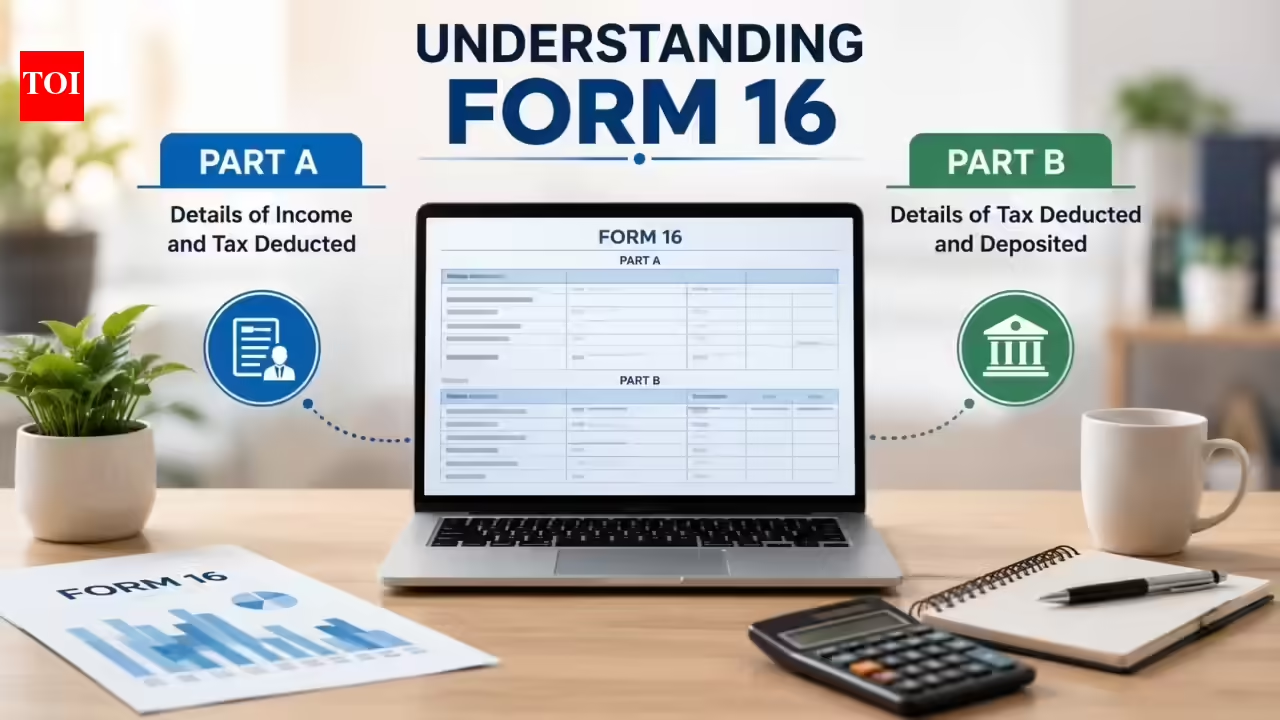
Form 16 Part A contains information about taxes withheld and paid by the employer on behalf of the employee. (AI image)
Filing of ITR in FY 2025-26. For salaried taxpayers, the process of filing Income Tax Return or ITR starts with Form 16. This is the most important document containing details of your salary income. The deadline for filing ITR for salaried taxpayers is July 31, 2026. If you are confused about what details your Form 16 contains and what you should check first, we can help you.
Understanding Form 16:
Form 16 is divided into two parts: Part A and Part B.Part A provides details of taxes withheld and deposited by the employer on behalf of the employee. It includes the employee’s PAN, employer’s TAN, service period and quarterly TDS summary. “Taxpayers should check whether the TDS reported under Part A appears in Form 26AS and AIS. Any material discrepancies should be verified before filing the ITR,” says Siddharth Deb, Tax Partner, EY India.Part B contains detailed payroll and tax calculations. It records details of salary income, benefits, deductions and taxable salary income received on which tax is calculated.Also read | Filing ITR: Which tax return form is right for you? Explanation of Eligibility for ITR-1 to ITR-7For example, an employee’s gross wages may be reduced by qualifying benefits and deductions before they reach taxable income. Taxpayers should check these numbers against their paystubs and other supporting documents.“Part A helps salary taxpayers ensure that taxes withheld by the employer have been deposited with the government, and Part B explains how salary income and tax liability were calculated. Reviewing both sections along with Form 26AS and AIS can help ensure accurate reporting and reduce the likelihood of notices, refund delays or subsequent changes,” he says. 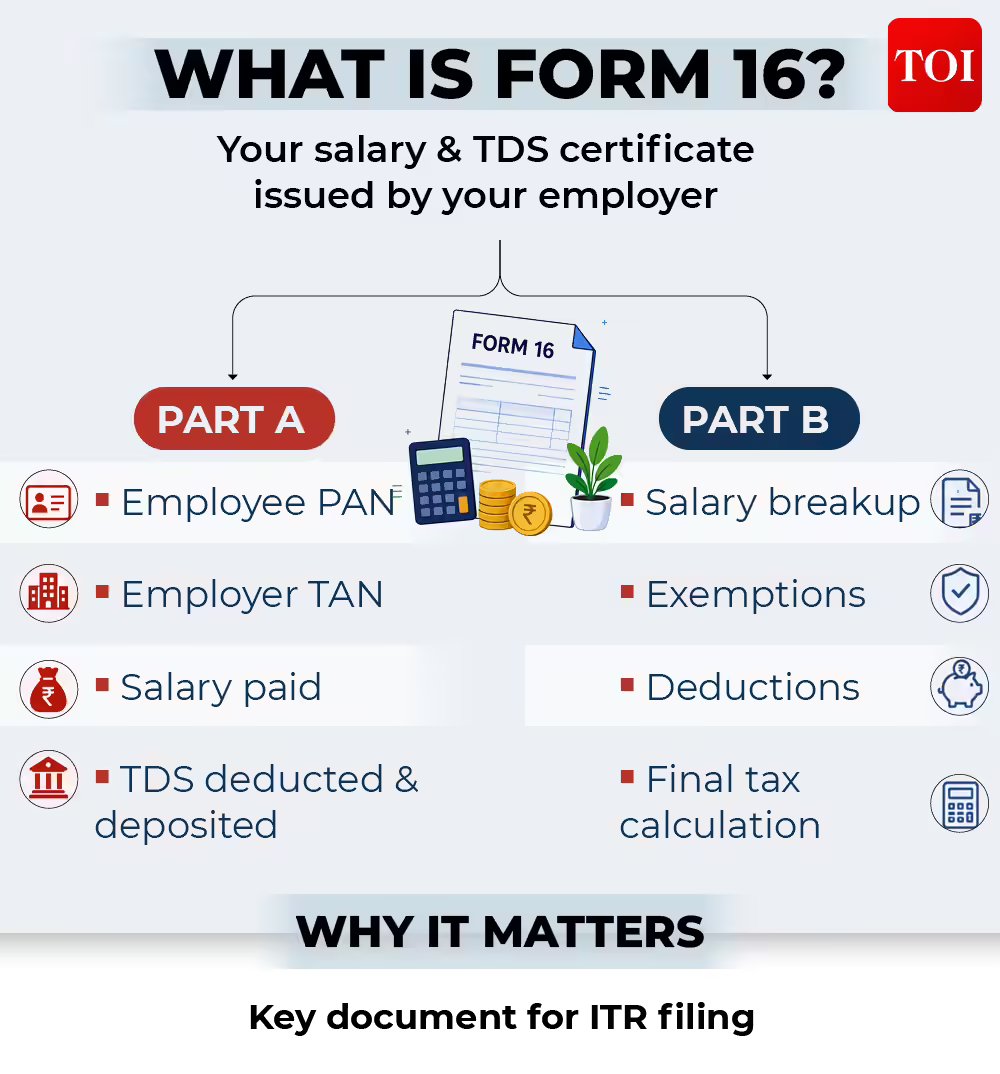
What is Form 16?
Form 16: Key Verification
According to Siddharth Deb, one of the key checks is the tax treatment that the employer takes into account when calculating TDS.
- In Part B of Form 16, taxpayers can find the field “Section 115BAC(1A) Waiver?” If the answer is No, it means that the employee has opted for the new income tax regime for TDS purposes.
- Conversely, “Yes” will mean that the employee has opted for the old income tax regime for TDS purposes.
One important thing the tax expert points out is that the tax treatment applied by the employer for TDS purposes does not necessarily determine the treatment when filing ITR.Also read | Filing ITR for FY 2025-26: How to calculate taxes under old income tax regime – explained “Employee taxpayers can either continue or change their tax treatment at the time of filing the ITR as per the provisions of the Income Tax Act,” he says.Siddharth Deb also advises employees receiving taxable benefits to review Form 12BA, if applicable. “Individuals who have changed employers during the year should ensure that salary income reported in multiple Form 16s is properly consolidated and avoid duplication of benefits. Income such as bank interest, dividends, rental income or capital gains may not be reported in Form 16 and must be accounted for separately while filing ITR,” he says.Also read | ITR Filing for FY 2025-26: Old and New Income Tax Regime – How Salary Taxpayers Can Reduce Tax Expenses