

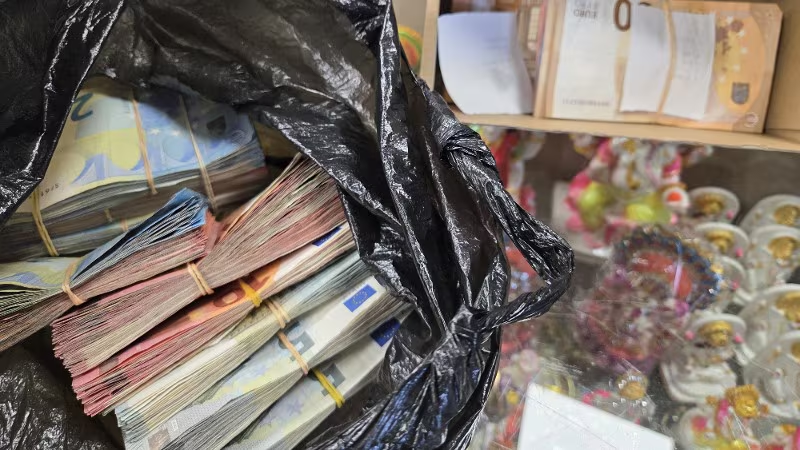
The arrests involve a 55-year-old man from The Hague and a 51-year-old man from Rotterdam. In addition to money laundering, both are now also suspected of importing, transiting and storing drugs, falsifying documents and participating in a criminal organization. To launder money, the suspects used a special form of underground banking: the so-called cash compensation model. In this case, criminal money is transferred into non-cash form and hence laundered through the preparation and use of false invoices. The suspects came to the attention of the police as a result of a previous search. During the investigation, phones and laptops were seized, among other things. The information the police found led to further investigation.
The result: new suspects, new searches and more evidence. Residential and business premises, as well as bank accounts of various companies, were seized. Two suspects are under arrest and will be brought before the investigating judge on July 17, 2026.
Money laundering contributes to crime
Billions of euros worth of criminal money are laundered every year in the Netherlands through underground banking. The fight against shadow banking is a priority for the OS and the prosecutor’s office, as it is an important tool in the fight against serious and organized crime. As criminal money and criminal influence permeate legitimate economies and societies, the consequences of money laundering and revenue erosion become increasingly apparent. The Underground Banking Task Force, a partnership between police and prosecutors, continues to combat this phenomenon.
From cash to non-cash money
This Monetary compensation model It involves exchanging money from crimes for money from apparently legitimate companies, often in sectors where cash is used frequently. This is done through fictitious business transactions. This creates a cash flow that appears to be of legitimate origin, when in fact the money comes from criminal activity.
This method of money laundering often involves companies from labor-intensive sectors such as construction, cleaning, transport or security. In these industries, companies often send each other invoices for personnel or work. Criminals take advantage of this by issuing false invoices and including multiple companies as links in the flow of money. Each new link makes it more difficult to trace the origin of money.