
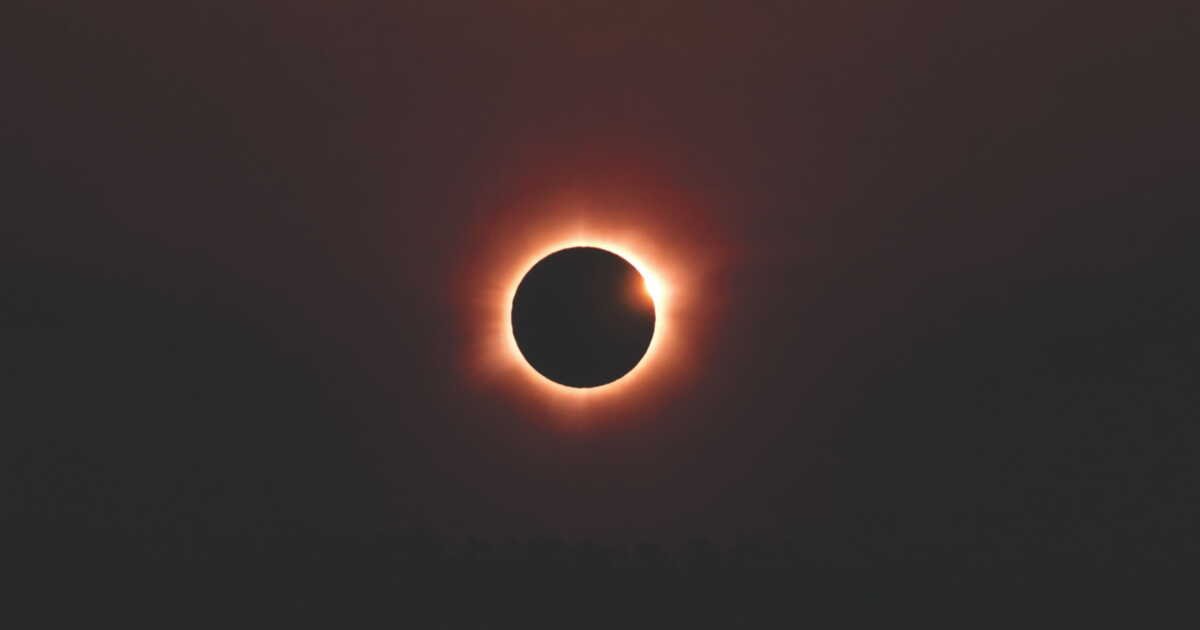
For all astronomy lovers, a rare phenomenon will occur on August 12th. After all, according to experts, there will be a total solar eclipse, short-lived and visible only in certain regions, while a partial, longer one will cover about a quarter of the planet.
This celestial spectacle will begin in Russia around midday before crossing the Arctic Ocean to the east. The eclipse will then pass south of the North Pole before reaching northeast Greenland shortly after 4 p.m. local time. The Moon’s shadow will finally pass along the east coast of Greenland at a speed of more than 3,400 kilometers per hour.
How long will the eclipse last?
The fullness will last approximately 2 minutes 18 seconds as the shadow crosses Greenland and reaches the Atlantic Ocean. “It will then reach Iceland, where the eclipse will be visible from more densely populated areas. For now, it will only be seen in small villages, research stations and a few people who have come specifically to observe it.”disclosed New scientist.
In Reykjavik, the full picture will be visible for just over a minute at 17:48. local time. It should be noted that this will be the first total eclipse visible in Iceland since 1954, and the last until 2196. After touching the west coast of Iceland, the total eclipse will cross the ocean again and reach the coast of northern Spain shortly before 8:30 p.m. local time, touching northeastern Portugal and crossing the Balearic Islands off the east coast of Spain before sunset and the end of the eclipse.
How to safely watch a solar eclipse?
Total eclipses provide a valuable opportunity to observe the solar corona and try to unravel its many mysteries, both for scientists and for people who want to be interested in it. Therefore, if you are in an area where the eclipse will be visible, you will need to wear special glasses to view it safely, or use a solar filter when directly viewing the Sun to avoid eye damage.
If you don’t have one, there are several solutions for viewing the eclipse without looking directly at the sun, such as using a pinhole camera or even projecting natural shadows to recreate the shape of the sun as the moon passes. A partial solar eclipse will be less impressive because the solar corona will not be visible and the brightness and temperature of the surrounding environment will not drop as much. It is still preferable to wear safety glasses for observation.