

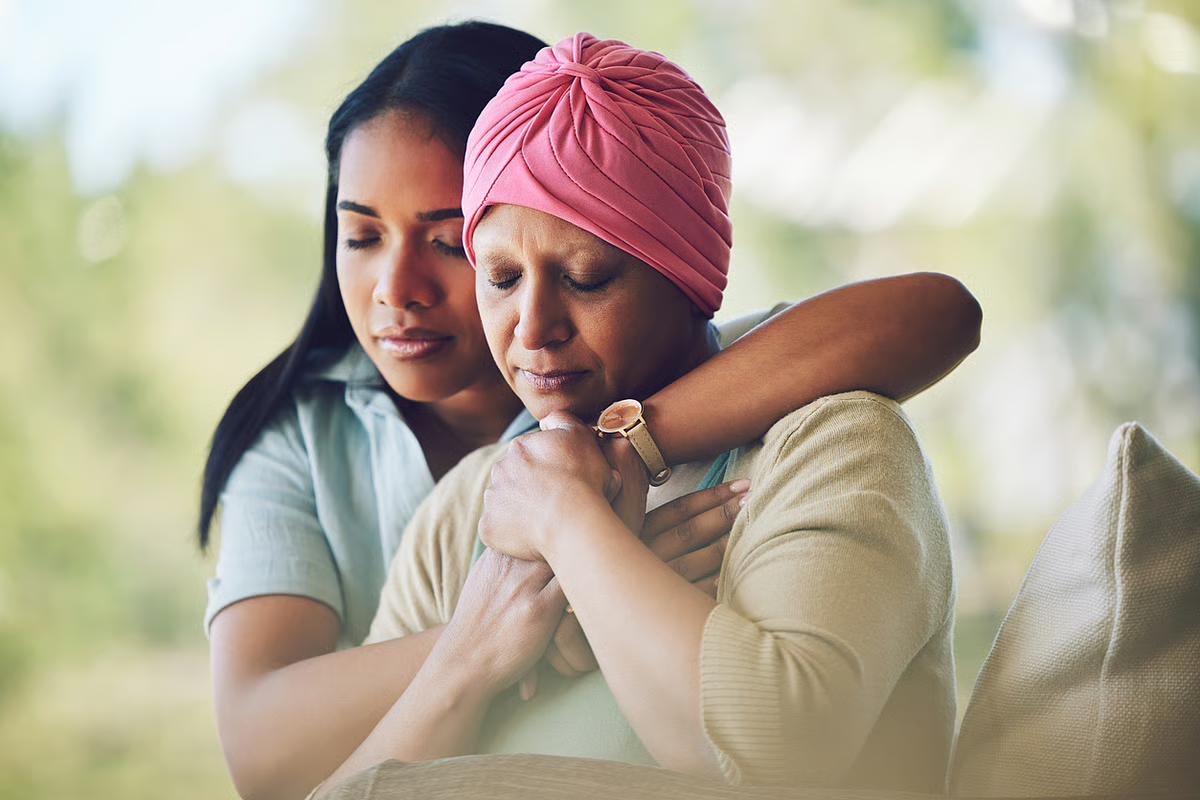
Almost one in five people in the world will develop cancer in their lifetime, but the effects of the disease will extend far beyond those diagnosed with cancer. According to a new joint report by the World Health Organization (WHO) and the International Agency for Research on Cancer (IARC), published on July 8, 2026, about 92 percent of the world’s population will develop cancer either due to their own diagnosis or because of the diagnosis of a close family member.
The report describes cancer as a growing global health, social and economic crisis affecting families and communities around the world. While advances in prevention, diagnosis and treatment have improved outcomes in many countries, the report warns that survival is increasingly dependent on geography and access to health care.
The report estimates that the cancer burden has already reached unprecedented levels. In 2024, more than 20.6 million people were diagnosed with cancer worldwide, including 19.5 million cases (excluding non-melanoma skin cancer).
Among men, lung cancer was the most commonly diagnosed cancer, accounting for about 1.6 million new cases, followed by prostate cancer with 1.5 million cases.
Among women, breast cancer remains the leading cancer with 2.4 million new diagnoses, and lung cancer ranks second with approximately 1 million cases.
Colorectal cancer was the third most common cancer among both men and women, with an estimated 1.1 million new cases among men and 900,000 among women.
The report also highlights the ongoing burden of childhood cancer. Each year, approximately 400,000 children and adolescents aged 0–19 years are diagnosed with cancer, with a large proportion of cases occurring in low- and middle-income countries.
9.7 million deaths worldwide, premature deaths rising
Cancer is estimated to cause 9.7 million deaths worldwide in 2024, including more than 4.8 million deaths among adults aged 30–69 years, highlighting the heavy burden of premature mortality.
Cancer is becoming one of the leading causes of early mortality worldwide, the report authors note. Around one in nine men and one in 13 women are expected to die from cancer before the age of 75.
Progress towards global SDG targets is also lagging. Between 2010 and 2019, only 12 countries were on track to meet the Sustainable Development Goal of reducing premature deaths from noncommunicable diseases, including cancer, by a third by 2030.
Although some countries have made progress, 48 countries are experiencing an increase in premature deaths from cancer. WHO Global health estimates for 2021 showed that cancer is already the leading cause of premature death in 41 countries, the second leading cause in 37 countries and the third leading cause in 47 countries.
Cancer also accounts for 16.5 percent of all deaths worldwide, making it the second leading cause of death worldwide after cardiovascular disease.
2.45 million children are orphaned by cancer
The effects of cancer extend beyond patients and deaths, affecting entire families. An estimated 2.45 million children were orphaned worldwide in 2020 due to cancer deaths among women and men, including 1.04 million children who lost their mothers and 1.41 million children who lost their fathers.
Breast cancer accounts for one in four cases of maternal loss among children, and cervical cancer accounts for one in five cases. Nearly half of these new maternal orphans lived in Asia, and more than a third lived in Africa. India, China, Nigeria, Indonesia, Ethiopia and Pakistan together account for about 40 percent of maternal orphanhood cases worldwide.
The burden of cancer is not limited to health consequences. The disease has a lasting emotional, social and financial impact on patients and their families, according to a WHO global study examining the lived experiences of people with cancer in the report. More than half of those surveyed reported mental health problems.
In India, this was also highlighted in the recent India Accidental Deaths and Suicides Report 2024 published by the National Crime Records Bureau. According to WHO, at least 45 percent faced financial difficulties. Almost all caregivers reported stress related to unpaid caregiving, prolonged grief, or social isolation.
Cancer can also push households into financial crisis. High medical costs, loss of income, expensive medications, care travel and child care costs often create long-term financial pressure. Thus, the new report names cancer as the leading cause of health care failure, even in countries with universal health coverage.
Cancer rise exacerbates global inequality
The report projects that annual cancer cases will increase 66.7 percent to 35 million by 2050, driven by population growth, an aging population and changing exposure to risk factors. However, this increase will not affect all countries equally.
High-income countries now report higher cancer rates, in part because cancer is detected earlier and populations live longer. These countries also experience better survival rates as patients are more likely to receive timely diagnosis and treatment.
In contrast, people in low- and middle-income countries continue to die disproportionately from cancers that are treatable in wealthier countries, as access to essential services such as pathology, imaging, surgery, radiation therapy and drugs remains limited.
For the first time, WHO-IARC presented country-comparable estimates of five-year survival rates for breast and childhood cancers, revealing stark differences between countries. More than 85 percent of women diagnosed with breast cancer survive at least five years in high-income countries, compared with less than 45 percent in low-income countries.
The gap is even wider for childhood cancer. For children diagnosed with lymphoid leukemia, the survival rate is about 93 percent in Europe and only 19 percent in parts of Africa.
The report identified unequal access to diagnostics as a key factor in these disparities. Almost 47 percent of the world’s population has little or no access to basic diagnostic services, including pathology and imaging.
In sub-Saharan Africa there is approximately one pathologist for every million people, which is about 50 times less than in high-income countries. Access to cancer treatment is also highly unequal. For example, lung cancer surgery is included in public health benefit packages in 96 percent of high-income countries, compared with only 19 percent of low-income countries.
The report warns that these disparities are likely to widen as the burden of cancer shifts towards countries least prepared to respond. While cancer cases are expected to increase by nearly 67 percent worldwide by 2050, in low-income countries the number of new cases is projected to rise by a staggering 133 percent, putting further pressure on already fragile health systems.
According to the WHO-IARC report, the future global response to cancer will depend not only on medical advances, but also on whether countries can ensure equitable access to prevention, early diagnosis and treatment. Without addressing these gaps, where a person lives will continue to play a critical role in whether cancer becomes a survivable disease or a life-threatening diagnosis.