

It was a picture that left a thousand words unsaid. If Casemiro, grinning widely with both hands and holding the trophy, had been covered by Jude Bellingham’s cloak of integrity, in the post-match interview the Brazilian midfielder might have explained why he didn’t deserve the gong.
He was neither the first nor the last to be chosen for Man of the Match at this 2026 World Cup, but the decision to put him on the podium after Monday’s alarming and unconvincing win over Japan was certainly the strangest.
Only Lucas Paqueta’s hamstring pain may have saved Casemiro from being hooked at the break for the second time this tournament after a 45-minute period in which he allowed Kaishu Sano to give Japan the lead, collided with Paqueta and Matheus Cunha – yes, his teammates – in farcical fashion and puffed obnoxiously like a sad caricature of his former self.
That he equalized was no doubt redeeming, but it was preceded by a string of errors that left the pub players red-faced; although Casemiro still looked pleased, talking about the importance of mindset and spirit as he accepted the award.
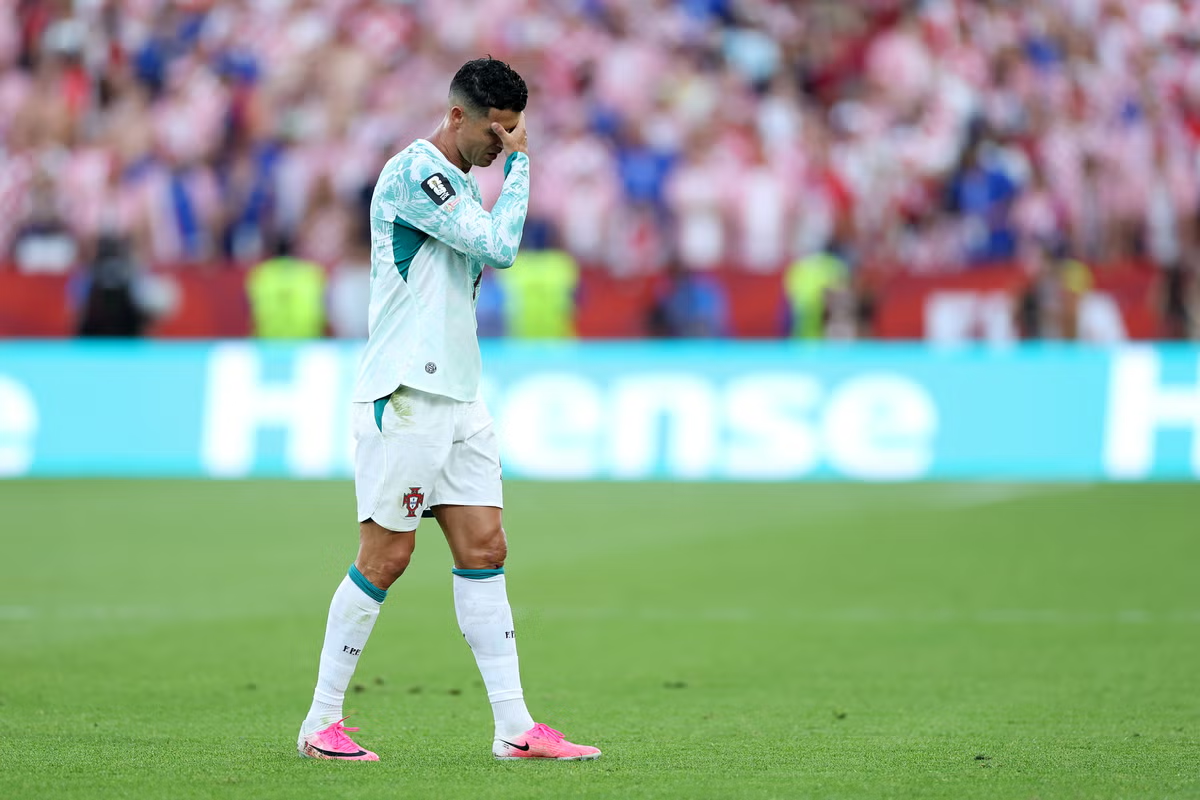
Other confusing nominations followed. Cristiano Ronaldo was praised for his role in Portugal’s nervy win over Croatia in Toronto, despite his only recorded touch in the box being the penalty that equalized before his substitution.
The presentation of the award to Lamina Yamal after Spain collectively demolished Austria 3-0 was also jarring, given Mikel Oyarzabal scored twice and Mark Cucurella had a couple more assists – even if Yamal’s nutmeg run was quite entertaining.
Then there was Bellingham, who at least had the humility to admit he wasn’t worthy of his prize after a tawdry draw with Ghana. “To be honest, I didn’t deserve this,” he said. “It should have gone to one of their guys who defended so well. I had a couple of chances, it was hard to get into the game and I appreciate whoever voted, but it should have gone to one of their guys.”
The problem is that the decision is made by the fans at home, voting early and often online, making what was once a gesture cherished by the players easily at risk of being hijacked for jokes. Many voted for Casemiro to laugh at his terrible start; meeting misdeeds with ridicule.
But more often than not, it serves as yet another example of football becoming more of an individual spectacle than a team sport. The creation of a popularity contest will only increase the number of star players, activating their presence on social media to delve deeper into the strange, twisted concept of modern fandom.
How else can you explain that Lionel Messi won the prize instead of several Cape Verdean heroes in the early hours of Saturday morning? “It was hard work,” Messi said. Perhaps because his opponents had the match of their lives.
It followed Mohamed Salah, who had long remained anonymous, being awarded the tournament’s second man of the match award following Egypt’s hard-fought penalty shootout win over Australia, where he missed a miraculous chance to win in extra time, the only highlight of which was a nonchalant penalty.
Luis Diaz later won the prize for Colombia. He was very good, but it still seemed predestined.
FIFA used a similar process at the previous two World Cups to make fans feel more involved, but this summer it seems more explicit and blatant. This approach has long prevailed in American sports, which is perhaps why no one batted an eyelid.
Take the NBA All-Star Game, for example, where public voting is important in determining the composition of each team.
Again, he favors big names over teams with large followings, sometimes blocking the path of more deserving candidates.
But there’s also a cautionary tale here that football should be mindful of, as the NBA’s ASG represents a huge financial incentive, with contracts including large bonuses and the recognition that players can demand millions more when it comes to future negotiations.
Lamin Yamal receives the award as the best player of the match.
#FIFAWorldCup #SuperiorPOTM pic.twitter.com/c2OtG1P7AD
— FIFA World Cup (@FIFAWorldCup), July 2, 2026
All this gives further reason to believe that the ladders are lining up, the elite are widening their gap – which is in fact very contrary to how, despite such obvious pre-tournament doubts, the expanded format has allowed smaller countries to flourish.
Cape Verde goalkeeper Vozinha or defender Sidney Lopez Cabral, who scored the second goal against Argentina, were more worthy than Messi on Saturday morning.