
Have you ever felt like the world around you is being shaped by events beyond your control?
Is it possible not to feel this feeling at all these days?
If you count yourself among those who feel powerless in the face of modern reality, don’t worry, because there is a series that understands this feeling perfectly.
This is the show Widow Bay. If you haven’t heard of him, ask around. It’s almost guaranteed that someone you know will love it. In fact, no matter how hard you try, you’ll be hard-pressed to find anyone who has experienced the series’ well-balanced blend of horror, comedy, and pathos who isn’t a fan. And for good reason.
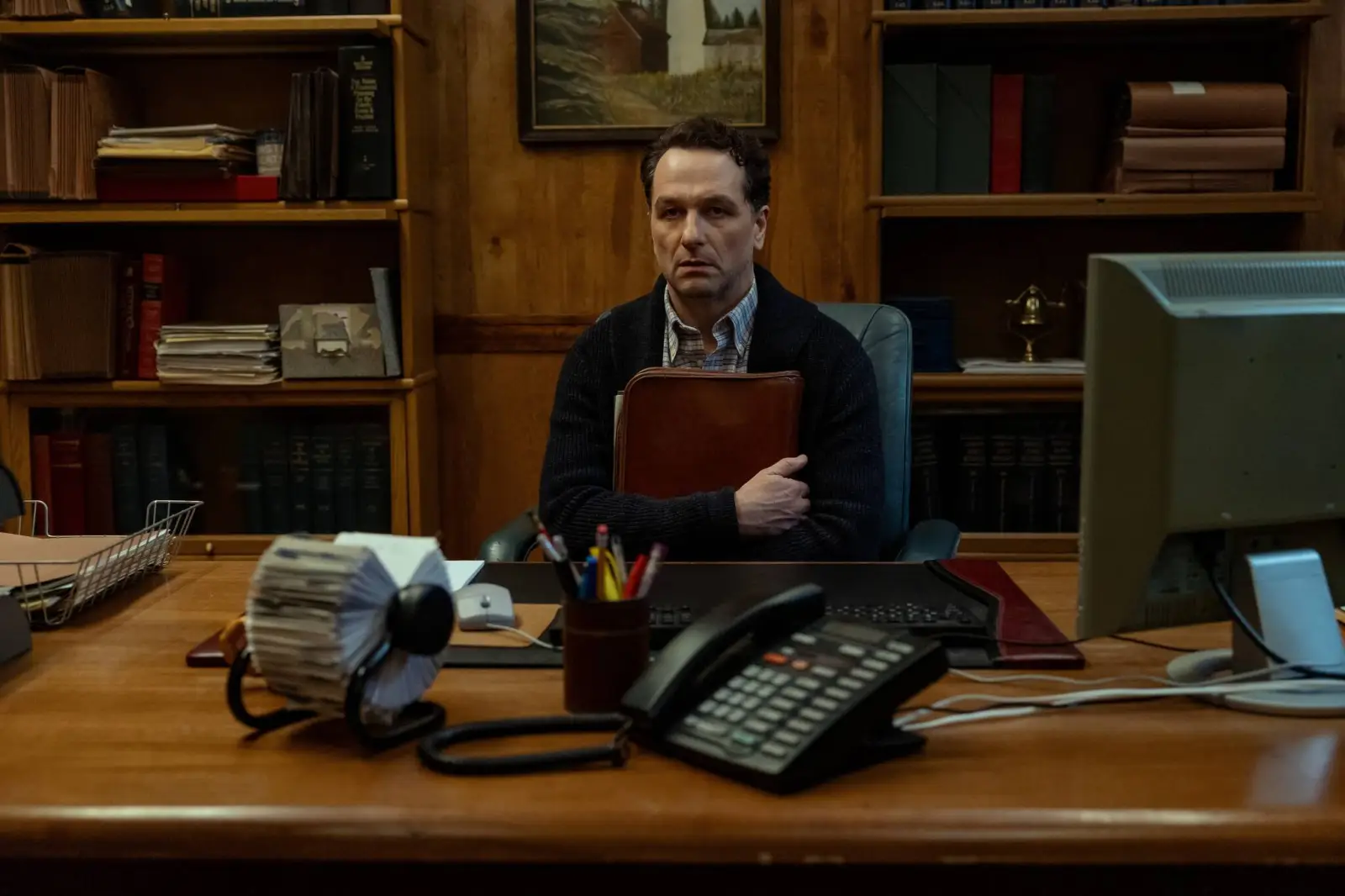
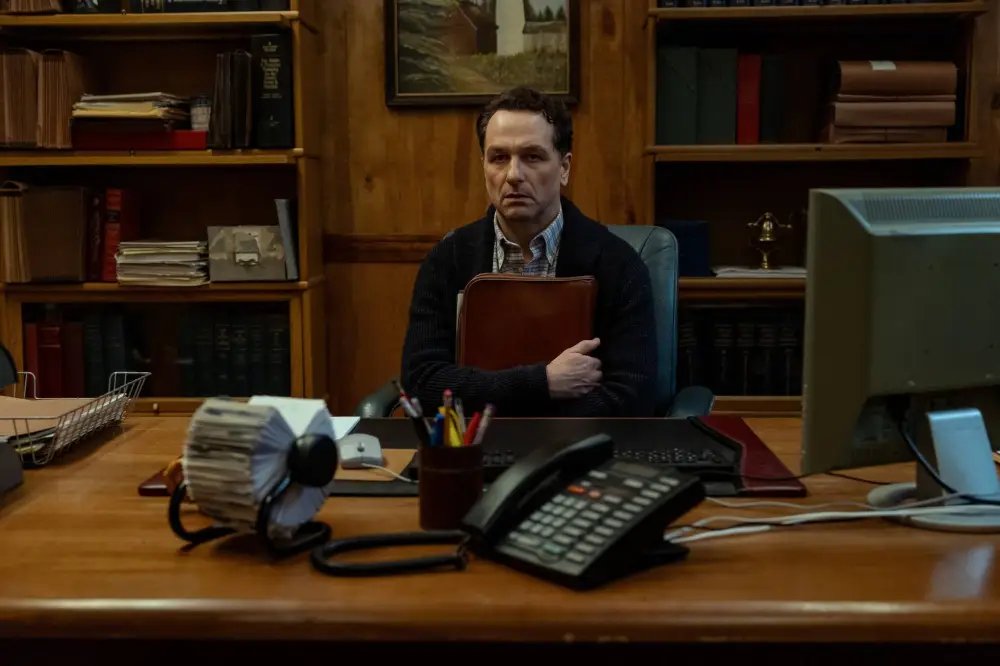
Funny and creepy in every way, the series follows Matthew Rhys as Tom Loftis, the ambitious mayor of the titular island village, whose dreams of turning his community into the next Martha’s Vineyard are met with a generational curse straight from Stephen King.
The Apple TV series has memorable characters, thrills, real scares and some of the most finely tuned comedy on television.
What does Widow Bay However, feeling special isn’t just about being funny, scary or well thought out. Beneath all the eerie events and small-town oddities lies a story about one of the defining anxieties of modern life: the growing suspicion that we cannot control the forces that shape our lives.
This anxiety finds its most vivid expression in the face of Mayor Tom. He starts Widow Bay with fairly simple goals. As mayor, he wants tourists, jobs, economic growth, a future for his community and for his son.
Unfortunately, there is such a little thing as a curse, which he doesn’t even believe in.
The funny thing about curses is that they don’t care whether you believe in them or not. They are going to create their nightmare chaos anyway.
One of the things that makes the series so delightful is the tension between Tom’s confidence and his growing awareness that the dark forces controlling the fate of Widow’s Bay are immune to his good intentions and spirit of courage.
Whether it’s zombie mists, haunted hotels, or ghostly bells, Tom’s attempts to first deny and then control the evil he faces only expose the limits of his power to his face.
And that’s a huge part of what makes this funny, quirky show about a town full of doomed weirdos so resonant.
It is not an exaggeration to suggest that uncertainty and a sense of powerlessness are among the defining experiences of modern life.
We still make plans, build careers, build families and imagine the future. We behave as if effort should be clearly expressed in results. Yet many of us cannot escape the broader cultural sense that the overwhelming forces driving outcomes—pandemics, gas prices, grocery costs, the rise of artificial intelligence, the erosion of political institutions, climate change, global instability and conflict—are greater and less sensitive to our individual intentions than we would like.
Widow Bay gleefully exploits this tension but replaces late-stage capitalism with reanimated serial killers.
The curse in Widow’s Cove operates not as a traditional monster, but as a system. It is inherited, difficult to understand, and largely indifferent to individual intentions and actions. All anyone can do is try to minimize the carnage.
The nightmares surrounding the city, like many of the ones we face every day, are not truly resolved; they reproduce. Tom’s attempts to rationally interact with the world around him have almost no external impact on the forces operating there. He can’t come to terms with the curse. He can’t talk about it. He can’t just work harder and make it disappear.
You’d be forgiven if this sounds familiar to the feeling you get after watching five minutes of every news show on the planet.
The horrors continue. Disturbances are not permitted. There are small victories, of course, but lately they seem to be outnumbered by new crises that most of us feel powerless to influence.
Apple TV
Matthew Rhys is Mayor Tom, who just wants to protect the town of Widows Bay from a curse he doesn’t believe in.
And yet, despite all this, Widow Bay This is not a depressing show. If anything, it’s strangely comforting. That’s where its magic really lies.
This comfort comes from the way it gives form to worries that often seem abstract and impossible to understand.
More importantly, Widow Bay realizes that the value of Tom’s efforts is not measured by whether he ultimately overcomes the curse. He will not become the master of the universe. He does not understand that determination alone can bend reality to his will.
Instead, he keeps showing up.
Perhaps it’s the show’s quiet response to the anxieties that make it feel so timely. Widow Bay does not promise that the forces that shape our lives can be fully understood, controlled, or overcome. If anything, this suggests the opposite.
But it also suggests that our obligations to each other do not disappear simply because the world has become complex, frightening or uncertain.
Tom continues to try to protect his city. He continues to help his neighbors. He continues to work towards a future that he may never be able to cope with.
The curse remains. The fog is rolling in. The ghostly bells keep ringing.
Winnipeg Free Press | Newsletter
And yet he continues to walk.
At a time when so many people feel powerless, there’s something unexpectedly reassuring about this. Not because Widow Bay tells us that we will win, but because it reminds us that meaning does not depend on victory. Sometimes it comes from a refusal to stop worrying, even when victory is far from guaranteed.
And the next morning Tom gets up and goes back to work.
Scott Montgomery is a Winnipeg-based writer and critic with a background in television, comedy, and literature.
arts@freepress.mb.ca