

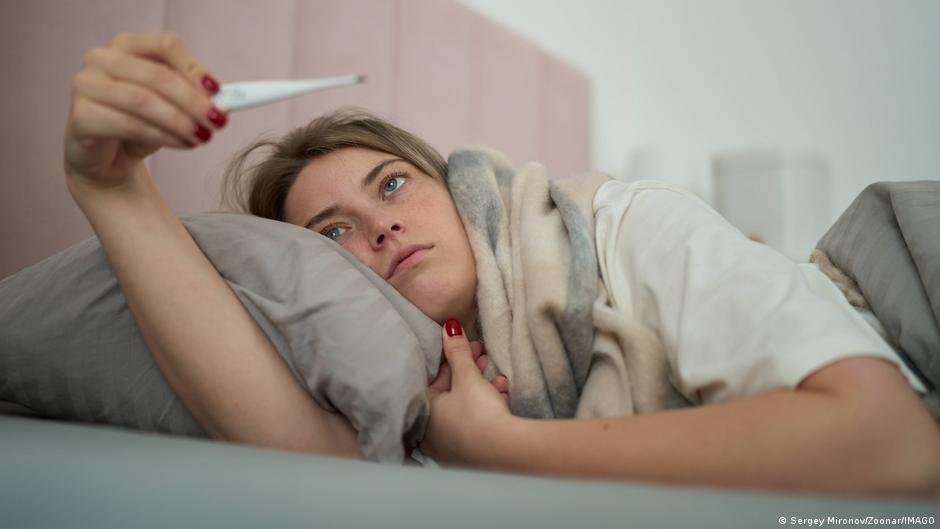
German Chancellor Friedrich Merz this week announced a crackdown on the country’s high number of sick days.
The move follows a study published in January by the Berlin-based IGES institute that found German workers now take an average of 19.5 working days of sick leave per year.
This figure is noticeably higher than approximately 13 days in 2018.
As part of Merz’s proposals, from January next year, workers will no longer be able to receive sick leave by telephone. They must visit the doctor in person and on the first day of illness.
This measure makes it even more difficult to take time off from work due to illness.
Merz said high absenteeism was damaging the German economy, adding that “we can no longer afford this competitive disadvantage caused by long absences from work.”
He called the measures an attempt to restore what he calls “fairness and functionality” to the labor market, allowing employers and insurers to respond more forcefully to repeated absences.
The change is part of a broader package of reforms to health and welfare programs agreed upon by the governing coalition of Merz’s conservative alliance and the center-left Social Democrats.
Lazy Germany: more work is the way to the top?
To view this video, please enable JavaScript and consider upgrading to a web browser that supports HTML5 video.
How does the sick leave system work in Germany?
Germany has one of the most generous sick leave systems in the world.
Employees are entitled to 100% of their salary for up to six weeks of employer-paid sick leave. A doctor’s note is usually required after three days of absence.
After six weeks of sick leave, compulsory health insurance comes into force, paying around 70% of gross salary, with a limit of up to 78 weeks over three years for the same illness.
In addition to preventing workers from losing income due to ill health, the system also promotes proper recovery to prevent the spread of germs at work.
Germany’s system contrasts with that of many other countries.
There are no federal paid sick leave requirements in the United States. Many workers receive none or only a few days, depending on the employer.
In India, paid sick leave often lasts only a few days a year as per labor laws. Many short-term absences are unpaid, and rules vary widely by company, industry, and state.
Domestically, Germany’s sick leave system is often criticized by politicians and business leaders as leading to increased absenteeism, which they say harms productivity and competitiveness.
The German economy is struggling due to growing competition from China, geopolitics and high energy prices, among many other problems. The government is trying to find ways to stimulate economic growth.
Critics of Merz’s reforms, however, argue that the crackdown could stigmatize legitimate illnesses and shift blame for the country’s economic woes to an increasingly aging working-class population.
What are the German government’s pension and labor reforms?
To view this video, please enable JavaScript and consider upgrading to a web browser that supports HTML5 video.
Why has Germany become the “sick man” of Europe?
One of the main reasons for the increase in sick leave is improved reporting, IGES wrote in a report published in January.
This is thanks to the new electronic sick leave system (eAU), which came into full force in 2023.
Doctors now send certificates directly to the insurance company, and employers can receive them digitally, making tracking more accurate.
IGES says many short-term absences that were previously not recorded on paper are now reflected in the data.
Another factor is changing behavior during and after the COVID-19 pandemic as workers have become more aware of the spread of germs.
People are now more likely to stay home when they have a cold or flu, which is positive for public health but increases the number of sick days reported, according to IGES.
Mental health issues also contributed to absenteeism. Musculoskeletal problems, such as back pain, remain one of the main reasons for seeking treatment.
According to an IGES study conducted for the health insurance company DAK-Gesundheit, healthcare workers have the highest percentage of sick leave.
Those in data processing and information technology jobs have some of the lowest scores.
Starting next year, workers will have to obtain sick leave from their doctor in person rather than over the phone.Image: Jochen Tuck/imageBROKER/picture Alliance
How is Germany different from other countries?
The easiest way to compare is to use data from the Organization for Economic Co-operation and Development (OECD).
However, the OECD calculates sick leave based on 7-day weeks rather than working days, so this is not a direct comparison with the IGES data.
Germany reached an average of 3.5 weeks or 24.5 days last year, according to the OECD. Based on this, the country is certainly not the worst offender: Norway, Spain and Slovenia will reach five weeks or more in 2025.
Finland (4.8 weeks), France (4.1), Portugal (4.0) and Belgium (3.9) also have higher absenteeism rates than Germany.
In many countries in Eastern and Southern Europe, the amount of sick leave is much lower: in Bulgaria, Romania, Turkey, Greece and Hungary they average a week or less per year, while Polish workers take an average of 1.8 weeks (8 or 9 days).
OECD data covering 32 of the organization’s 38 member countries shows Americans took 1.1 weeks of sick leave in 2024, the latest year for which data is available.
Editor: Andreas Becker