
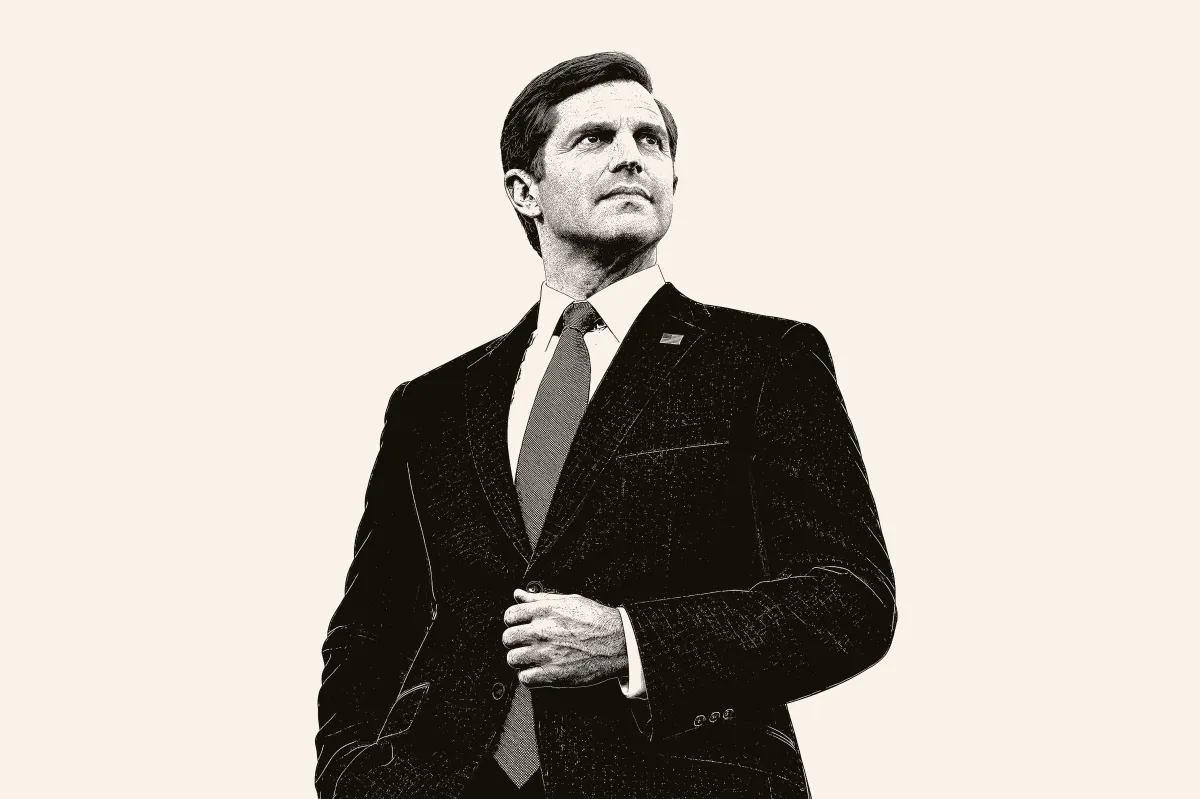
Andy Beshear Says the Next President Should Be a Democratic Governor — Here’s Why That Argument Matters
Kentucky Governor Andy Beshear is making a bold case for the Democratic Party’s future. In a recent interview, he argued that the party’s next presidential nominee — and the next occupant of the White House — should come from the ranks of state governors, not the U.S. Senate. The claim arrives at a pivotal moment for Democrats, who are still reckoning with the aftermath of the 2024 election and debating which kind of leader can best challenge Donald Trump’s continued grip on Republican politics.
Beshear’s argument is far from a quixotic fantasy. It reflects a growing consensus among some Democratic strategists and donors that executive experience, rather than legislative credentials, may be precisely what the party needs to win back competitively. Whether Beshear himself is positioning for a 2028 run or simply outlining a roadmap for the party, his perspective carries significant weight — especially as chair of the Democratic Governors Association.
Why Governors, Not Senators?
Beshear’s central thesis is straightforward: since Bill Clinton’s 1992 victory, no Democratic president has emerged primarily from a governor’s mansion. Every nominee since 2000 has been a U.S. senator. In an era when the presidency functions more like a chief executive role than a legislative pulpit, Beshear and his allies believe that experience governing a state — however small or politically unfriendly — offers something the Senate cannot.
“I think our next nominee and the next president should be a Democratic governor,” Beshear told Newsweek. “I think Democratic governors should be the face of the Democratic Party because, with all due respect to senators and congressmen and women, they’re voting on the rule of the amendment of the something else [instead of practical governance].”
The argument gains traction when you consider how Trump has wielded executive power. Democrats who believe the party needs a leader who can act decisively — and heal as well as divide — see governors as better equipped for that task. Red-state governors, in particular, bring a set of credentials that Washington-based senators often lack: proven ability to win in hostile territory, hands-on budget management, and a track record of getting things done across party lines.
Kentucky Roots and a Political Education
To understand Andy Beshear’s political identity, you have to understand the state he calls home. His father, Steve Beshear, served as Kentucky’s governor from 2007 to 2015, posting a 61 percent approval rating upon leaving office. The elder Beshear was widely regarded as a skilled politician who could navigate the complexities of a state that tilts heavily Republican at the federal level.
Andy Beshear grew up immersed in that world. A graduate of the University of Virginia School of Law and a civil litigator by training, he worked on his father’s 2007 campaign in his late twenties. He often recounts a formative moment from that era — a woman bursting into tears on an elevator in Lexington, telling his father, “I’m only alive today because of you.” The woman had cancer and lost her insurance coverage before benefiting from Kentucky’s Affordable Care Act marketplace, which Steve Beshear helped implement.
That story encapsulates the philosophy that would later define Andy Beshear’s own political brand: government done right, at the individual level, can change lives. He ran unopposed for Kentucky attorney general in 2015 and won the general election with a razor-thin 50.1 percent to 49.9 percent margin against a formidable opponent.
Winning in a Ruby-Red State
Beshear’s electoral success in Kentucky is remarkable by almost any measure. He inherited a state where the Democratic brand has been deeply damaged at the national level, yet he managed to secure a 65 percent approval rating — a number that would be the envy of virtually any Democrat in elected office.
How did he do it? Eric Hyers, the Democratic strategist who managed Beshear’s 2019 gubernatorial campaign and his 2023 reelection, offered a clear answer. Beshear traveled deep into red communities where Democrats are rarely welcome. His campaign deployed localized digital ads featuring real newspaper headlines celebrating his accomplishments. It was retail politics in its purest form — personal, authentic, and rooted in the belief that voters can be reached where they are, not where the party wants them to be.
“His ability to communicate and distill Democratic values to folks who don’t normally vote for Democrats is the best I’ve ever seen,” Hyers told Newsweek. “He is himself, and he is very comfortable in his own skin.”
That authenticity has proven durable. Beshear has maintained his high approval ratings despite suing the Trump administration dozens of times and vetoing Republican-led legislation on issues including gender-affirming health care for transgender minors and transgender sports participation — vetoes that were ultimately overridden by the GOP-controlled legislature. His willingness to take politically costly stands while remaining personally warm and genuine is a hallmark of his governorship.
A Unifier With a ‘Mr. Rogers’ Persona
Adam Edelen, the former Kentucky state auditor who challenged Beshear in the 2019 Democratic primary, offers a revealing portrait. Edelen describes Beshear as earnest, faithful, and fundamentally a problem-solver — someone who doesn’t rely on raw charisma but instead on discipline and genuine commitment. Edelen coined the phrase “Mr. Rogers persona” to capture Beshear’s approach: affable, principled, and willing to split the difference between progressive and conservative positions in pursuit of practical solutions.
This approach has both strengths and vulnerabilities. On the one hand, Beshear’s warmth and authenticity resonate with voters who are exhausted by political theater. He hosts a friendly namesake podcast, earns rave reviews for his personal warmth, and has built a reputation as someone who tells it like it is — sometimes delivering memorable lines on social media that remind observers of a certain former president’s gift for communication.
On the other hand, the debate stage presents a different challenge. Going toe-to-toe with figures like Gavin Newsom, Jon Ossoff, or Alexandria Ocasio-Cortez may test Beshear’s comfort zone. Newsom, in particular, has emerged as one of Trump’s most provocative critics, often mimicking the president’s trolling style on social media. Beshear drew a clear contrast, telling Newsweek: “If people are looking for a Democratic version of Trump, I’m not their guy.” He added that he believes the American people will eventually want “something more stable with adults in the room.”
The DGA Chairmanship as a Springboard
Beshear’s role as chair of the Democratic Governors Association has given him a national platform few state-level politicians enjoy. Under his leadership, the DGA has maintained an aggressive posture across the country, investing in races in Nevada, Georgia, Iowa, Ohio, and Michigan — all critical battlegrounds where Democratic governorships are at stake.
Former DGA chair Gina Raimondo, who led the organization when Beshear was running in 2019, emphasized the natural advantage governors hold. “Governors, frankly, just spend more time with the people of their state than with other politicians in Washington,” she told Newsweek. “Democrats are overly focused on Congress and the president, but I think where most people interact with government is at the state level.”
Meghan Meehan-Draper, the DGA’s executive director, praised Beshear’s intensity. “He’s one of the most engaged and enthusiastic chairs we’ve ever had,” she said, noting his deep involvement in fundraising, candidate recruitment, and on-the-ground campaign work. Melissa Ceriale, finance chair of the DGA’s Women Governors Fund, described Beshear as “the everyman” — someone comfortable in every room, with high moral standards that come through in every conversation.
His influence extends to state parties as well. Colmon Eldridge, chair of the Kentucky Democratic Party who worked alongside Beshear’s father, said that under Andy Beshear the state party has “never had a deficit of staff.” That kind of institutional strength is precisely what the DNC under Chair Ken Martin has been trying to build nationally, sending $1 million a month to state parties after years of chronic underfunding left red states destitute.
The 2028 Field and Beshear’s Path Forward
Beshear has not confirmed his intention to run for president, but his name has been in the 2028 mix for years. He was shortlisted as Kamala Harris’s potential vice presidential running mate in 2024, a signal that national Democrats see him as viable at the top of the ticket. He told Newsweek he would decide on a run when his term as DGA chair ends in December.
If he does run, the Democratic primary field could be formidable and ideologically diverse. Beshear would face candidates from the progressive wing who have energized the party’s base — names like Newsom, Ossoff, and Ocasio-Cortez — as well as figures like Lieutenant Governor Juliana Stratton and former Health and Human Services Secretary Xavier Becerra, who have shown they can raise money and generate enthusiasm. This cycle, Democrats have signaled they want a fighter.
Beshear’s path would be different. He brands himself a unifier — someone who can win where Democrats traditionally lose. Adam Edelen believes that approach could work in a crowded primary: “In the Hunger Games that is the Democratic primary for president, being everybody’s second or third may be a path.” The key, Edelen suggests, is leveraging Beshear’s retail connection strengths while avoiding the debate stage where more charismatic opponents may outshine him.
What the Data Suggests
Public opinion data offers some support for Beshear’s broader thesis. A 2024 YouGov poll found that Americans prioritize leadership skills, decision-making ability, honesty, mental health, and a vision for the country’s future when evaluating presidential candidates. Strip away partisan labels, and the profile that emerges looks a lot like Beshear: a steady executive with a record of winning in difficult territory, an authentic personal style, and a focus on practical governance over ideological combat.
Michigan Governor Gretchen Whitmer, who serves as DGA vice chair, made the case plainly: “Andy’s experience in Kentucky is resonant around the country because, at the end of the day, people want government to work. There are a lot of great people in Congress who I am sure aspire to be a chief executive, but they’re very different skills.”
Whether Beshear can translate that appeal into a successful national campaign remains an open question. The Democratic primary electorate is more progressive than the general electorate that actually decides elections, and name recognition is a significant hurdle. But in a year where voters may be craving stability over spectacle, Beshear’s case grows louder.
What Comes Next
For now, Beshear continues to build his case — one speech, one campaign stop, one state party at a time. His newly released memoir, Go and Do Likewise: How We Heal a Broken Country, lays out a vision of faith-driven governance that he believes can unite a fractured nation. Whether that vision carries him to the presidency remains to be seen, but it has already reshaped the conversation about what Democrats need in their next standard-bearer.
As Edelen put it, Beshear is “much more a Jimmy Carter — a fundamentally decent guy who plans his work and works his plan.” In a political era defined by volatility and performance, that could be either a liability or precisely the medicine the electorate is looking for.
Government, News, People, Society, Politics, Elections, Kentucky, Democratic Party, 2028 Presidential Election, Democratic Governors Association, Andy Beshear, State Politics, Executive Leadership, Retail Politics, Presidential Primary, United States

