

The US struck Iran in response to a drone strike on a cargo ship as the US-Iran ceasefire that reopened the Strait of Hormuz faces its greatest test yet.
The US strikes targeted numerous missile and drone sites in Iran near the Strait of Hormuz and on Qeshm Island on Friday. It appeared to be a limited strike intended to respond to Iran’s attack on a Singapore-flagged cargo ship without escalating the conflict.
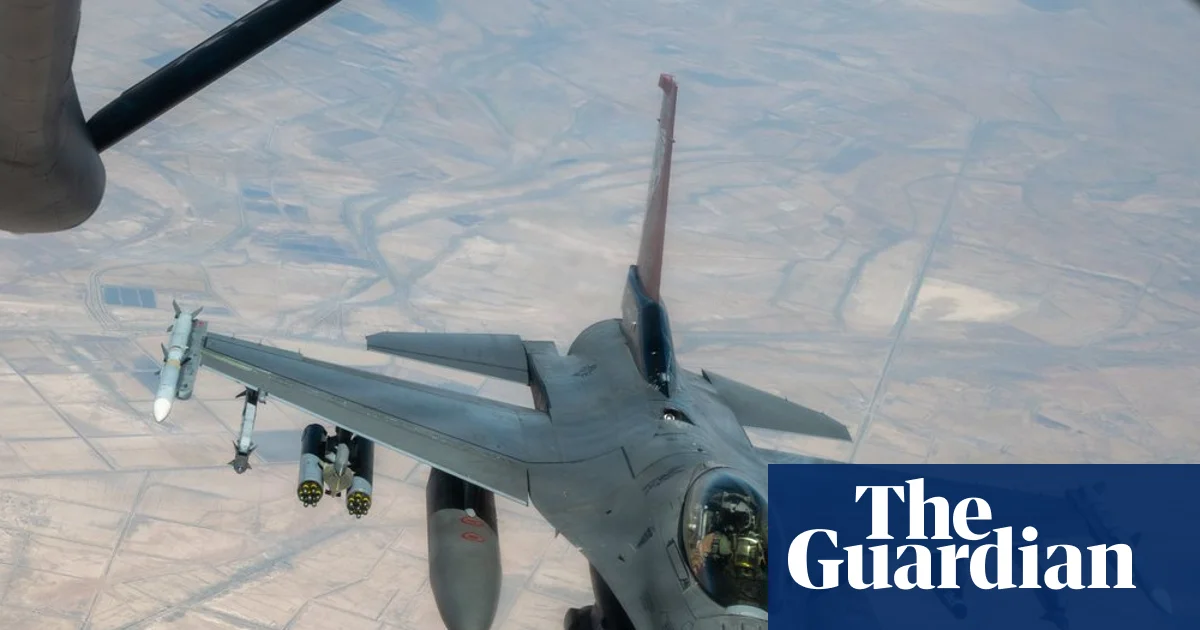
The United States struck “Iranian missile and drone storage sites,” US Central Command (Centcom) said, in a “powerful response” to Iran’s attack on the Ever Lovely.
But the U.S. military has said it will continue to enforce a shaky ceasefire with Iran even as disagreements have emerged over the terms of Iran’s nuclear program, tolls in the Strait of Hormuz and other hot-button issues including Iran’s ballistic missile program.
“The U.S. military remains present and vigilant to ensure that all aspects of the Iran agreement are respected, enforced and in full force,” Centcom said.
“Iran has signed a ceasefire. We are honoring it. If they have a disagreement about how the Memorandum of Understanding is applied, they can pick up the phone,” US Vice President J.D. Vance wrote on social media after the strikes. “But violence will be met with violence.”
Donald Trump said the Iranian drone attack violated the ceasefire. The strikes came shortly after Trump told reporters that “you’ll find out” whether the US will respond. The US President also called the attack a “stupid violation” of the ceasefire.
“I don’t like the fact that they took a shot yesterday, four of them actually,” Trump said shortly before the US strike on Friday.
Iranian state media, citing an unnamed military source, reported an attack on the port of Sirik after an explosion occurred there. The source said several warning shots were fired from Sirik at ships that “violated the Strait of Hormuz rules about five hours earlier”, adding that two warning missiles were also fired from the nearby Karpana area towards the strategic waterway.
The Revolutionary Guards said their navy responded by “targeting terrorist U.S. forces in the region” and warned that any further U.S. attacks would be met with a broader response, according to a statement published in state media.
The ceasefire agreement gave Iran control over shipping traffic in the strait, the Guard said.
“However, the United States, through provoking various fronts, sought to violate this commitment, and the necessary response was given and will continue to be given. If aggression is repeated, our response will be broader than this.”
Ebrahim Azizi, a senior Iranian security official, said Iran was not seeking to escalate the conflict.
“This is not a violation of the ceasefire, this is management of the ceasefire,” Azizi wrote.
The attack forced the UN’s International Maritime Organization to suspend efforts to evacuate hundreds of ships stranded in the Persian Gulf due to the conflict. It was not immediately clear under what conditions or under what authority the Ever Beautiful attempted to exit the Strait of Hormuz. The UK Maritime Trade Operations Center said no one was injured in the attack on the Ever Lovely, which damaged the ship’s bridge.
“The cargo ship was hit on the starboard side by an unknown projectile, resulting in damage to the bridge,” the department said. “The foreman did not report casualties or environmental impacts.”
On Thursday, Iran’s Gulf Strait Authority said: “Any passage along routes outside the scope defined by the PGSA will not be covered by safe passage guarantees and will not be eligible for insurance coverage or related obligations.”
However, there were signs of progress elsewhere, with Israel and Lebanon signing an agreement to end hostilities between Israel and Iran-backed Hezbollah. Both sides saw the deal as a first step that calls for Hezbollah to disarm and Israel to withdraw its troops from Lebanon, but it was not clear how it would be implemented. Hezbollah said it would not cooperate.
The agreement “begins to lay the foundation for lasting peace and security,” US Secretary of State Marco Rubio said at the signing ceremony, adding: “This is just the beginning. There is still a lot of work ahead.”
Lebanese Ambassador to Washington Nada Hamadeh Moawad said the agreement “is the first step towards restoring Lebanon’s sovereignty and territorial integrity, ensuring a permanent and permanent cessation of hostilities (and) allowing our people to return to their land.”
And Israel’s envoy to the United States, Yechiel Leiter, said that under the agreement, “Iran is out, Hezbollah is out, and the path to peace between Israel and Lebanon is open.”
According to the agreement, the text of which was released late Friday by the US State Department, Israel and Lebanon “declare their intention to bring the conflict to a definitive end, to address its root causes, and thereby to formally end any state of war between them.”
It also establishes a process by which the Lebanese Armed Forces will restore “sovereign authority over all Lebanese territory” pending the “verified disarmament of non-state armed groups,” in particular Hezbollah.
In association with Reuters and Agence France-Presse.