

PressSplit
Follow us on Google
According to IW research, gas heating could become significantly more expensive. The planned green gas quota, in particular, will become a burden for tenants and landlords in the future.
Cologne – Gas heating costs could almost double in the next few years, affecting both tenants and landlords. This is the result of a new study conducted by the Institute of German Economics (IW) in Cologne.
Economists estimate that as a result of the new heating law, the annual cost of running a gas heater could rise from €1,080 today to €1,952 in 2040 and €2,366 in 2045. The basis for their calculation is a typical, partially renovated old building with an annual gas consumption of 10,000 hours for heating and hot water.
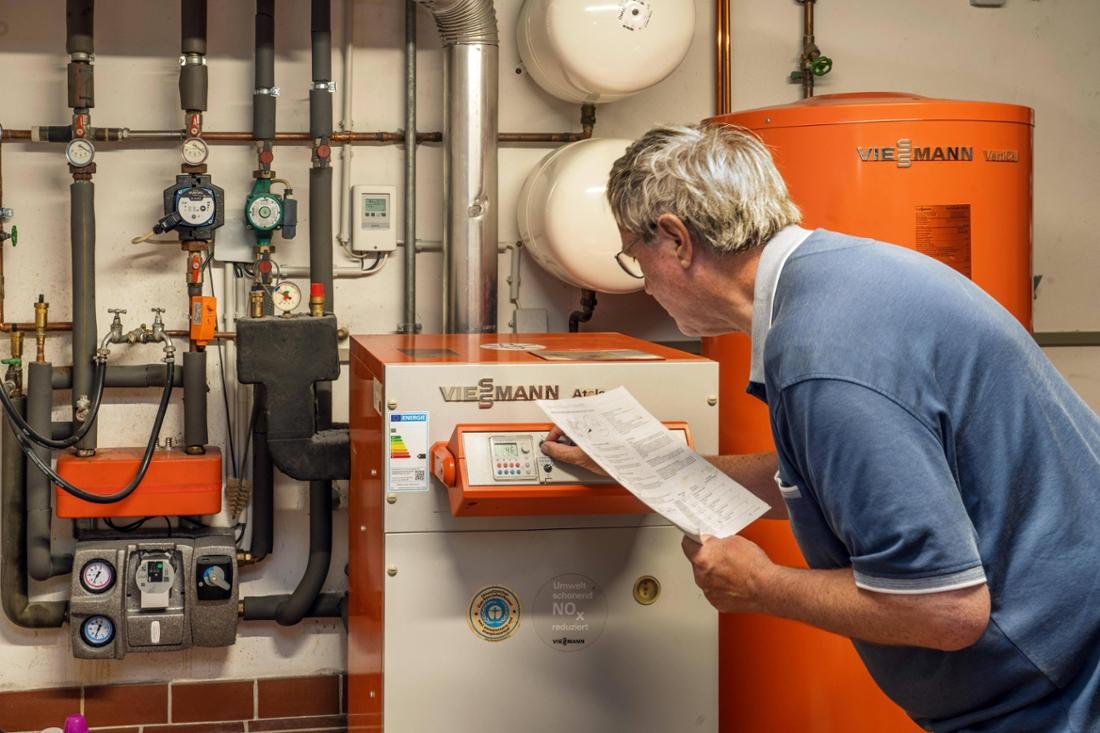 Anyone installing a new gas heater today will pay more, warn researchers from the German Economic Institute. © IMAGO
Gas heating can become significantly more expensive
During the election campaign, the Union sharply criticized the traffic light heating law of the then Economy Minister Robert Habeck (Greens). The law stipulated that new heating systems must be powered by 65 percent renewable energy.
Politicians are selling the new heating law as freedom in the boiler room – at no extra cost. This is a misconception.
“The bureaucratic government in the boiler room must end,” the Union demanded during the election campaign. In mid-July, the federal government under the leadership of Chancellor Friedrich Merz (CDU) reversed the Habeck reform and adopted a new heating law. In the future, in addition to heat pumps and district heating, it will be possible to install oil and gas heating systems. The increasing quota of green gas – the so-called “organic ladder” – is designed to ensure that climate targets continue to be met. To achieve this goal, gas heating systems must be mixed with at least ten percent biomethane or hydrogen from 2029, and then 60 percent in 2040.
Green gas quota increases gas heating costs
According to IW researchers, it is this basic gas quota that makes gas heating significantly more expensive. Accordingly, 643 euros of the 872 euros of additional costs calculated in 2040 will be due to the addition of clean gases. Economists do not expect biomethane to be sufficient for heating, so expensive hydrogen will have to be used for heating.
In addition, gas network charges could be €184 higher in 2040 than today as more and more consumers are likely to switch from gas to heat pumps or district heating. This increases the cost of the network fee for the remaining connections to gas heaters. Also an increase in CO2-Prices increase costs, although they are hardly significant in comparison. Economists expect an additional burden of 44 euros per year.
Gas networks may become more expensive for consumers
The new heating law opens up more freedom when choosing heating. Installing a new gas heater may seem cheaper at first glance, especially for landlords. The total installation cost of a gas heater is between 10,000 and 15,000 euros, only about half that of a heat pump. However, in the long term, this calculation will be wrong due to rising operating costs, economists warn. They note that higher CO costs2network fees and alternative fuel provided for the organic ladder are shared equally between tenants and landlords, so landlords incur higher operating costs.
Accordingly, the researchers’ verdict on the new law is devastating. “Politicians are selling the new heating law as freedom in the boiler room – without additional costs. This is misleading,” says IW expert Ralf Hänger, who prepared the study with his colleagues Malte Küper and Laurens Wünsch. “Anyone who decides to install a new gas heating system will end up paying more – both landlord and tenant,” says Henger.