

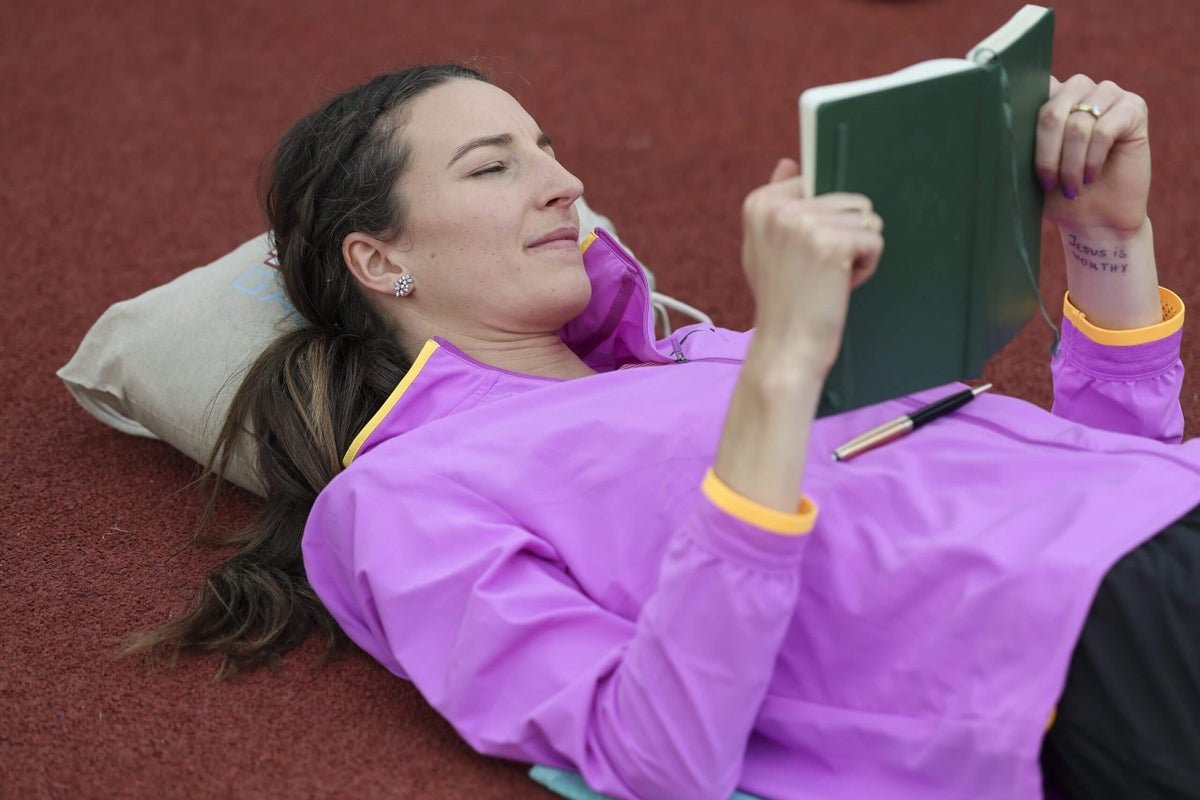
If Nicola Olislagers weren’t a world-class high jumper, she might have become a public speaker or an analyst. Talk to her in the mixed area with the reporters after the competition and she will talk about her performance in detail.
“Pressure brings out what’s deep inside,” she said after winning silver at the world indoor championships in Torun, Poland, in March. It was the Australian’s sixth consecutive podium finish on the world stage, which included three world titles and two Olympic silver medals, and she can add to her medal tally next week at the Commonwealth Games in Glasgow.
Olislagers arrived in Poland mid-training block, three weeks before the Australian Athletics Championships and after just one competition in 2026. “I didn’t know if I was in international shape yet, it was a mental battle to overcome,” she said. “At every height I had to believe that I could make it (to the bar).”
She has a secret weapon that helps her keep her faith: a notebook. In it, she carefully scores each jump in nine different categories, each out of 10 points, including how well she leans on her approach, the formation of her run to the bar and her jump technique. Below each line of numbers is a short instruction that will help her in her next attempt.
“It helps me train strategically afterwards, know what to work on,” she said at the Diamond League finals in Zurich, Switzerland, last August. “Lowest scores mean you have some work to do, girl!”
There were big results that day: she improved her own Oceania record to 2.04 meters and won her first Diamond League title – she had finished second in the previous two seasons.
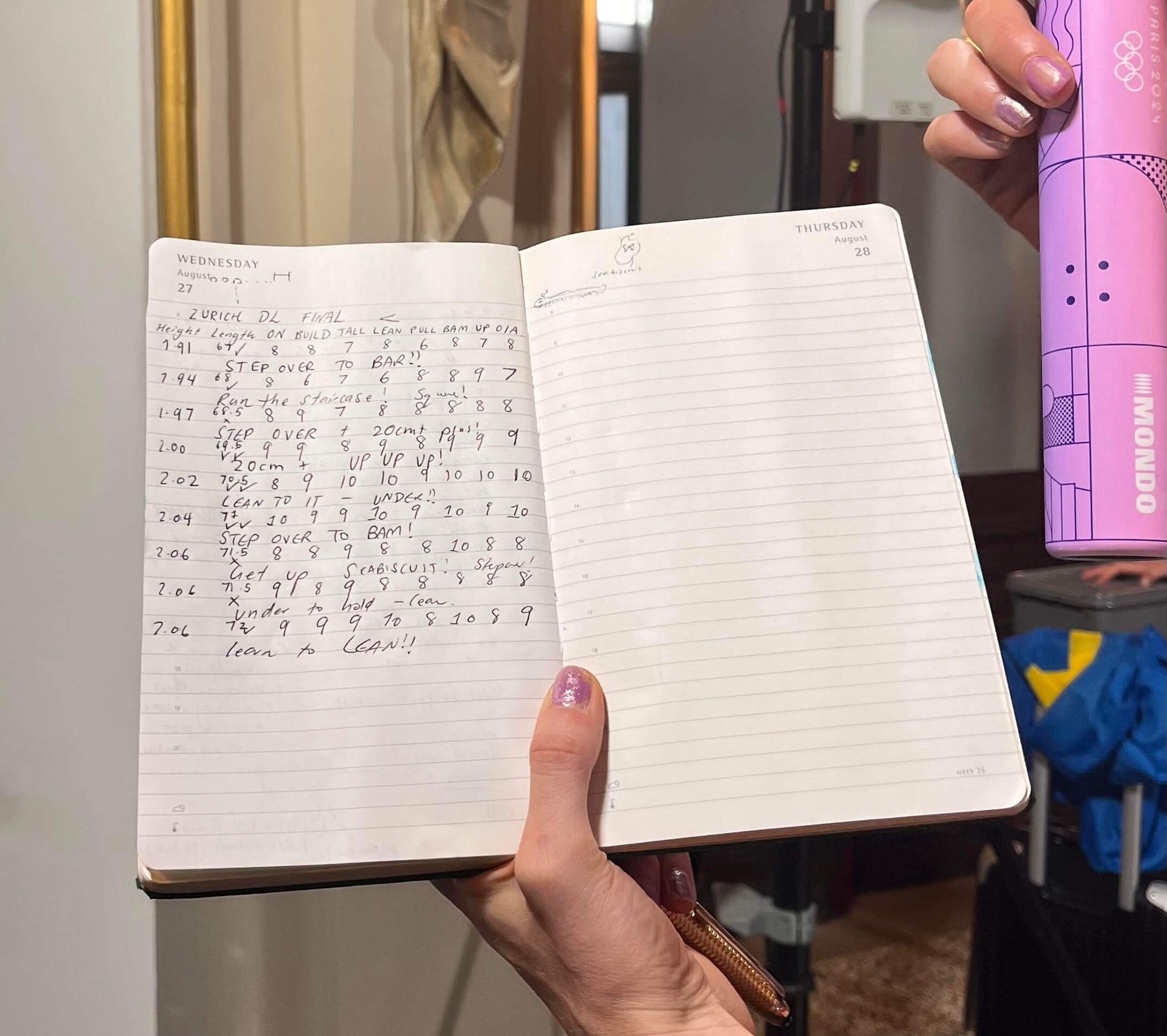
Nicola Olislagers’ notebook at the Diamond League finals in Zurich, August 2025. (Liam Tarme/ Athletic)
She beat Olympic champion and world record holder Yaroslava Maguchikh, and the competition took place in an intimate setting: street competitions on the shores of Lake Zurich, where temporary stands were installed on three sides of the square, on which there were runways for the high jump and pole vault, as well as a circle for the shot put.
World Champion 🇦🇺 Nicola Olislagers was awarded the Bruce McAvaney Award for Performance of the Year! 🏅
This award recognizes the Australian’s performance at the Diamond League finals in Zurich, where the two-time Olympic medalist cleared a distance of 2.04 meters to set a new Oceania record! 🙌 pic.twitter.com/yYZhnZnXtX
– SBS Sport (@SBSSportau) December 19, 2025
“I don’t often get a 10/10 jump, but I did it at 2.02m and 2.04m (clearances),” Olislagers smiled as she showed off her notebook in the opera house, which doubled as a mixed zone. “A 10/10 jump is all I’ve technically worked on and that’s more important to me than a personal best. So to get two of those was good.”
She made six jumps for the first time, from 1.91m to 2.04m, and won the competition final, which saw four women clear two meters (the first time since the 2022 World Championships, when Olislagers finished fifth and Australian Eleanor Patterson won gold). How did she rate her three failures at 2.06m in Zurich? “A few eights and a few nines.” The best results can only be achieved by breaking the bar.
Olislagers, 29, joked that she was “still a spring chicken.” She made her global debut at the World Championships in London in 2017 and the following year, aged 21, on home soil at the Gold Coast Commonwealth Games, she won a bronze medal.
This was followed by seven national titles, as well as 10 victories at Diamond League meetings. She has cleared two meters and above on four continents and is the third best jumper of the 2020s after Maguchi (2.10 m) and Maria Lasitskene (2.05 m).
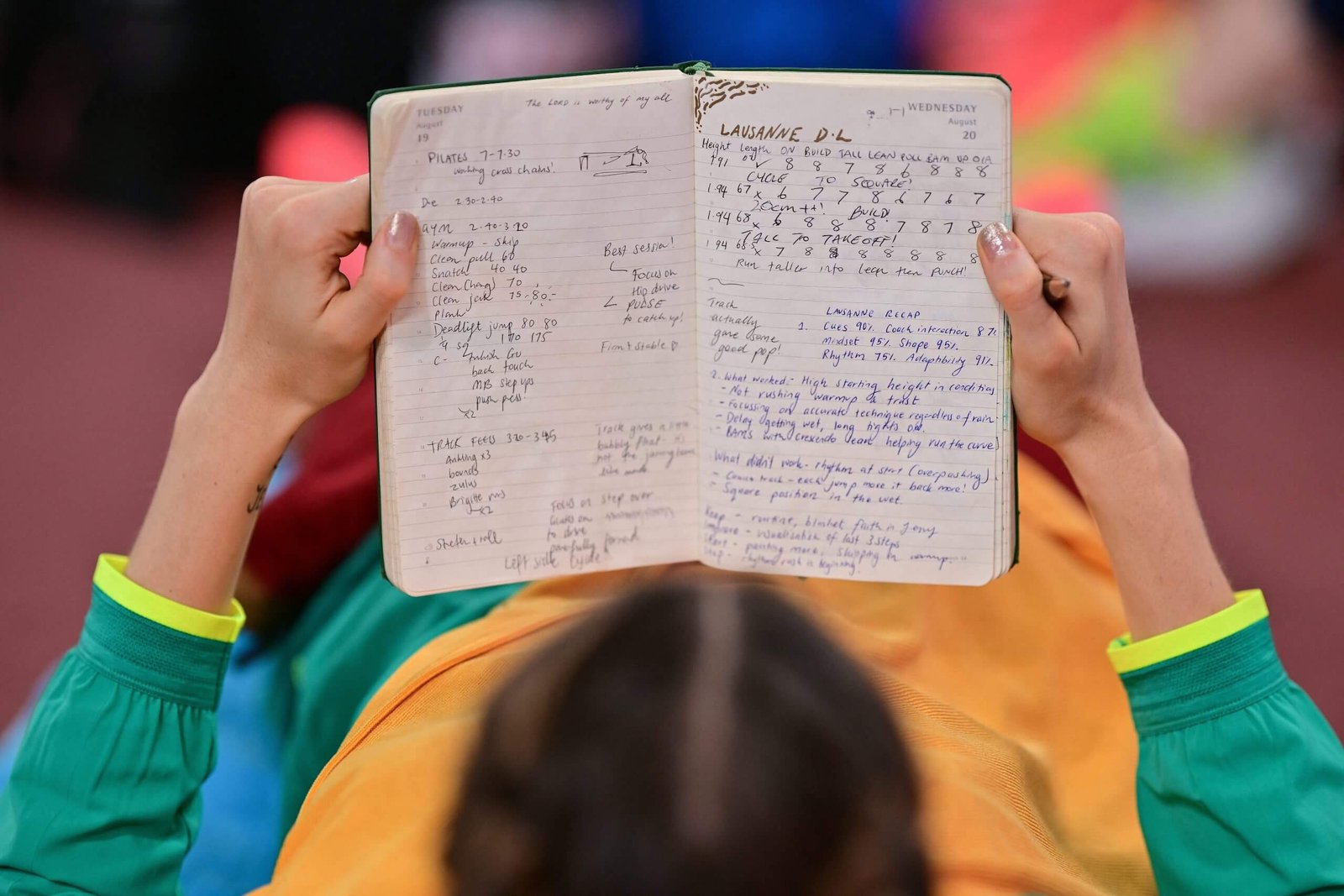
Nicola Olislagers looks at her notebook during last year’s Diamond League in Stockholm, Sweden. (Maja Hitij/Getty Images)
At 6ft 1in (186cm), Olislagers has the ideal body type for her competition: tall, slender, long legs and, most importantly, a long Achilles tendon, where the stretch-shortening cycle helps store and release elastic energy during a running jump.
The high jump is a technical competition. While physiology matters, the winner is usually determined by who can best correct their mistakes as the bar rises. That’s why, between jumps, Olislager can be seen writing something in his notebook.
She spoke about this after the World Indoor Championships final in March, when she cleared 1.99m but failed three attempts by 2.01m, losing to Mauchih, who reached the height on her first attempt.
“In terms of speed, all my coach told me was that I needed to get into take-off position,” she said, “which is something that all of us jumpers have a hard time with at that height.”
“It’s a fight with the body and instincts,” Olislagers explained. “In the last leg, when you’re running, all the forces in your body are trying to get around. You have to be strong enough to pull yourself up (to the bar) and then get vertical because you get so much speed.”
She compares a curved run-up before a jump to a “car skid,” where there is a tendency to turn the wheel toward the direction of travel rather than away from it.
“If you hold it there for even a second, you feel like you can’t hold it anymore—that’s when you hit really great heights,” Olislagers added. “We just recorded it every jump. We say: “Put it (the body) in a square, align it with the crossbar, don’t walk around.” There were a lot of squares in my notebook,” she said, laughing.
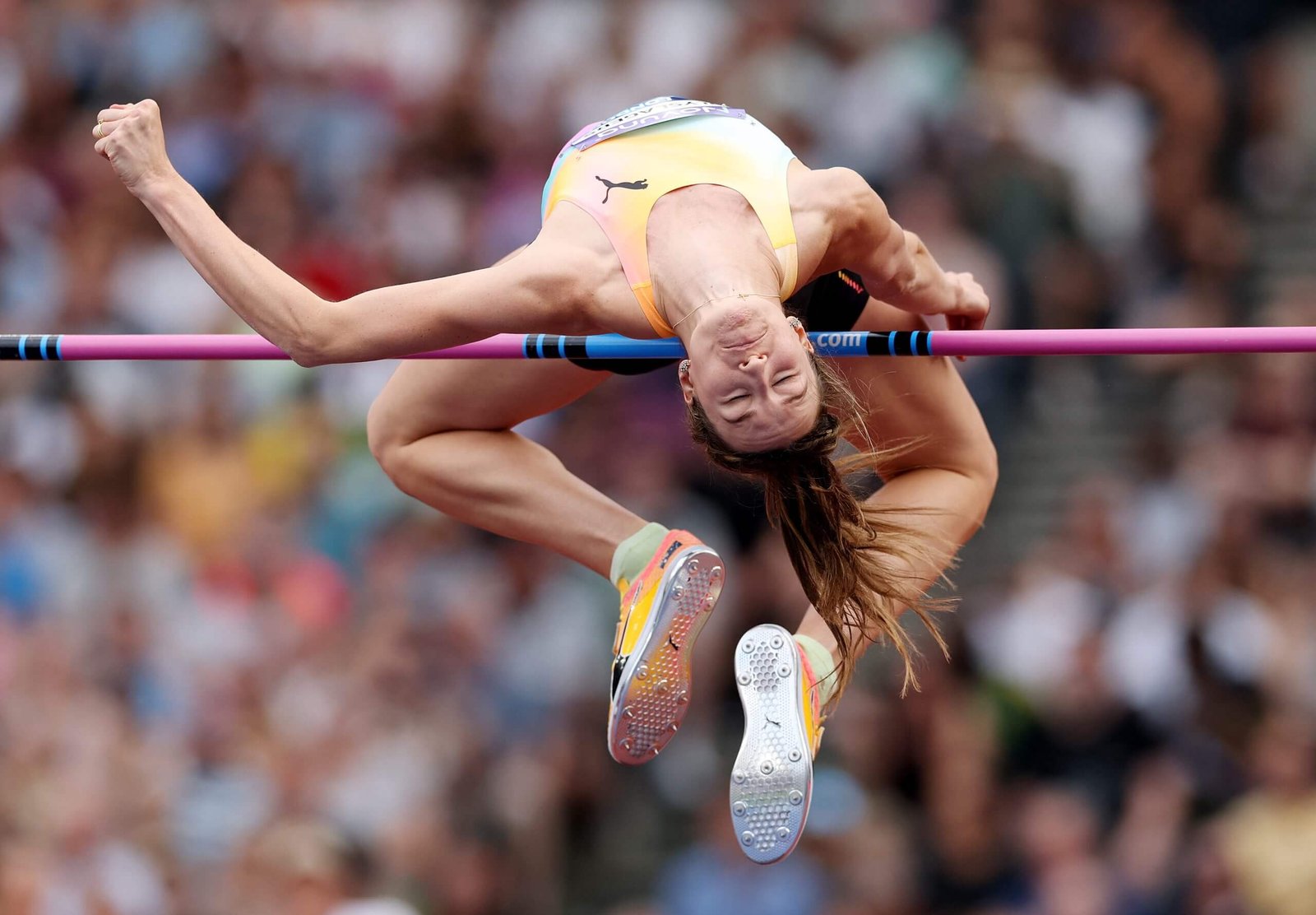
Nicola Olislagers is favorite to win gold in the women’s high jump at the Commonwealth Games. (Michael Steele/Getty Images)
Her takeaways from the self-reflection and indoor notepad assessments were to “perfect those last few steps” as she felt her run-up in the first and third attempts at 2.01m was lacking in speed, especially given how fast the runway seemed.
In Zurich last summer it was the other way around. Olislagers said at the time that she had “tried too hard” in her approach to the 2.06m distance – a mark only 11 women have jumped – and it showed her training should include more running under fatigue. “If there wasn’t enough push, then I know we need to do more plyometrics. That’s how we measure it.”
Before every jump she lets out a battle cry of “come on” while pumping her fists twice, and last year she changed her run-up in search of faster speeds, from three jumps and six running steps to “one jump and run.”
Interestingly, she spends most of her training not jumping, partly because of her level, and partly because it is very physically tiring. “I really only jump a few months out of the year, and then once a week I jump and maybe 10 jumps per workout,” she said. As a self-proclaimed “strength athlete,” her training included a lot of gym work and sprinting.
Having cleared two meters for the first time in 2026 at the London Diamond League last weekend (she beat Mauchihih and Patterson in the process), Olislagers heads into the Commonwealth Games as gold medal favorite, challenging for the title Patterson claimed in 2014.
Four years ago, she was forced to withdraw from the high jump finals in Birmingham, England, due to a torn calf she suffered in qualifying two days earlier. Now she has a chance to earn another global medal and some personal redemption. The notepad will go with it.
“The older you get, your body starts to change, even if it’s just a little thing,” she said in March of this year. “You can be very rigid in your preparation. Being flexible and adapting takes real character. It shows me who I am outside of performing.”