

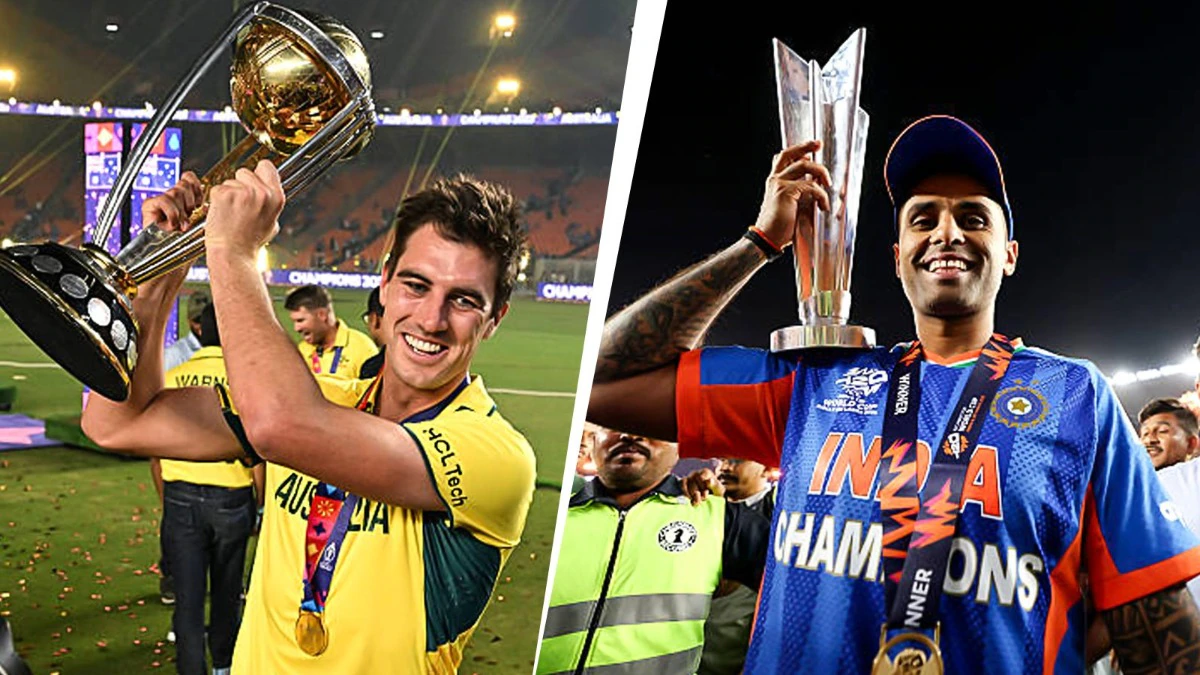
The International Cricket Council (ICC) has approved major changes to the format of the two biggest men’s tournaments – the ODI World Cup and the T20 World Cup. These decisions were taken with the approval of the recommendations of the Leadership Committee at the annual meeting of the ICC Council held in Edinburgh. The ICC says the aim of these changes is to make every match of the tournament more competitive, meaningful and exciting. The new format will increase the significance of each match, from the opening matches to the final, increasing the level of competition and improving the experience for both players and spectators.
read more
Along with this, the ICC has also approved the qualification system for the 2028 Men’s T20 World Cup. At the same time, the proposal to organize a new global T20 tournament involving 16 teams from associated member countries has also received the support of the Board. However, final approval for this new tournament will be given after a review by the ICC Finance and Commerce Committee, which will take place in November.
“Super Series” will be held for the first time at the ODI World Cup, Super 7 will be played again
As before, the ICC Men’s Cricket World Cup will feature just 14 teams, but the entire structure of the tournament will change. The competition will now be held in three stages, which will increase the pressure on each team and the importance of each match from the very first match.
First stage. super series
The tournament will begin with a round-robin “Super Series” between the teams that took 12th, 13th and 14th places in the ranking. The team that remains the leader among these three teams will advance to the next stage.
Second phase. group stage
After this, the 12 teams will be divided into two groups, with each group having six teams. In addition to the top three teams from both groups, the next best team from both groups will advance to the Super 7 stage.
third step. super 7
This is where the biggest changes have taken place. The seven teams that have reached the Super 7 will play round-robin matches against each other. The teams that take the first four positions in the points table will advance to the semifinals. After this, the semi-finals will be held: first against fourth and second against third. Both winning teams will meet in the final.
According to the ICC, in this format the opening matches will become as important as the knockout games and there will be fewer opportunities for any team to get off to a slow start. Moreover, new cricket teams will also get the opportunity to showcase their potential on a big stage like the World Cup.
What is the difference between the old and new ODI World Cup formats?
Previously, the 14 teams were divided into two groups of seven teams each. The top three teams from both groups will advance to the Super 6 and the path to the semi-finals will be determined from there. In the new format, instead of Super-6 there will be Super-7. In addition, a super series has been added before the group stage. Because of this, every team will be under pressure from the very first match of the tournament and no match will be considered formal.
The T20 World Cup will now have a Super 10, selector ahead of the semi-finals
The ICC has also made major changes to the format of the Men’s T20 World Cup. The board took this decision in view of the impressive performances of the new teams in the 2026 T20 World Cup. The ICC believes that this will give more teams a chance to play in the second phase and the excitement of the tournament will continue until the final matches.
group stage changes
Previously, there were five teams in four groups. Now there will be five groups, and each group will have four teams. The two best teams from each group will advance to the next stage.
Start of Super-10
Instead of Super-8 there will now be Super-10. In the second stage, a total of 10 teams will be divided into two groups of five teams in each group. This means that two additional teams will get the opportunity to play in the second stage compared to the first. This will also increase the representation of new cricket teams.
The eliminator will determine two semi-finalists
The top teams from both groups will directly advance to the semi-finals. In this case, the team that takes second place in one group will play in a knockout game with the team that takes third place in the other group. Likewise, the second-placed team of the second group will face the third-placed team of the first group. The winners of these two qualifying matches will take the remaining two semi-final spots.
The ICC believes that in this scenario, the battle for qualification will continue until the final matches of the Super 10 stage and the importance of each match will remain.
The qualification system for the 2028 T20 World Cup has also been determined.
The ICC Council also approved the new qualifying structure for the 2028 ICC Men’s T20 World Cup. Given the special circumstances and their performance at the 2026 T20 World Cup, Scotland will have direct access to the European regional final.
In addition, those teams participating in the 2026 T20 World Cup, which will not automatically qualify for the 2028 World Cup, will directly earn a place in the global qualifiers. The remaining eight spots in the global qualifiers will be filled through regional qualifiers. These include two teams each from Africa, Asia and Europe, as well as one team each from the Americas and the East Asia-Pacific region.
The top team from each global qualifying region directly qualifies for the 2028 T20 World Cup. In addition, the next three best overall teams will receive tickets to the World Cup. However, this will require meeting the minimum performance criteria set by the ICC.
New 16-team global tournament for associated countries
The ICC board also backed the proposal for a new 16-team global T20 tournament for associate member countries. It is planned that this competition will be held before the T20 World Cup so that the associate countries can get high level competition and get an opportunity to perform on the big world stage before the World Cup.
However, this new tournament has not yet received final approval. The ICC Council has supported it in principle, but final approval will only be given after a review by the Finance and Commerce Committee in November.
What is the purpose of the ICC?
According to the ICC, the main purpose of these changes is to make global cricket more competitive. The board wants every World Cup match to matter and to ensure there is excitement even in the early stages of the tournament. The new format will not only make matches between big teams more challenging, but will also give up-and-coming teams the opportunity to remain competitive for a longer period of time and prove their strength.
Super Series and Super 7 in the ODI World Cup, Super 10 and Eliminator in the T20 World Cup, a new qualification system for the 2028 World Cup and a proposed 16-team global tournament for associated countries. With all these decisions, the ICC has made it clear that future World Cups will not only be bigger, but also more competitive, exciting and decisive than ever before.
—- End —-