
Student Loan Default Crisis Exposes Problems at For-Profit Colleges
Five hundred colleges and universities across the United States now share a disturbing statistic: at least 40 percent of recent students who began repaying federal loans face default. The latest data from the U.S. Education Department reveals a crisis that extends far beyond individual borrowers—it threatens the viability of entire sectors of higher education, particularly for-profit institutions that have long operated with minimal oversight.
The Scope of the Default Crisis
The new data covers roughly 17 million borrowers who entered repayment between January 2020 and May 2025. While the overall default rate sits at concerning levels, the distribution is starkly uneven. Only fifteen of the five hundred schools with nonpayment rates of forty percent or higher are public institutions. The vast majority—four hundred twenty-four—are private, for-profit colleges and universities.
Public colleges and universities typically maintain nonpayment rates around fifteen percent, a figure that suggests their students fare significantly better than their for-profit counterparts. Yet the reality for many for-profit schools tells a different story. Tulsa Welding School alone had nearly twenty thousand recent borrowers, with more than half failing to make payments. Similarly, Miller-Motte College, a career training institution with campuses across multiple states, saw approximately half of its thirty‑seven thousand borrowers fall behind on their loans.
Dominance of For-Profit Institutions
For-profit colleges dominate the list of schools struggling with default rates. Their business model relies heavily on selling expensive, short-term training programs to students who often lack the financial resources to complete the courses. The result is a cycle of debt that frequently spirals into default.
Legends Barber College serves as a particularly damning example. With only about eighty borrowers, ninety‑one percent of whom failed to repay their loans, the school’s performance mirrors that of other small, specialized institutions. The college responded by discontinuing its computer systems training program, citing poor completion and job placement rates.
Miller-Motte College illustrates the scale of the problem. With nearly thirty‑seven thousand borrowers, the school’s nonpayment rate hovers around fifty‑eight percent. The parent company, International Education Corporation, acknowledged that the pandemic payment pause and earlier loan forgiveness promises left many students disconnected from their obligations. The company has since hired third‑party firms to reengage with borrowers, though the root causes of the default trend remain unclear.
Extreme Reliance on Federal Financial Aid
Perhaps the most troubling aspect of this crisis is the extreme dependence of these institutions on federal student aid. At Miller-Motte College, federal assistance accounts for nearly eighty‑six percent of revenue. At UEI College—the school featured prominently in the story—federal aid represents between seventy‑nine and eighty‑five percent of income. Even the larger American InterContinental University System receives eighty‑nine percent of its revenue from the U.S. government.
Undeniably, the existence of these schools would be impossible without federal funding. Without the guaranteed stream of loans and grants, many for-profit colleges would close entirely. The Education Department’s own analysis confirms this interdependence, noting that the vast majority of the schools on the list rely on federal dollars for more than half of their operating budgets.
New Accountability Measures Under Review
Recognizing the severity of the situation, the federal government is implementing stricter accountability measures. The Education Department plans to calculate graduate earnings starting in early 2027, with the goal of identifying programs whose graduates do not earn more than workers who never attended college. Such programs could face loss of federal loan eligibility.
Complementing this effort is a new “do no harm” test that examines whether a school’s graduates leave the workforce financially better off than those who never pursued higher education. The test aims to ensure that federal taxpayers are not subsidizing institutions that fail to deliver on their educational promises.
Experts warn that the upcoming regulations may catch many of the schools already identified as problematic. A preliminary analysis suggested that roughly half of the five hundred schools with high nonpayment rates could also be flagged under the new earnings test. Whether this will lead to widespread closures or forced restructuring remains uncertain, but the pressure is mounting.
Looking Forward Amid Uncertainty
The coming years will test the resilience of both students and institutions alike. For borrowers trapped in high‑cost, low‑return programs, the path forward may involve navigating complex repayment options or seeking alternative pathways to credentialing. For schools, the choice is clear: either improve outcomes or lose access to federal aid.
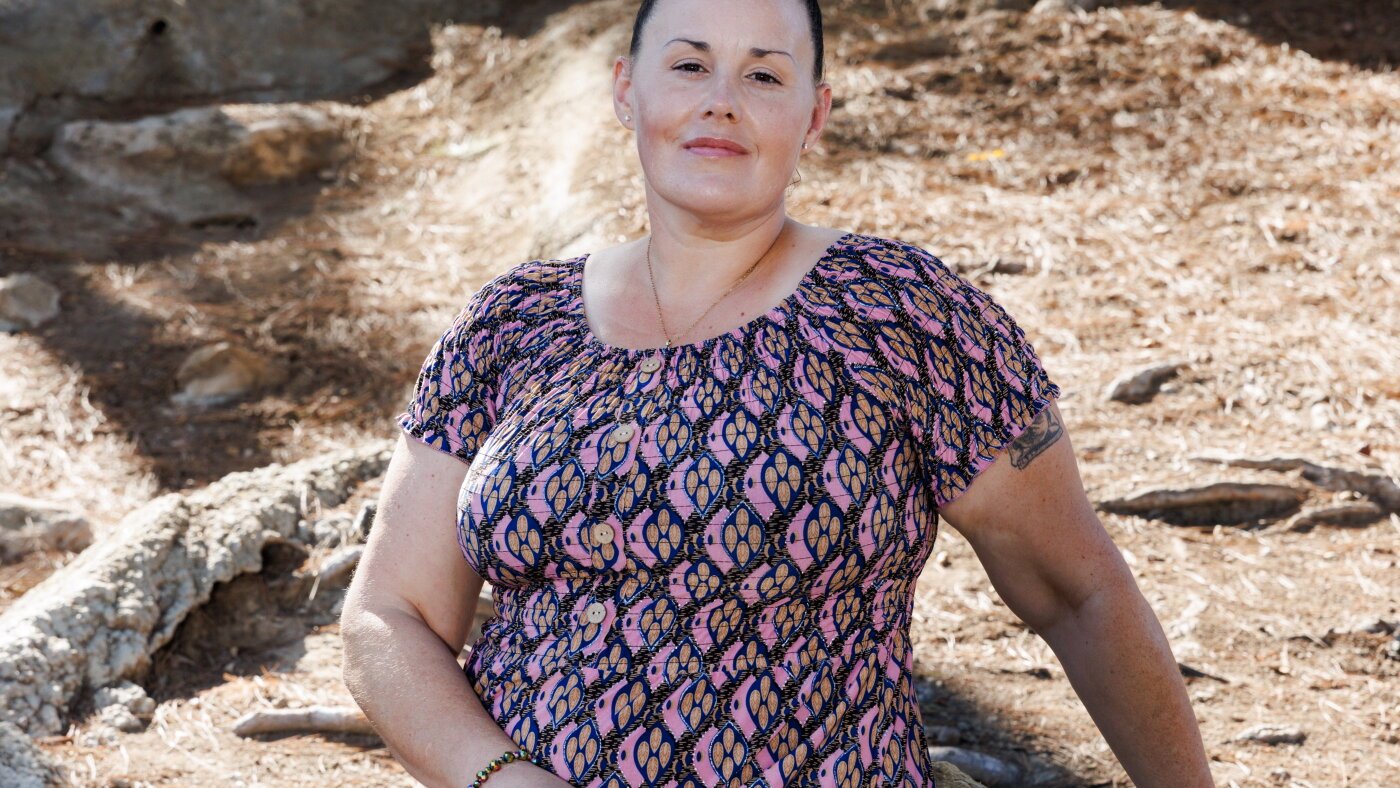
Lisa Collenbaugh, a former UEI student who struggled to complete her computer systems training program, continues to carry the weight of her debt despite finding employment elsewhere. Her experience reflects a broader truth: when institutions prioritize profit over preparation, the consequences extend far beyond the balance sheet.
As Congress moves toward legislation that could further tighten oversight, the stakes are high. The crisis at for-profit colleges is not merely an academic concern—it represents a fundamental question about the integrity of America’s higher education system and the responsibility of taxpayers to fund institutions that deliver real value.
Only time will reveal whether these reforms will restore trust in the system or accelerate its decline. What is certain is that the next generation of borrowers will bear the full weight of these decisions.
Arts, Education, Business, Government, Finance, Health, News, Society

