
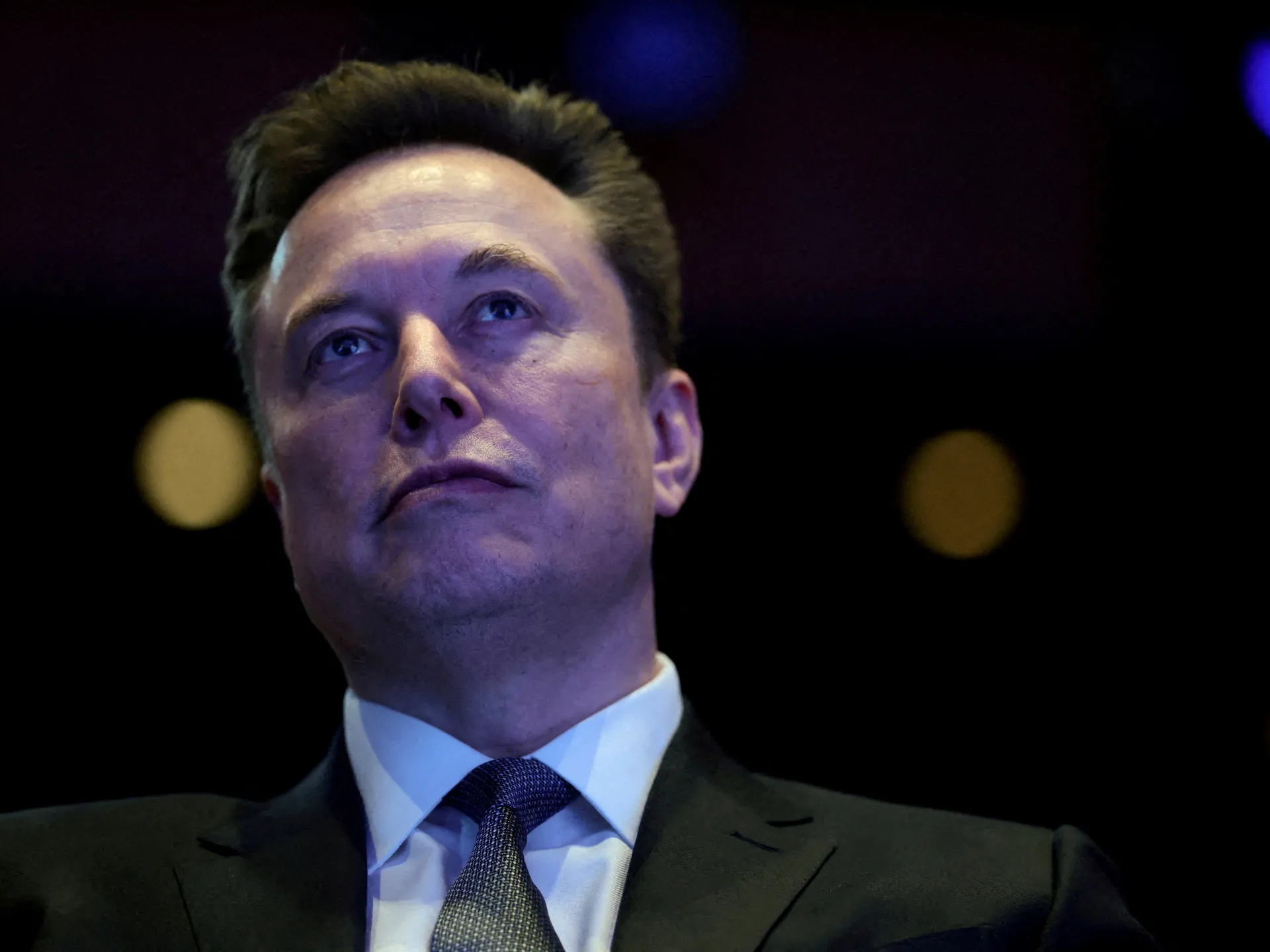
A jury found Twitter owner Musk responsible for tweets in which he questioned whether the platform was overrun with fake and spam accounts, causing stock prices to plummet.
Published July 6, 2026
A US federal judge has rejected Elon Musk’s bid to overturn a jury verdict that found Musk, the world’s richest man, defrauded Twitter investors in an attempt to drive down the social network’s share price after agreeing to a $44 billion takeover.
U.S. District Judge Charles Breyer in San Francisco, California, on Monday also denied Musk’s request to decertify the investor class and granted the investors’ request for pre-judgment interest. However, a judge ruled that Musk was not liable for one of his disputed tweets.
Recommended Stories
list of 4 itemsend of list
“Even if the speaker changed his mind or momentarily regretted the deal, such doubts do not justify lying to investors,” Breuer wrote.
An investor lawyer estimated after the March 20 verdict that damages could be about $2.6 billion.
Musk’s lawyers did not immediately respond to requests for comment.
Mark Molumphy, an investor lawyer, called it a “very good day” for investors in the public markets after a jury “rejected Musk’s attempt to game the system.”
Musk changed Twitter’s name to X, and it is now part of his rocket and satellite company SpaceX. He also faces a lawsuit in Manhattan, New York, alleging he defrauded Twitter investors by waiting too long to disclose his initial investment, allowing him to buy shares on the cheap and forcing them to sell at low prices.
“Lie”
The jury found Musk responsible for tweets on May 13 and May 17, 2022, in which he questioned whether Twitter was overrun by fake and spam accounts known as bots.
A May 13 tweet said the purchase was “on hold” pending more details on whether bots make up less than 5 percent of users.
The second tweet said the bot rate could be much higher than 20 percent and the purchase “cannot proceed” until the Twitter executive proves the rate is below 5 percent.
Investors said Musk did this to force Twitter to reconsider his offer or allow him to withdraw. They also said the first tweet caused Twitter’s share price to fall 18 percent over two trading days, leading to losses when they sold their shares at depressed prices.
Breyer found “substantial evidence of falsehood” in the May 13 tweet and said, “The jury could find that Musk had a motive to exit an existing deal and used bots as an excuse to do so.”
The judge agreed with Musk that the market’s lack of reaction to the May 17 tweet meant it did not cause investors to lose money.
Claim “420”
Breyer also rejected Musk’s claim that the jury “bullied” him and used the verdict to “send a message” by highlighting the number “$4.20” in bright blue on the verdict form.
The number 420 is associated with marijuana or cannabis culture, and Musk has often used it in interviews, tweets and business activities.
As a result of Musk’s takeover of Twitter, the company’s value was $54.20 per share. Another example: Musk’s 2018 tweet that he had “secured financing” to take his electric car company Tesla private at $420 a share sparked a civil fraud lawsuit by the U.S. Securities and Exchange Commission, which he later settled.
The judge, however, said it was “defying common sense” that the jury was biased against Musk, noting that they deliberated for nearly four days and sided with Musk on some of the claims. Breuer also found no evidence that 420 was negatively associated with Musk.
“In contrast, 420 is a cannabis/marijuana reference,” Breuer wrote. “You only have to walk around San Francisco on April 20th to see how big this celebration can be.”