

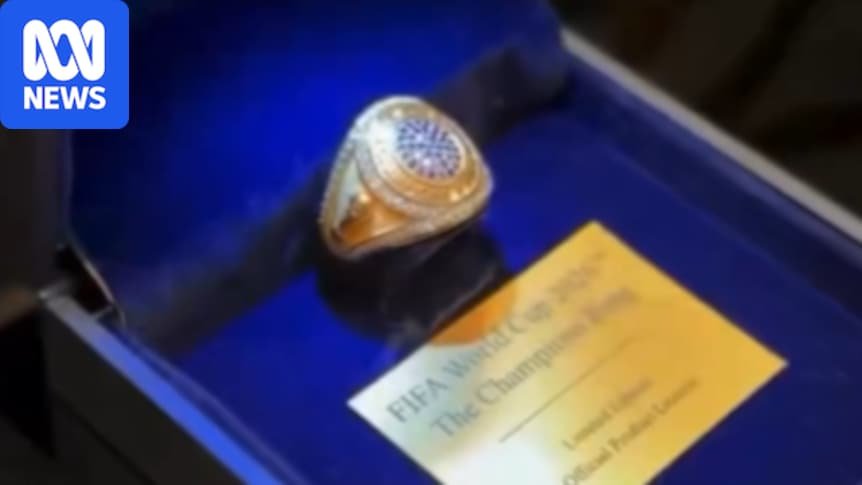
Spain was not just playing for the World Cup trophy. They also played for rings.
For the first time, FIFA is presenting rings in honor of the championship. Teams that win the title receive rings, a tradition in North American sports that dates back to the late 19th century but is not common in other parts of the world.
Judging by the US final, FIFA’s decision seems to be a tribute to this tradition. Players on the World Cup winning team will receive gold medals as usual, and the captain and coach of the winning team will also receive temporary rings shortly after the title match.
Spain will ultimately receive 30 individual rings. The World Cup trophy will be on one side, while the other side will be designed to “reflect the personality of the winning team,” FIFA said.
A total of 2,026 rings will be produced as a tribute to the year, each individually numbered, custom fitted and supplied with its own certificate of authenticity. The 1,996 rings that do not go to the winning team will be sold to the general public.
FIFA has not said how much the rings will cost.
The tradition of championship rings is believed to date back to at least 1893, when the Montreal Hockey Club was awarded the Dominion Hockey Challenge Cup, the predecessor to what is now the Stanley Cup. This team also ordered simple ribbons with tiny hockey sticks attached to the top.
Read more about the 2026 FIFA World Cup.
Major League Baseball teams began handing out championship rings in the 1920s, while NBA champions have received them virtually since the league’s inception in the late 1940s, and NFL teams have received them throughout the Super Bowl era, starting in the 1960s.
Some Halls of Fame present rings to their members, and U.S. Olympians and Paralympians receive rings as part of a benefits package that provides representation for their country on the world stage.
Rings are now routinely awarded in all U.S. professional sports, as well as in a number of college, high school and even youth sports, to celebrate championships.
AP