
Rio Grande Shootout Reignites Tensions Over Border Security and U.S. Intervention Fears
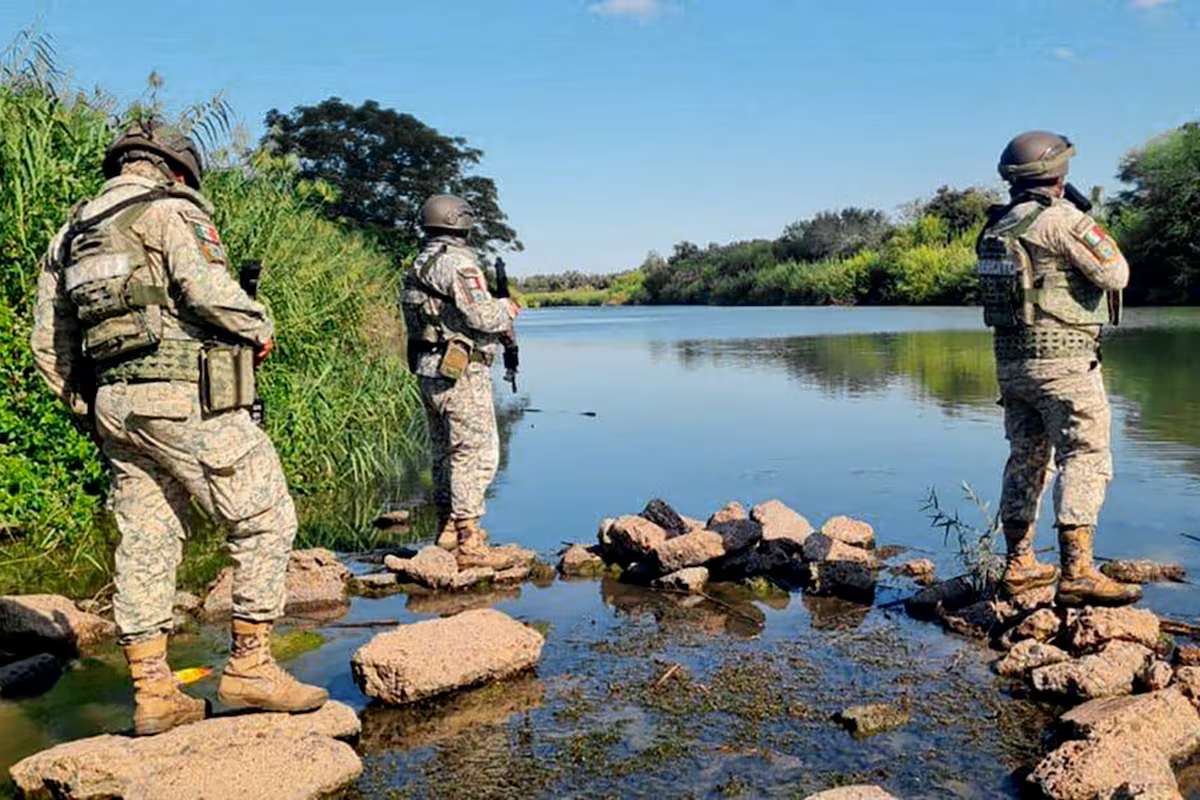
A reported exchange of gunfire between U.S. Coast Guard personnel and suspected armed individuals crossing from Mexico has thrown a fresh spotlight on the volatile Mexico–United States border, specifically the eastern stretch along the Rio Grande. The incident, which allegedly occurred on September 26 near the Texas community of Garceño — directly across from Camargo, Tamaulipas — has prompted military deployments on both sides and exposed a widening gap between Washington’s narrative and Mexico City’s skepticism.
No injuries or fatalities were reported, but the political aftershocks continue to reverberate. At the heart of the dispute lies a familiar question: how far will the United States go to confront what it labels narco-terrorist organizations operating on Mexican soil?
The Incident on the Rio Grande
According to U.S. accounts, Coast Guard crews patrolling the river encountered armed men attempting to cross from the Mexican side. Shots were exchanged. In response, 500 Mexican soldiers were dispatched to the area under the ongoing Frontera Norte operation, while U.S. forces also bolstered their presence. U.S. Ambassador Ronald Johnson publicly endorsed the American version of events, praising the Mexican deployment and stating that “Mexican military commanders will communicate directly with deployed U.S. forces.”
Yet President Claudia Sheinbaum struck a markedly different tone during her Monday press conference. “They said there had been shots fired from the Mexican border toward the U.S. We have asked for evidence that this was the case, because we have no evidence,” she said. The skepticism underscores a deeper mistrust: Mexico has long resisted any suggestion that its territory serves as a launchpad for attacks on the United States, a narrative that has gained traction since Donald Trump’s return to the White House.
Conflicting Narratives: Washington vs. Mexico City
The divergence is not new. For the past year and a half, the Republican narrative has framed Mexican cartels as an existential threat to American security — “narco-terrorists” who, if unchecked, justify unilateral action. Mexico, for its part, has responded with mass deportations of criminals, high-profile arrests of cartel figures and corrupt politicians, and the militarization of its northern border through operations like Frontera Norte.
Yet the goalposts keep moving. Each Mexican concession is met with acknowledgment — followed by new demands. The Garceño–Camargo shootout arrives at a moment when the Trump administration’s second term has shifted focus from migration enforcement to organized crime interdiction, a pivot that raises the specter of deeper U.S. military involvement south of the border.
A Border Transformed: From Migrants to Drones
The physical and operational reality of the border has changed dramatically. Three years ago, the dominant image was thousands of migrants waiting for CBP One appointments, managed via smartphone. Today, that flow has collapsed — apprehensions for illegal crossings have dropped below 10,000 per month. In their place: a technological arms race.
Cartel-operated drones now routinely surveil the border, and the U.S. military is shooting them down in increasing numbers. A U.S. commander told Reuters that in the past month alone, 378 drone incursions were detected — a rising trend. Signal jammers, aerial surveillance, and direct military coordination have replaced the humanitarian processing infrastructure of the recent past.
“The border is no longer defined by who crosses it on foot. It’s defined by who controls the airspace above it.”
The Camargo Corridor: Cartel Stronghold
The stretch from Reynosa to Nuevo Laredo — known as the narrow border — has long been a cartel battleground. Security consultancy Lantia identifies more than half a dozen criminal groups operating across municipalities including Nueva Ciudad Guerrero, Ciudad Díaz Ordaz, Mier, Miguel Alemán, and Camargo. These groups control not only drug trafficking routes but also the migrant smuggling pipelines that once moved thousands northward.
Camargo itself carries traumatic weight. In 2021, the massacre of 19 people — mostly migrants — in a rural area of the municipality shocked Mexico. The perpetrators were identified as state police, yet the motive was never fully clarified. That unresolved horror lingers in the collective memory, a reminder that violence in this corridor wears many uniforms.
Historical Echoes: The 2021 Massacre
The Camargo massacre remains a cautionary tale. It demonstrated how state actors, criminal groups, and migration enforcement intersect in ways that defy simple narratives. The victims were not combatants but workers seeking opportunity. The killers wore badges. The investigation stalled.
Today, as Mexican troops deploy to the same municipalities under federal orders, locals watch warily. The Frontera Norte operation is framed as a response to U.S. pressure, but its effectiveness — and its human rights record — remain unproven. The 2021 massacre showed that more boots on the ground does not automatically mean more safety for civilians.
Implications for Bilateral Security Cooperation
The Garceño incident is more than a skirmish. It is a test of the U.S.–Mexico security relationship under renewed strain. Direct communication between Mexican commanders and deployed U.S. forces — highlighted by Ambassador Johnson — suggests a level of operational coordination that goes beyond traditional channels. Whether that coordination respects Mexican sovereignty or erodes it depends on whom you ask.
For Washington, the message is clear: the border is a threat vector requiring active suppression. For Mexico City, the priority is managing that pressure without ceding autonomy. The Sheinbaum administration has so far chosen engagement over confrontation, but its demand for evidence signals a limit.
As drones replace migrants as the primary currency of border tension, and as cartel fragmentation fuels unpredictable violence, the risk of miscalculation grows. A single unverified shootout can trigger deployments, harden rhetoric, and push two nations closer to a rupture neither can afford.
The border is not a line. It is a living, shifting space where sovereignty, security, and survival intersect. What happens next in Camargo and Garceño will not stay there.
News, Government, Law, Society, Politics, International Relations, Border Security, Mexico, United States, Texas, Tamaulipas, Organized Crime, Cartels, Drug Trafficking, Migration, Drones, Military Deployment, Diplomatic Tensions, Human Rights, Sovereignty, Trump Administration, Sheinbaum Administration, US Coast Guard, Mexican Armed Forces, Reuters, EL PAÍS, Controversial, Critical, Neutral, Negative, Positive, Supportive

