

It’s only been six months since Starlink received U.S. regulatory approval to boost gigabit speeds, but SpaceX is already developing the next-generation Starlink constellation, which should be much larger, have 100,000 satellites, and offer even faster speeds.
On Monday, the company filed an application with the Federal Communications Commission (FCC) for a “Gen 3” constellation that would dwarf the current Starlink system of about 10,000 satellites. The Gen 3 constellation goes beyond gigabit speeds with the goal of offering “ultra-low latency, multi-gigabit broadband services to orders of magnitude more users around the world,” SpaceX says.
But it also stands out because it aims to bring high-speed satellite broadband not only to consumers, businesses and governments, but also to “billions of artificial intelligence-powered devices around the world,” according to a document included in the application. “The Gen3 system will provide the communications foundation for the era of artificial intelligence,” SpaceX writes.
“AI requires enormous uplink bandwidth to support the high-definition spatial and auditory data needed for real-time decision making and industrial automation,” the application adds. “Without this, the United States will not be able to compete in the artificial intelligence revolution.”
“While downlink capacity will remain important for delivering broadband to end users, the rapid growth of real-time communications and audiovisual processing for AI-enabled devices, including industrial automation, precision agriculture, telemedicine and personal robotics, will also require significant expansion of uplink capacity to end users,” the company adds.
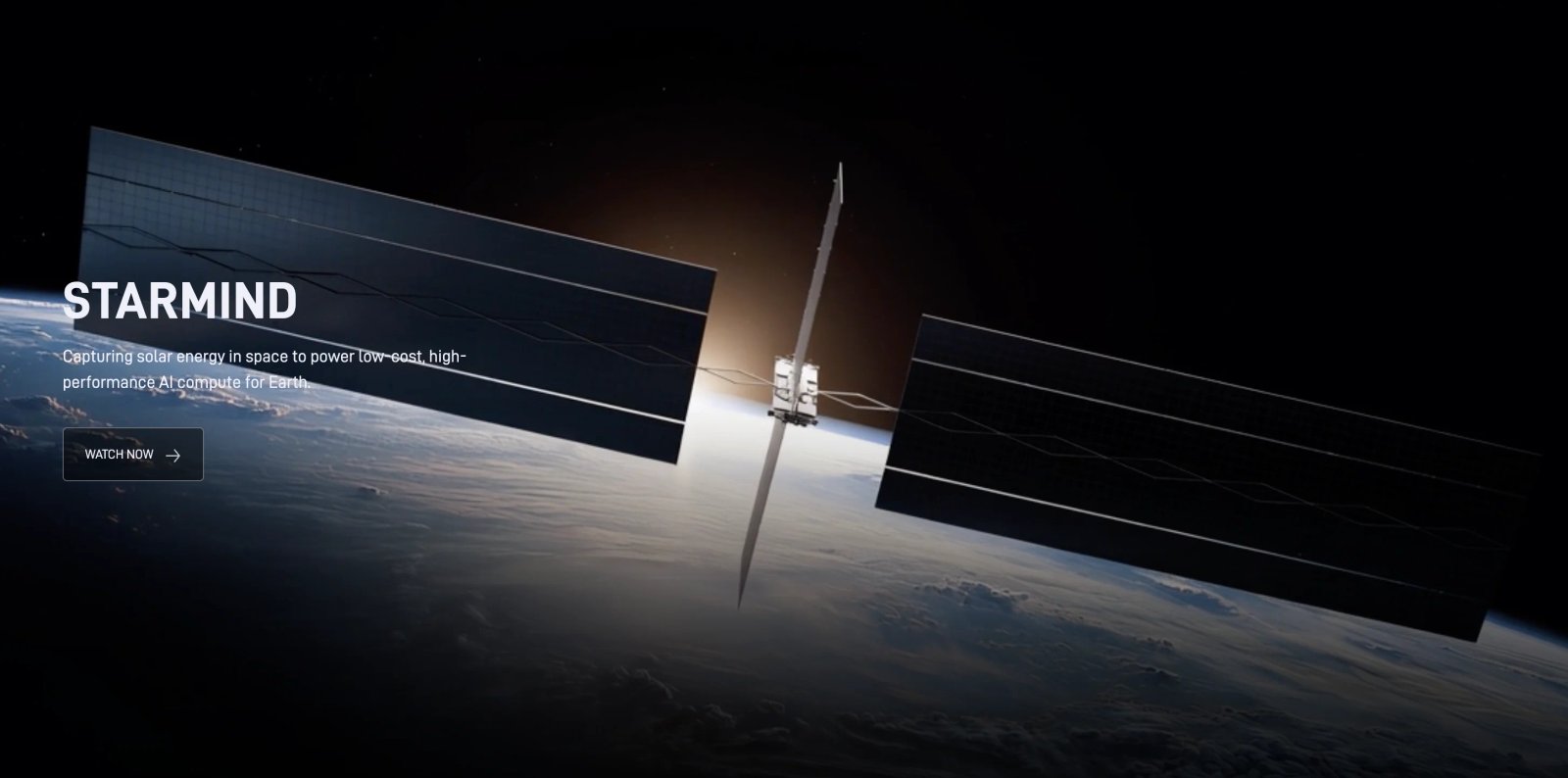
So the Gen 3 system appears to be tied to SpaceX’s proposal to launch a constellation of orbital data centers that could span up to a staggering 1 million satellites. These orbital data centers will use optical lasers to connect to Starlink and route data to users below. The FCC is currently reviewing the proposal, which has drawn widespread opposition from interest groups including astronomers and environmentalists.
(Photo: SpaceX)
We also wonder if the third-generation Starlink constellation could include SpaceX’s rumored smartphone-like artificial intelligence device that the company is secretly showing off to investors. At the same time, SpaceX CEO Elon Musk called reports about the development of the device “completely false.”
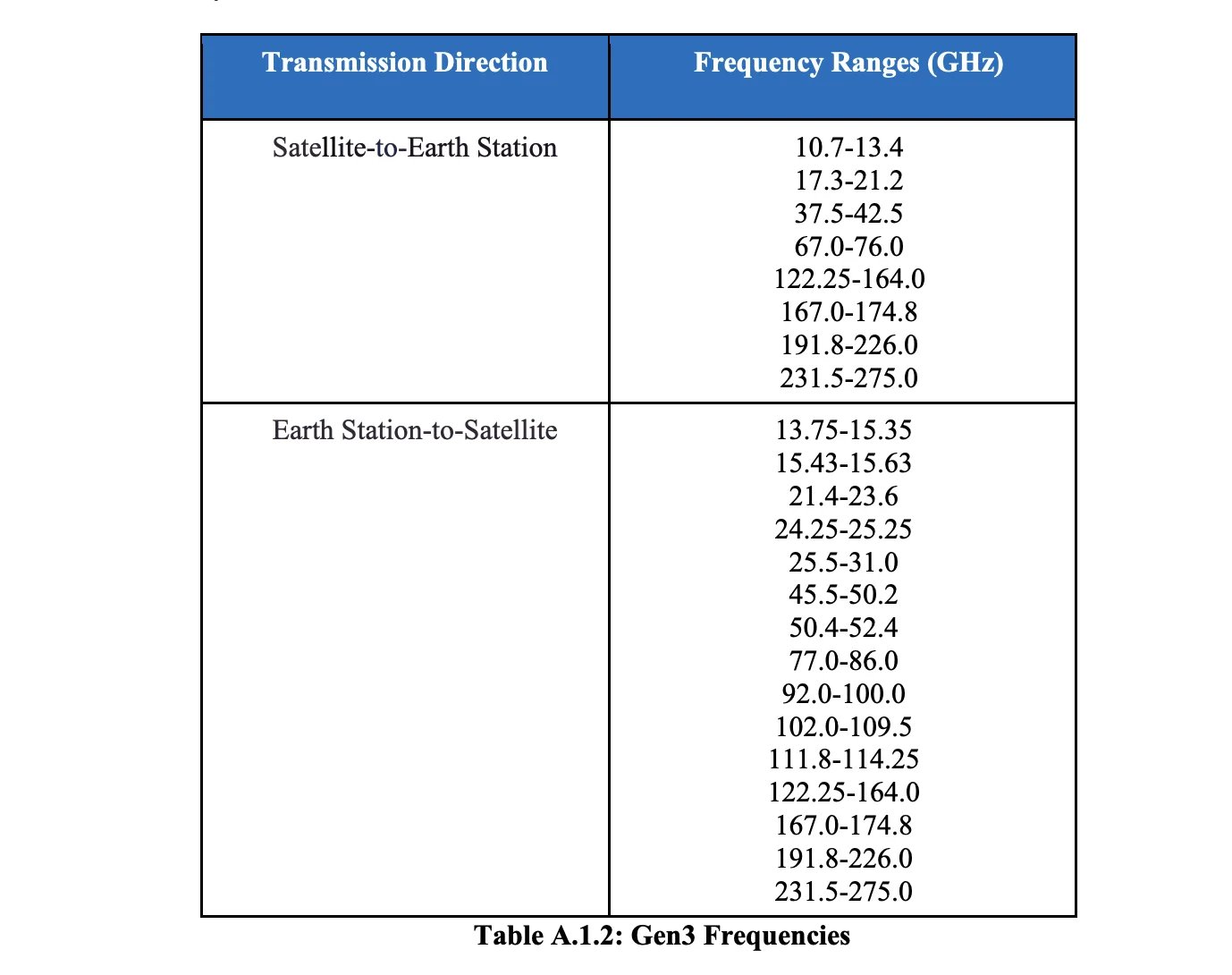
Meanwhile, SpaceX’s filing says the Gen 3 system will meet AI power needs using a band of radio spectrum for which Starlink has already received regulatory approval in the Ku-, Ka-, V- and E-bands. However, SpaceX also wants to pioneer the use of “W- and D-band frequencies from 92 to 275 GHz” to radically improve throughput.
(Photo: FCC/SpaceX)
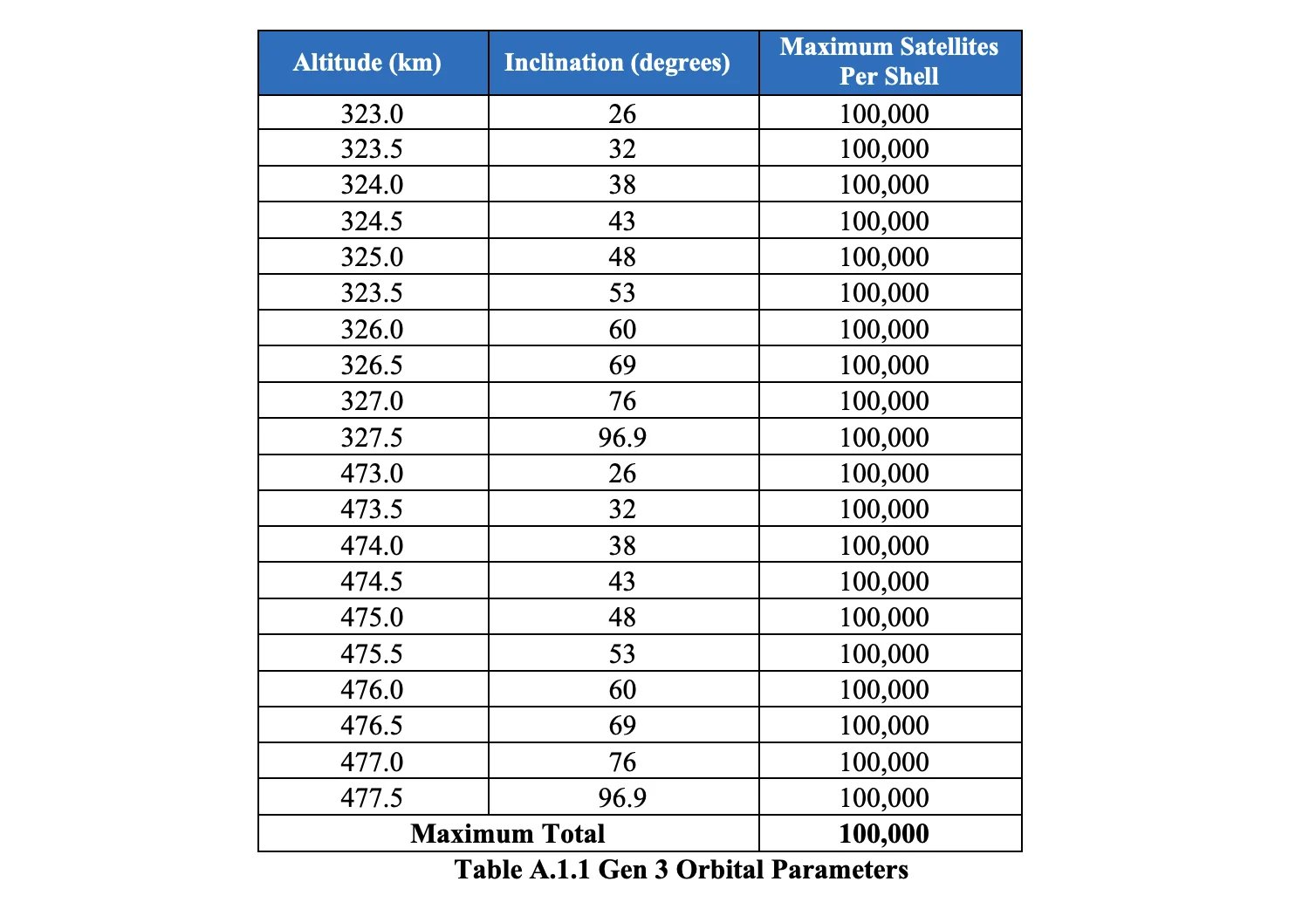
In addition, SpaceX wants to put the satellite into orbit at an altitude of 323 kilometers from the Earth’s surface; approval of the gigabit upgrade allows the use of orbits up to 340 km altitude. The company explains: “By deploying these satellites at very low altitudes, the Gen3 system will achieve unprecedented satellite diversity, ensuring multiple satellites are always visible from anywhere on Earth.”
Recommended by our editors
(Photo: FCC/SpaceX)
SpaceX currently has regulatory authority to launch and operate up to 19,400 satellites in the second and first generation Starlink constellations, approval it received several years ago. Later this year, the company plans to launch the first V3 satellites with gigabit connectivity.
However, it appears that 20,000 satellites are not enough; The company wants to go even further, explaining: “With dozens of satellites visible from anywhere, the Gen3 system can dynamically route traffic, avoid interference, and maintain continued high-quality service even as spectrum usage intensifies around the world.” Starlink currently has over 12 million active customers.
SpaceX is calling on the Federal Communications Commission to greenlight the Gen 3 constellation, saying it will ensure U.S. leadership in “space, spectrum, robotics and artificial intelligence for years to come, delivering the capacity, coverage and quality of service needed to connect billions of devices to real-time AI-powered tools, including constellations of advanced AI satellites.”
Currently, Starlink offers average speeds of about 120 Mbps or higher in the US. But the resulting third-generation system could make Starlink an even faster alternative to terrestrial fiber optic cable if it can deliver multi-gigabit performance. However, we wouldn’t be surprised if the third generation constellation faces resistance from astronomers and environmentalists due to potential light pollution and atmospheric effects.
About our expert

Michael Kahn
Chief reporter
Experience
I have been working as a journalist for more than 15 years. I started my career as a schools and urban reporter in Kansas City and joined PCMag in 2017, where I cover satellite internet services, cybersecurity, computer hardware and more. I currently live in San Francisco, but previously spent more than five years in China covering the country’s technology sector.
Since 2020, I’ve covered the launch and explosive growth of SpaceX’s Starlink satellite internet service, writing more than 600 articles on the availability and launch of new features, as well as regulatory battles over expanding satellite constellations, battling rival providers such as AST SpaceMobile and Amazon, and efforts to expand satellite mobile services. I scoured FCC filings for the latest news and traveled to remote parts of California to test Starlink cellular service.
I also cover cyber threats, from ransomware groups to the emergence of AI-powered malware. In 2024 and 2025, the Federal Trade Commission ordered Avast to pay consumers $16.5 million for secretly collecting and selling their personal information to third-party customers, my joint investigation with Motherboard found.
I also cover the PC graphics card market. The pandemic-era memory shortage has me camping out in front of Best Buy to buy an RTX 3000. Now I’m keeping an eye on how memory shortages caused by artificial intelligence are affecting the entire consumer electronics market. I always want to learn more, so please leave comments and send me tips.
Read full biography