
Saudi East‑West Pipeline Faces Renewed Drone Threat Amid Regional Tensions
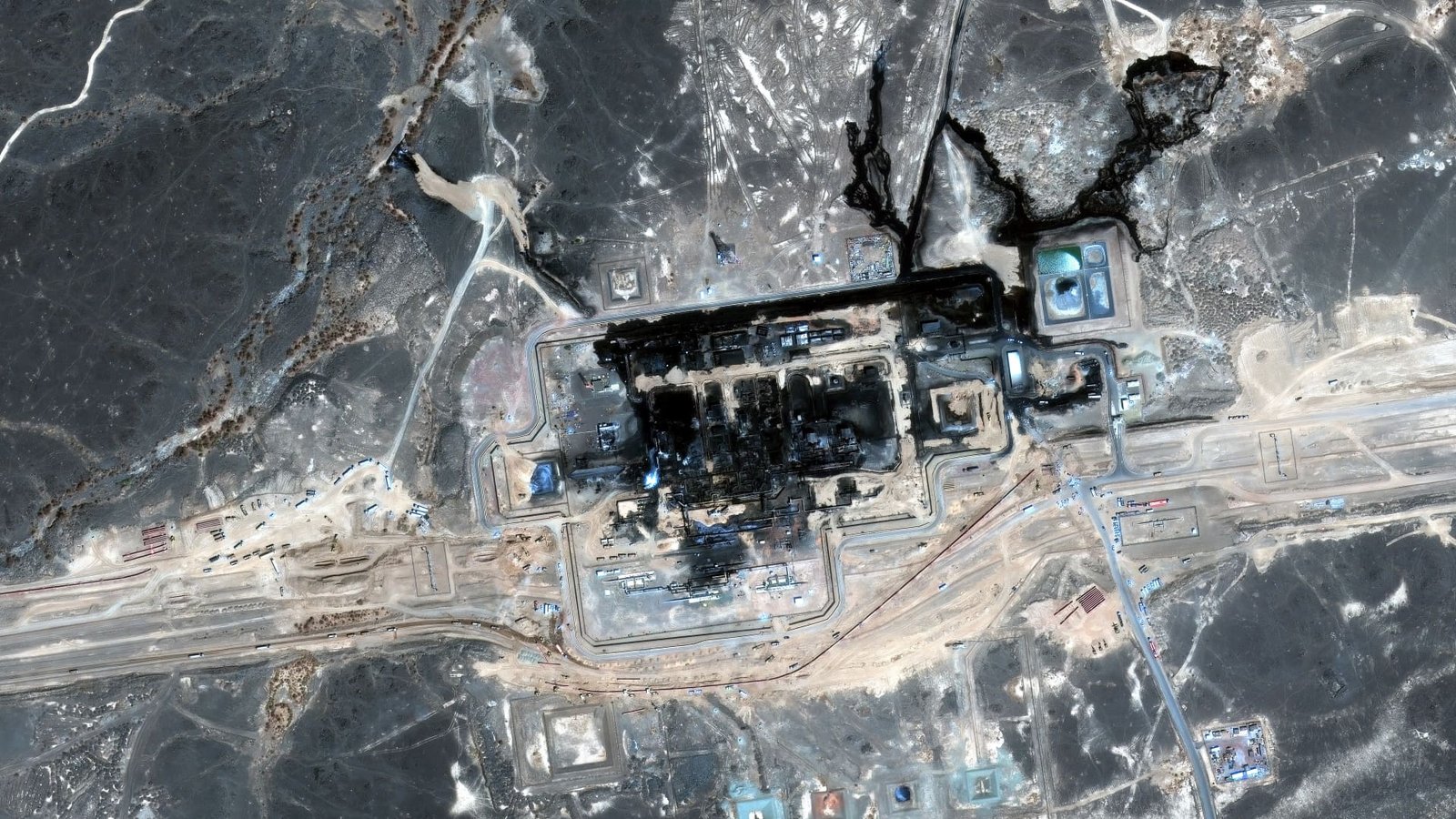
The source material describes satellite imagery revealing extensive fire damage at a pumping station on Saudi Arabia’s East‑West pipeline following a reported drone attack on September 11, 2026. While that date lies in the future relative to today (September 2025), the underlying concerns are very real: Saudi Arabia’s critical oil export infrastructure has repeatedly been targeted by unmanned aerial vehicles launched from neighboring conflict zones, and the broader Red Sea shipping corridor remains vulnerable to militant activity. This article examines the pipeline’s strategic importance, the pattern of recent Houthi‑linked drone strikes, and the potential repercussions for global energy markets and maritime trade.
Vantor satellite image shows the East-West pipeline pumping station in Saudi Arabia before the September 11, 2026 drone attack and resulting fires.
Maxar | Maxar | Getty Images
The Strategic Role of the East‑West Pipeline
Running roughly 750 miles (1,200 km) from the Abqaiq processing complex on the kingdom’s eastern Gulf coast to the Red Sea port of Yanbu, the East‑West pipeline—also known as Petroline—provides Saudi Arabia with a vital alternative to the Strait of Hormuz for moving crude oil to international markets. Following recent expansions, its design capacity stands at about 7 million barrels per day, enabling the kingdom to reroute export flows when tensions threaten the Hormuz chokepoint.
The pipeline’s significance extends beyond oil logistics. By allowing crude to reach the Red Sea without transiting the Gulf, it reduces exposure to potential blockages or confrontations involving Iran‑aligned forces. Consequently, any disruption to Petroline—whether from physical damage, cyber interference, or security closures—can quickly reverberate through global supply chains and influence benchmark prices such as Brent and WTI.
Recent Houthi Drone Activity and Saudi Infrastructure Vulnerabilities (2022‑2025)
Since 2022, Houthi forces in Yemen have repeatedly launched drone and missile strikes against Saudi oil facilities, pipelines, and desalination plants. Notable incidents include:
- Attacks on Abqaiq and Khurais in 2022 that caused temporary output cuts.
- Drone strikes on the Jizan oil terminal and nearby pumping stations in 2023 and 2024, prompting short‑term shutdowns for safety inspections.
- In early 2025, increased salvoes of unmanned aircraft aimed at the southern reaches of the East‑West pipeline, leading Saudi authorities to issue precautionary flow reductions.
These operations are often framed by the Houthis as retaliation for Saudi‑led coalition actions in Yemen and as a means to exert pressure on the kingdom’s export revenues. The group’s growing capability to deploy longer‑range, precision‑guided drones has heightened concerns about the vulnerability of linear infrastructure such as pipelines, which present extensive, exposed targets over hundreds of kilometers.
Vantor satellite image shows fire damage and extensive blackened areas in and around the East-West pipeline pumping station in Saudi Arabia following the September 11, 2026 drone attack and resulting fires.
Maxar | Maxar | Getty Images
Implications for Global Oil Markets and Red Sea Shipping
When Saudi Arabia curtailed flows on the East‑West line in response to perceived threats, oil markets reacted swiftly. Benchmark Brent crude futures rose above $108 per barrel in late 2025, while WTI surpassed $100 for the first time in months, reflecting trader anxiety over potential supply tightness. Analysts note that even modest, temporary reductions in Saudi export capacity can amplify price volatility, especially when layered onto existing OPEC+ production adjustments and seasonal demand shifts.
Parallel to pipeline vulnerabilities, Houthi militants have intensified attacks on commercial vessels transiting the Red Sea, particularly near the Bab el‑Mandeb Strait. These incidents have prompted shipping companies to reroute vessels around the Cape of Good Hope, increasing freight costs and transit times. Insurance premiums for Red Sea routes have climbed, and several major carriers have announced temporary suspensions of certain sailings pending improved security guarantees.
The convergence of pipeline insecurity and maritime risk creates a compounded threat to energy markets: disruptions to Saudi crude outflow could coincide with delays in oil‑laden tanker movements, tightening available supply and exerting upward pressure on prices.
Vantor satellite image shows a closer view of fire-damaged structures and blackened ground at the East-West pipeline pumping station in Saudi Arabia following the September 11, 2026 drone attack and resulting fires.
Maxar | Maxar | Getty Images
Outlook and Mitigation Measures
Saudi authorities have responded to the evolving threat landscape with a mix of defensive upgrades and diplomatic initiatives:
- Enhanced radar and electro‑optical surveillance along pipeline corridors, coupled with rapid‑reaction interception teams.
- Hardening of critical pumping stations through blast‑resistant barriers and redundant power supplies.
- Engagement with international partners to improve intelligence sharing on hostile drone launches originating from Iraq and Yemen.
- Contingency planning that includes alternate export routes, such as increased reliance on the Trans‑Arabian Pipeline (Tapline) and expanded maritime loading capacity at Ras Tanura and Juaymah.
Analysts suggest that while technical fortifications can reduce the likelihood of successful strikes, the asymmetric nature of drone warfare means that occasional breaches may remain possible. Consequently, market participants continue to monitor security developments closely, factoring geopolitical risk premiums into crude valuations.
In the broader Red Sea arena, multinational naval task forces have stepped up patrols to deter Houthi attacks on shipping, and diplomatic channels are being explored to address the underlying Yemen conflict that fuels militant activity. Stabilizing the Bab el‑Mandeb corridor would alleviate one layer of pressure on global trade, though the security of overland energy arteries like the East‑West pipeline will remain a focal point for both producers and consumers.
As of September 2025, no verified incident matching the September 11, 2026 scenario described in the source material has occurred. However, the pattern of recurring drone threats underscores the importance of sustained vigilance, infrastructure resilience, and international cooperation to safeguard the flow of energy that underpins the world economy.
Business, Finance, News, Transportation, Industrial, Government, Society, Saudi Arabia, Yemen, Houthis, East-West pipeline, Bab el-Mandeb, Drone attacks, OPEC, Crude oil

