
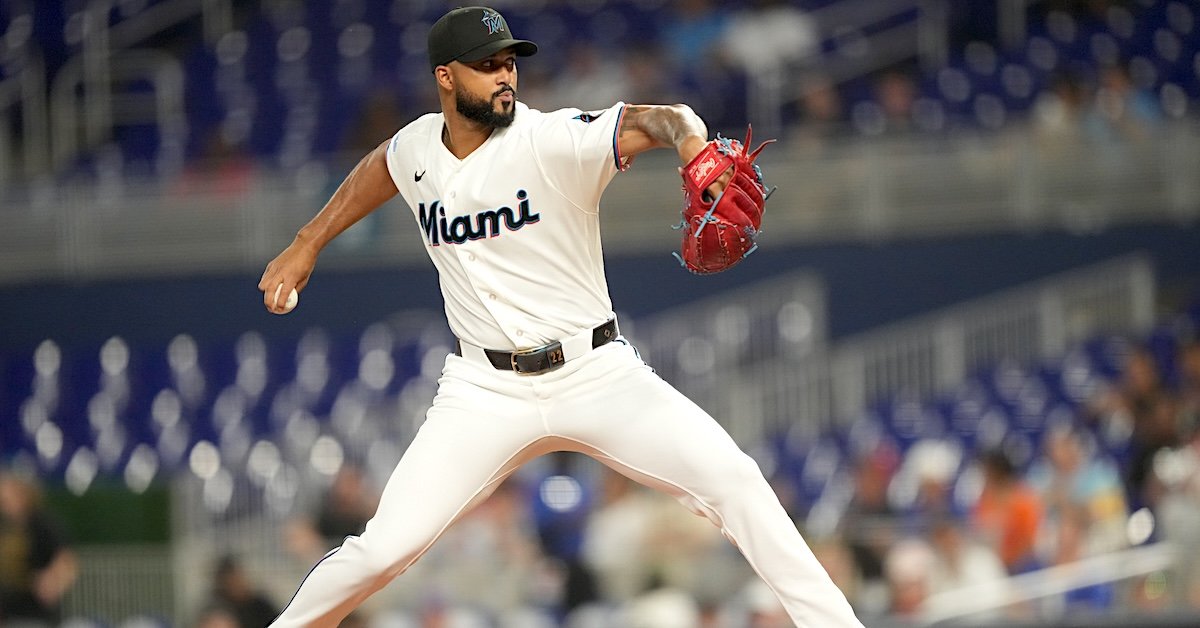
Sandy Alcantara’s Innings Dominance: A Throwback Season in Modern Baseball
In an era where starting pitchers rarely cross the 180-inning threshold, Sandy Alcantara has done something increasingly rare: he reached 200 innings pitched before anyone else in Major League Baseball. On September 8, 2026, the Miami Marlins right-hander threw 4⅓ innings against the New York Mets to become the first pitcher to hit the mark this season — a milestone that once felt routine but now stands as a testament to both his durability and the shifting landscape of pitcher usage.
The 200-Inning Milestone in a Diminished Era
Alcantara’s achievement arrives against a backdrop of historic decline in starter workloads. In the early days of divisional play, teams regularly featured two or more 200-inning starters; as recently as 2014, there were more 200-inning pitchers than major league teams. Since then, the numbers have cratered. From 34 such pitchers in 2014 to just 15 two years later, the trend accelerated until last season produced only three 200-inning starters league-wide.
This season, the scarcity is even more pronounced. Before Tuesday’s games, only eight pitchers had reached 175 innings. The theoretical maximum for 200-inning qualifiers in 2026 is five, and that requires optimistic scenarios for Cristopher Sánchez, Trevor Schlittler, Michael King, and others. Alcantara, meanwhile, is on pace for the high 210s — a workload that would have been unremarkable in 2003 but now looks almost anachronistic.
Volume Over Velocity: The Alcantara Profile
The 2022 NL Cy Young winner has never been a strikeout artist. Even in his award-winning season, his strikeout rate ranked just 11th among 22 qualified NL starters — 36 fewer punchouts than Corbin Burnes in 26⅔ fewer innings. What made Alcantara elite was a low arm angle, a fastball with extreme arm-side run, a devastating changeup, and an ability to suppress hard contact and home runs.
In 2026, the profile has shifted. Alcantara has expanded from a simple three-pitch mix to a seven-pitch arsenal featuring three breaking balls. His velocity has dipped slightly, and his strikeout rate has plummeted to 20th among 22 qualified starters. Yet he continues to pitch deeper than anyone: 26 of 31 starts lasting at least six innings (no one else has more than 23), and a league-high 13 starts of seven-plus innings (only four other pitchers have reached double digits).
The Times-Through-the-Order Puzzle
Alcantara’s season hasn’t been without rough patches — he’s allowed four or more runs in 11 starts, tied for sixth-most in the league, including each of his last four outings. But the Marlins aren’t simply leaving him in too long. His first time through the order: 2.91 ERA, .301 opponent wOBA. Third time through: 2.98 ERA, .272 wOBA. The damage comes the second time around: 4.48 ERA, .317 wOBA. Miami appears to be giving him rope to navigate early trouble, trusting his ability to settle in and finish deep.
A Historic Margin of Victory
As of Tuesday, Alcantara leads the innings race by 17⅔ over Sánchez. That margin, partly a function of being one day ahead in the rotation, would still represent the largest gap since Alcantara’s own 23⅔-inning lead over Aaron Nola in 2022. Before that, you have to go back to 2003 — Roy Halladay (266 innings) over Bartolo Colón (242) — for a double-digit margin between first and second place.
On pace to finish 11⅔ innings ahead of the runner-up and 32 innings clear of 10th place (Gavin Williams, ~185⅔), both gaps would be the largest since 2022. The last time the innings leader beat 10th place by more than 32 innings was 2008 (CC Sabathia, 35 starts). The last pitcher to start more than 35 games? Halladay and Greg Maddux in 2003.
Percentage Margins: The Knuckleball Standard
Raw innings gaps tell only part of the story. Measuring the leader as a percentage of the runner-up, Alcantara is on pace to beat Sánchez by 5.7% — just outside the top 10 margins of the divisional era (1969–present). The all-time leaders on this metric share a striking commonality.
| Season | Name | Team | Leader IP | % of 2nd |
|---|---|---|---|---|
| 1979 | Phil Niekro | ATL | 342 | ~115%+ |
| 1972 | Wilbur Wood | CHW | 376⅔ | ~115%+ |
| 1971 | Mickey Lolich | DET | 376 | ~115%+ |
| 1978 | Phil Niekro | ATL | 334⅓ | ~115%+ |
| 2003 | Roy Halladay | TOR | 266 | ~110%+ |
Five of the top six seasons belong to Phil Niekro and Wilbur Wood — knuckleballers whose low-stress deliveries allowed unprecedented workloads. Alcantara, by contrast, reached his peak throwing harder than any starter in baseball. This year, his average four-seamer ranks ninth among starters with 100+ innings.
The New Fireballers: A Generational Shift
The eight pitchers ahead of Alcantara in velocity — Jacob Misiorowski, Bubba Chandler, Eury Pérez, Schlittler, Roki Sasaki, Walbert Ureña, Chase Burns, and Gavin Williams — all made their MLB debuts after Alcantara’s 2022 Cy Young. So did José Soriano and Paul Skenes, who ranked second and third in fastball velocity last year behind Hunter Greene (debut: 2022).
In just a few years, a new generation of elite velocity arms has flooded big-league rotations. Alcantara still throws harder than the peers of his prime, but the influx of triple-digit starters makes him look like a knuckleballer by comparison — not in delivery, but in relative velocity. He’s lapping the field in innings the way Niekro and Wood once did, but with a power fastball that now registers as merely above-average.
Leader Over 10th Place: The Eras of Dominance
Comparing the innings leader to 10th place offers a clearer picture of era-by-era expectations for a frontline starter. The table below shows the greatest percentage margins over 10th place in the divisional era.
| Season | Name | Team | Leader IP | % of 10th |
|---|---|---|---|---|
| 1979 | Phil Niekro | ATL | 342 | 135.5% |
| 1972 | Wilbur Wood | CHW | 376⅔ | 134.5% |
| 1971 | Mickey Lolich | DET | 376 | 133.2% |
| 1978 | Phil Niekro | ATL | 334⅓ | 123.8% |
| 1977 | Phil Niekro | ATL | 330⅓ | 123.7% |
| 1973 | Wilbur Wood | CHW | 359⅓ | 122.5% |
| 2003 | Roy Halladay | TOR | 266 | 120.5% |
| 1999 | Randy Johnson | ARI | 271⅔ | 119.2% |
| 1980 | Steve Carlton | PHI | 304 | 118.8% |
| 1975 | Catfish Hunter | NYY | 328 | 118.1% |
Alcantara’s projected margin over 10th place would rank among the highest since 2003, reinforcing that his 2026 season represents an outlier workload in the modern game — not because he’s throwing 350 innings, but because everyone else is throwing so few.
Conclusion: The Last Workhorse
Sandy Alcantara’s 2026 season won’t resemble his 2022 peak in the box score. The strikeouts are down, the ERA is higher, the arsenal has expanded from surgical simplicity to something more experimental. But in the category that once defined ace status — innings eaten, games deepened, rotation stabilized — he stands alone. He is the first to 200, the likely leader by a historic margin, and a living bridge between the workload expectations of two decades ago and the pitcher management orthodoxy of today.
Whether that makes him a throwback or a trailblazer depends on which direction you’re looking. For the Marlins, it means something simpler: every fifth day, the ball goes to Alcantara, and more often than not, he’s still on the mound in the seventh inning. In 2026, that’s as rare as a knuckleballer leading the league in velocity — and just as valuable.
Sports, News, People, MLB, Miami Marlins, Sandy Alcantara, Pitching, Baseball Statistics, Historical Analysis, Starting Pitchers, Innings Pitched, Cy Young Award, Baseball History, 2026 MLB Season

