

An agreement between the Innu Pessamit Council, Hydro-Quebec and the provincial government was rejected Sunday night during a referendum. In total, 63% of the votes were against.
The community has voted on whether or not to accept a multibillion-dollar agreement with a state-owned company to pursue various energy projects in their ancestral territory.
The participation rate was about 37%. About 3,500 community members were able to vote, of which 1,287 people spoke.
Referendum Chairman Alexis Vawanoloat announced the results of the vote in the evening: 809 votes against and 471 votes in favor were recorded. A total of 7 votes were rejected.
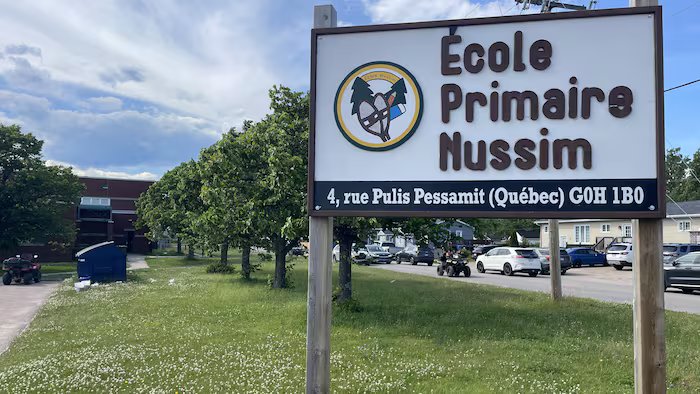 Open in full screen mode
The community voted on Sunday from 8 a.m. to 6 p.m. at the Nusim School Gymnasium.
Photo: Radio-Canada/Jacob Demers
The band council negotiated the agreement with Hydro-Québec and Quebec and then decided to put it to a vote through a community referendum.
By email, Hydro-Québec writes that it respects a democratic decision by the members of the Pessamit community.
The state corporation notes that remains open to dialogue and will continue discussions with community representatives.
The vice-chief of Pessamit, Jerome Bacon Saint-Onge, confirmed on his social networks that the decision of the community members will be fully respected.
The Council’s responsibility now is to continue to work with the same commitment to protecting our territory, our rights and our collective future.
The minister responsible for First Nations and Inuit relations, Ian Lafrenière, also responded Sunday to the vote result.
We take note of the decision of the members of the Pessamit community. I agreed with the elected officials that tomorrow we will take stock.
– he wrote on his social networks.
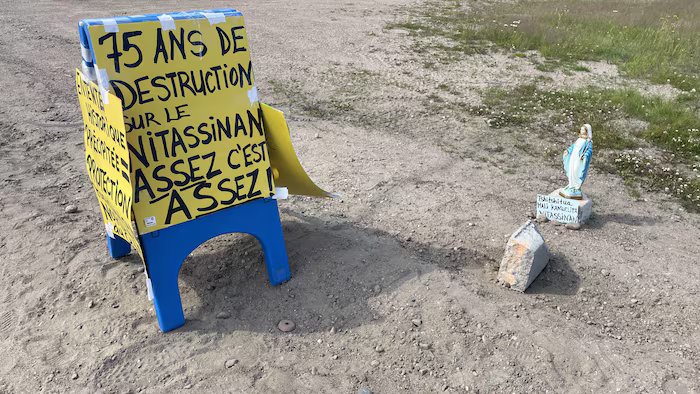 Open in full screen mode
Members had less than ten days to discuss and attend informational meetings on the issue.
Photo: Radio-Canada/Jacob Demers
With this draft agreement, Hydro-Québec, in particular, wanted to pave the way for the construction of a hydroelectric dam, wind turbines and transmission lines on the community’s ancestral territory.
The Pessamit Band Council estimated that the agreement would help right past wrongs and that it could generate economic benefits of up to $7 billion over half a century.
However, this amount was not specified anywhere in the draft agreement. The amounts planned for compensation and promised under the partnership amounted to several billion dollars, but some of them depended on future variables.
The referendum was criticized
Community members raised concerns about the consultation process.
Before the vote, Pessamit-based interdisciplinary artist Natasha Canapé Fontaine wrote an open letter condemning, in part, the fact that community members had less than 10 days to familiarize themselves with the agreement. 42 pages of lawyer jargon
.
Two party members interviewed by Radio-Canada also felt the time available before the referendum was too short.
Professor Thierry Rodon, chair of sustainable development studies in the North at Université Laval, suggested Wednesday that the tribal council wants the population to make a decision quickly so that the agreement can be signed before the next provincial election.
This kind of agreement, when the government changes, in any case, it takes a long time before it is signed again.
– he explained.
Two years ago, the Pessamit-Innus Council signed a framework agreement with Hydro-Québec. However, some Innu in the community at the time also criticized the band council for a lack of consultation in the process.
Based on information from Nazdar Roy