
Loading the Boat: The Dominant Strategy in Team Golf
In the high-stakes world of team match-play golf, where every point can swing the momentum of an entire competition, one strategy has risen to prominence: “loading the boat.” This term refers to the practice of sending a team’s strongest players out first in the singles session, a tactic once considered unconventional but now almost universally accepted. As the Ryder Cup and Presidents Cup approach, understanding this concept is crucial for fans and analysts alike. The reason can be described in one word: momentum, but it goes deeper, built into the very fabric of how team golf is played today.
The Momentum Factor: Why Early Points Matter
Singles matches in golf are not played in a vacuum; they are interconnected in a way that affects players psychologically. If you’re playing in the back of the lineup—say, in match No. 10 of 12—and you see that your team is winning or losing the matches ahead, that’s going to affect your play. This means all matches are not created equal. If you know the other team will load the boat, you can’t just hold your best players back to play the other team’s worst, because ceding that early momentum is going to make everything that comes afterward more difficult. Once you hand the initiative to the other team (and its fans), you might not recover. The early points set the tone, creating a ripple effect that can either propel a team to victory or leave them playing catch-up all day.
Historical Evolution: From Backloading to Frontloading
The concept of loading the boat wasn’t always the norm. In fact, it was first popularized in the 1983 Ryder Cup, when European captain Tony Jacklin broke tradition by putting three of his best players—Seve Ballesteros, Nick Faldo, and Bernhard Langer—in the top three spots. At the time, the unwritten rule was to backload, as Jacklin and American captain Jack Nicklaus had done in 1969. But Jacklin’s move shocked the golf world and marked the beginning of a strategic shift. Over time, the 1999 and 2002 Ryder Cups cemented this approach. In 1999 at Brookline, the U.S. trailed Europe 10-6 but loaded the boat to pull off an incredible comeback. In 2002 at The Belfry, Europe front-loaded while the U.S. held back Tiger Woods, Phil Mickelson, and Davis Love III, leading to a European victory. These events proved that early momentum is key, and captains began to adopt loading the boat as standard practice.
Case Studies: Lessons from Ryder Cup History
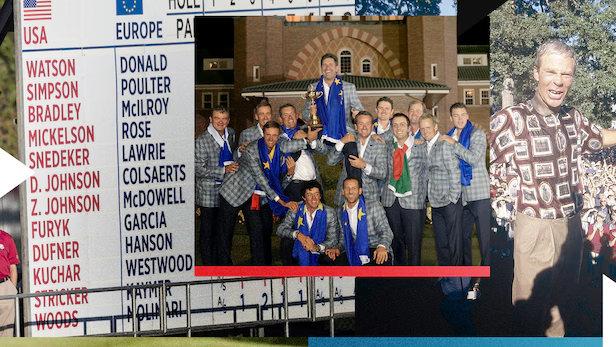
History offers vivid examples of loading the boat in action. The 2012 Ryder Cup at Medinah is a cautionary tale: U.S. captain Davis Love III failed to front-load his team, instead sending weaker players first, which contributed to Europe’s miraculous comeback. Love later called it the biggest mistake of his career, admitting, “We left them hanging… Bubba and Webb going first was just a complete air ball.” In contrast, at the 2016 Ryder Cup at Hazeltine National, Love learned from his error, loaded the boat, and led the U.S. to a decisive win. These cases highlight how critical lineup order can be, especially when trailing or in tight matches. As Jason Aquino of Scouts Consulting, who worked with U.S. teams, bluntly put it: “It’s about shooting your shot. If the Cup is over with your best players still on the golf course, you have committed captaincy malpractice.”
Cultural Perspectives: American vs. European Mindsets
Why did it take America so long to embrace loading the boat? According to Aquino, there’s a cultural explanation. Americans, he suggests, have a desire to “want the ball” in crunch time, analogous to wanting the Ryder Cup to come down to their match. This leads to an insecurity about letting weaker players decide the outcome. Europeans, on the other hand, often view the lineup as a relay race, where leading off is an honor. Players like Paul McGinley, Phillip Price, and Jamie Donaldson—minor figures in terms of tour accolades—have become Ryder Cup heroes, embodying the European ethos that “out of the shadows come heroes,” as Sam Torrance once said. This cultural difference has shaped strategic approaches, with Europe consistently leading the way in adopting front-loading tactics.
Modern Applications and Ongoing Debates
On the eve of the 2026 Presidents Cup, the strategy continues to evolve. While the Presidents Cup format allows captains to make match-ups one-by-one, rather than blind submissions, Aquino warns against playing too finely: “You’re playing with fire when you try to play one-on-one match-ups too finely.” The recent 2026 Solheim Cup saw U.S. captain Angela Stanford suffer a close loss after failing to load the boat, putting two of her worst players in the first three spots. This underscores that while loading the boat isn’t a guarantee—your best players can still lose—decades of evidence show that momentum is real and contagious. Captains like Brandt Snedeker and Geoff Ogilvy are expected to heed the lesson at Medinah, where the strategy will likely be deployed to harness early advantages.
Conclusion: The Future of Team Golf Strategy
In summary, loading the boat has transformed from a radical idea to a cornerstone of modern team golf captaincy. While it may not always work, the psychological and practical benefits—momentum, early clinching of points, and avoiding back-end mismatches—make it a critical tool. As the game progresses, the debate may shift to variants like “offset front loads” or “circuit breakers,” but the core principle remains: in the battle for team glory, sending your best players first is often the key to victory. Load the boat, or risk watching it sink.
Sports, Leisure, Golf, Ryder Cup, Presidents Cup, Team Golf Strategy

