
There is growing evidence that a very popular weed killer used on farms across the country may be linked to the progressive nervous system disorder Parkinson’s disease.
The chemical paraquat is so toxic that its use is banned in 74 countries around the world, even in China where it is made, but not here in Australia, and patients, doctors and disease experts are wondering why.
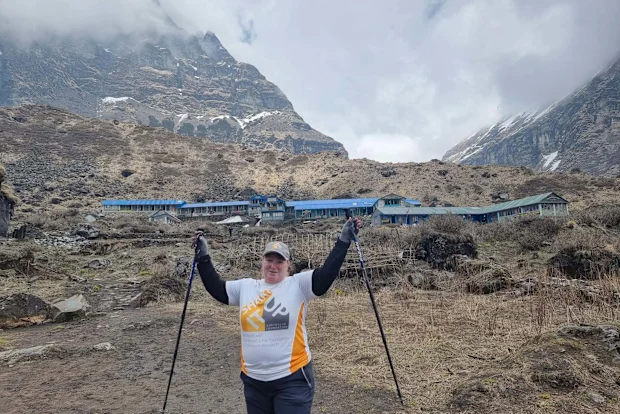
Sandy Gershwitz conquered one of the world’s highest peaks in Nepal. She also has Parkinson’s disease. Current case
This is not a battle between farmers and doctors, but between Parkinson’s patients and Australia’s chemical regulator.
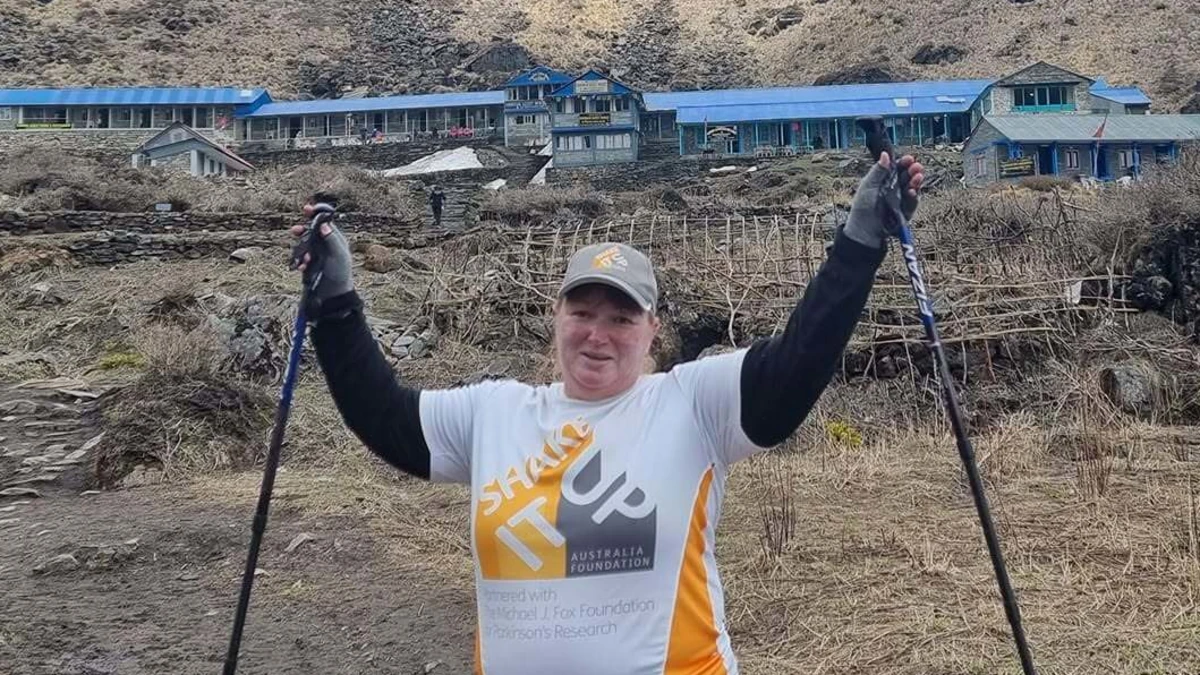
For Sandy Gershwitz, movement is life: she takes boxing classes, goes to personal training, rides a bike, hikes regularly, and has even climbed one of the world’s highest peaks in Nepal.
It’s impossible to believe to the naked eye that she has Parkinson’s disease, but one of the cruel ironies of the disease is that basic movement can be nearly impossible.
Despite all her fitness success, Sandy struggles to get from her chair to her desk.
“You’re telling your body to really move, but it feels like no one’s home,” Gershwitz told A Current Affair reporter Davina Smith.
These muscle freezes are one of the many symptoms of Parkinson’s disease, a disease that affects older people, but Gershwitz was only 52 years old.
“I have trouble walking, but I can climb stairs,” Sandy said.
“I just happened to ask one of the allied health professionals, ‘Why do so many people my age, and maybe a little older, have Parkinson’s disease?’ – recalls Gershwitz.
“And this person then told me: “Well, yes, these are chemicals in agriculture.”
Gershwitz grew up on a wheat farm in South Australia, where the herbicide paraquat was widely sprayed throughout the area to kill weeds.
Paraquat has been strictly banned or restricted for decades in more than 70 jurisdictions, including the UK, European Union and China – most recently in the US state of Vermont, where an official ban will be introduced in November this year.
However, three years ago, paraquat maker Syngenta shared a video online featuring Western Australian wheat farmer and grain grower Andrew Wiedman, who showed what he needs to do these days to stay safe when using it.
“If you follow the guidelines and do everything correctly, it is very safe to use,” Widmann said in the video.
“We just put it into the tank through the system and are not exposed to it.”
The timing of the video was critical; The Australian Pesticides and Veterinary Medicines Authority (APVMA), which decides which products are safe to use, was considering whether paraquat should be banned here too.
“The idea of not having products like paraquat in our rotation to support what we do is going to be a real challenge for us,” Wiedmann added.
Paraquat is used on golf courses and on farms growing wheat, barley, chickpeas, soybeans and potatoes.
This is a cheap and effective way to kill weeds without disturbing soil moisture. It kills everything it touches and is often sprayed just before seed is planted to clear out the paddock.
Due to its toxicity, users require a license to purchase and possess it, must wear strict personal protective equipment, and can only spray it using a closed mixing and loading system.
“We are the most pro-farm organization you can find because we are trying to ensure the health and safety of farmers,” said Olivia Nassaris, CEO of Parkinson’s Australia.
She and Professor David Blacker are fighting for change.
“I think we need to plan for the ban and get people involved who can make a difference,” Blacker said.
“And I think the economic impact of changing farming practices should be offset by health care costs.”
For Blacker, it’s personal.
After decades of working as a neurologist who diagnosed Parkinson’s disease, he developed the disease himself.
He attributes this directly to his childhood in the wheat belt of Western Australia.
“If farmers have been misled into thinking they are working with something that is safe and won’t harm them or others, then you can understand why they would be under the impression that it was important,” he said.
International research has shown that people with long-term exposure to paraquat – through skin, air or contaminated water – are three times more likely to develop Parkinson’s disease.
The World Health Organization has raised questions about the risks of its use, but the Australian regulator has not changed its position.
“There is no convincing evidence that there is in fact a causal relationship,” APVMA CEO Scott Hansen said last month when the body published its 30-year-old, 234-page review of paraquat.
The review did not consult Australian neurologists, but the main study the APVMA relied on to form its conclusions was a 2021 report funded by paraquat manufacturer Syngenta.
Although the APVMA says it makes decisions based on evidence, there are calls for decisions on paraquat to be made by someone completely independent.
“I don’t think the APVMA can be trusted to make these decisions,” Nassaris said.
“I don’t think they’re independent enough.”
The APVMA is primarily funded through a cost recovery scheme that charges chemical companies a fee to register and sell their products.
“The incidence of Parkinson’s will triple by 2050,” Nassaris warned.
“This will put a tremendous strain on our health care system and our economic system.”
Shine Lawyers is currently conducting its own investigation separate from the APVMA.
Practice manager Sarah Thompson is asking patients with Parkinson’s disease who may have been exposed to the chemical to contact them.
“Most of the stories we’ve heard so far are from people who have worked in agricultural settings, like farms, golf courses, anywhere where there are weeds and where those weeds need to be sprayed,” Thompson said.
Despite daily struggles and looming legal battles, Gershwitz remains resilient.
“Just live with it, just get on with it,” she said.
“This is my life, this is what I have to deal with. Everybody has something they have to deal with. So just, yeah, keep going.”
The APVMA stands by its decision to allow the continued use of paraquat, telling us that the approval process is based on safety, not industry funding. Here is their full statement on the matter:
- The APVMA is the independent statutory body responsible for the assessment and regulation of agricultural and veterinary chemicals in Australia in accordance with the Agvet Code.
- APVMA’s decisions are made independently and are based on available scientific evidence, patterns of use in Australia and whether products meet established safety, effectiveness, marketing and labeling criteria. If the APVMA is no longer satisfied that a labeled use meets the statutory criteria, it must remove, modify or restrict that use.
- Fees and charges levied under cost recovery mechanisms fund the operation of the regulatory system but do not determine the outcome of the regulation.
- Cost recovery is an Australian Government policy that applies to most regulatory bodies, including those that evaluate or approve therapeutic products, financial services, aviation, maritime and communications activities. This does not affect the independence of decision-making.
- The APVMA considers all relevant available information as part of its assessments, including published scientific literature, studies provided by registrants or applicants, assessments by international regulators and submissions from interested parties. All evidence is assessed for quality, relevance and weight before it can be relied upon.
- Following three months of public consultation, each proposal was reviewed in detail before a final regulatory decision was made. How the APVMA reviewed each application, including the specific neurotoxicity application, is published on the APVMA website.
- The regulatory system for agricultural and veterinary chemicals in Australia is based on risk assessment. This means the APVMA considers both the inherent hazards of the product and the likelihood and level of exposure under approved Australian conditions of use.
- If risks are identified, APVMA may manage them through mandatory controls, including labeling guidelines, use restrictions, personal protective equipment requirements, application controls, training requirements, retention periods, or changes to approved uses.
- The final regulatory decision on paraquat requires closed mixing and loading systems for all uses, enhanced personal protective equipment, and eliminates the use of backpack spray from product labels.
- Many higher application rate uses have also been removed from product labels due to environmental risks.
- Paraquat is a Schedule 7 poison in Australia and is subject to strict regulatory controls. The APVMA’s focus is on whether products can continue to meet statutory criteria in Australian conditions of use, including with enhanced risk management measures published on product labels.
- The APVMA sets national regulatory requirements, including product labeling, that must be followed, while state and territory authorities are generally responsible for enforcing usage requirements in their jurisdiction.
- The APVMA will continue to consider relevant scientific evidence, international regulatory developments and stakeholder submissions in accordance with its statutory responsibilities.
Full statement from the Australian Center for Disease Control:
The Australian Center for Disease Control takes the potential public health risks seriously and continues to monitor new data.
The Australian Pesticides and Veterinary Medicines Authority (APVMA) is an independent statutory body responsible for the assessment and registration of agricultural and veterinary chemicals for supply and use in Australia.
Decisions to ban or restrict the use of chemicals are a matter for the APVMA.
APVMA is part of a portfolio of agriculture, fisheries and forestry projects.
Questions regarding the independence or funding model of APVMA should be directed to this portfolio.