
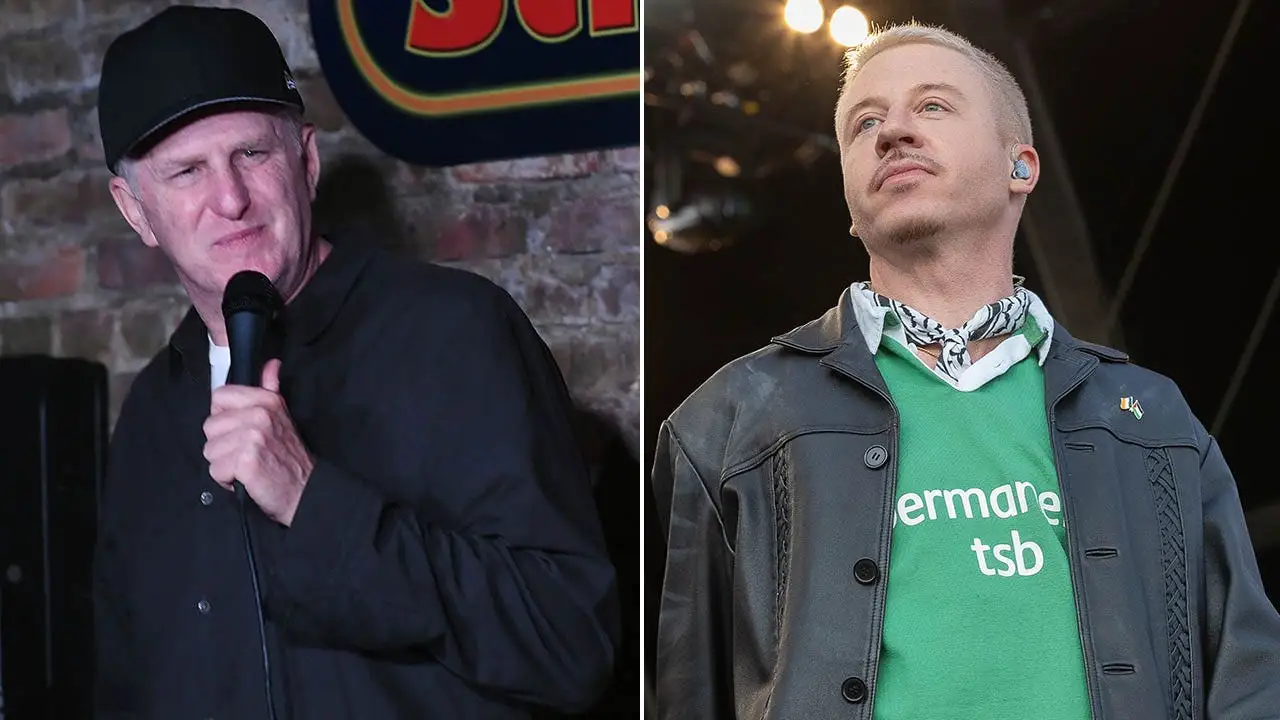
Michael Rapaport Calls Macklemore a ‘Clown’ Over Pro-Palestinian Message at Ed Sheeran Concerts
During Ed Sheeran’s recent U.S. leg of the “Loop Tour” at MetLife Stadium in East Rutherford, New Jersey, opening act Macklemore used his stage time to chant “Free Palestine” and perform his protest song “Hind’s Hall.” The move drew a sharp rebuke from comedian and actor Michael Rapaport, who labeled the rapper a “clown” on X (formerly Twitter) and questioned Sheeran’s decision to allow the political messaging to continue across two consecutive nights.
Rapaport’s Criticism and Social Media Backlash
Rapaport, who is Jewish and has become an outspoken defender of Israel since the October 7 Hamas attack, posted a series of messages on X condemning Macklemore’s performance. He wrote, “Imagine going to see Ed Sheeran & this absolute no talent none singer non rapping non dancing clown Macklemore is opening & because he actually has no act or specific skill set he’s jumping around like dkc carrying on about a genocide that never happened in Gaza,” adding that the situation was “a nightmare.” In another post, Rapaport asked, “So Ed Sheeran is ok with this p— stain opening up for him? Sweet Ed Sheeran?” He also reposted criticism of Macklemore’s self‑description as a rapper, stating that calling him a “Rapper” is “disrespectful to any actual ‘Rapper.’”
The backlash extended beyond Rapaport. Several concertgoers took to social media to express disappointment, saying they attended the shows for Sheeran’s music, not a political lecture. One fan reported leaving the venue with his wife and two daughters after Macklemore’s set, noting that the children looked “completely confused” by the “Free Palestine” chant. Another attendee in a company suite described feeling “embarrassed” and “shocked” by the rapper’s remarks, declaring that after the “political stunt” he could no longer support Macklemore’s music.
Macklemore’s Pro‑Palestinian Advocacy During Sheeran’s “Loop Tour”
Macklemore, born Benjamin Haggerty, used the opening act slot to deliver a speech in which he explained his motivation for touring with Sheeran. “A big part of the reason why I wanted to do this tour in the first place is so I could stand up in stadiums like this and say two words that are very near and dear to my heart: Free Palestine,” he said in a video shared on social media. He linked the message to the safety and future of his 11‑year‑old daughter, Sloan, arguing that every human deserves the chance to grow up without fear of violence.
Following his speech, Macklemore performed “Hind’s Hall,” a song inspired by the 2024 pro‑Palestinian occupation of Hamilton Hall at Columbia University. The lyrics praise anti‑Israel campus encampments, criticize President Biden, police, and the music industry, and call for freedom not only for Palestine but also for countries such as Cuba, Congo, Sudan, and Iran. During the performance, footage from Gaza, pro‑Palestinian protests, images of Israeli soldiers, and related messages were displayed on the stadium’s large screens.
The rapper also used the moment to criticize U.S. Immigration and Customs Enforcement (ICE), stating, “I say, free America, free Cuba to the Congo to Sudan to Iran, and all the people in America who have to live in fear because of this terrorist organization, ICE.”
Audience Reaction: Divided Opinions on Political Opening Act
Reactions to Macklemore’s set were split. While some audience members cheered the “Free Palestine” chant and joined in, others felt the political content was inappropriate for a pop concert. A concertgoer who attended Saturday’s show in a company suite with 35 colleagues said he had “always been a Macklemore fan,” but after the rapper’s “political stunt,” he could no longer support him or his music, adding that “when you go WOKE, you have to be prepared to lose fans.”
Conversely, several fans praised Macklemore for using his platform to speak on humanitarian issues. One Instagram user wrote, “Huge respect for Ed Sheeran, but seeing Macklemore use his voice for Palestine made this moment mean so much more,” while another X user argued that “calling for peace, safety, and equality for Palestinians, Congolese, and Sudanese isn’t antisemitic—it’s pro‑humanity.” A different commenter noted that “music has always been a vital platform for human rights advocacy” and suggested that attendees could simply skip the opening act if they preferred.
The “Hind’s Hall” Performance and Its Significance
“Hind’s Hall” references the Columbia University building renamed after six‑year‑old Palestinian girl Hind Rajab, who was killed in the Israel‑Gaza war. The song’s lyrics celebrate the anti‑Israel encampments that emerged on college campuses in 2024 and call out perceived complicity of political leaders, law enforcement, and the music industry. By performing the track at a major stadium event, Macklemore aimed to amplify the message beyond activist circles and reach a broad, mainstream audience.
The visual backdrop accompanying the performance included footage from Gaza, images of Israeli soldiers, and pro‑Palestinian protest scenes, reinforcing the song’s thematic focus. Critics, including Rapaport, argued that the presentation amounted to a “genocide” narrative that they contend is unfounded, while supporters viewed it as a necessary reminder of the ongoing humanitarian crisis.
Petition by Israeli‑American Council Seeking Removal
In response to the controversy, the Israeli‑American Council launched a petition calling for Macklemore to be removed from the remaining dates of Sheeran’s tour. The petition argued that “this was an Ed Sheeran concert – not a political rally, not a protest, and not an activist event,” and questioned where the line should be drawn when an opening act uses a global concert platform to advance a one‑sided political agenda. As of the latest available information, representatives for both Macklemore and Ed Sheeran have not issued public statements addressing the petition.
Fox News Digital has reached out to the artists’ camps for comment, but no further updates have been reported beyond the initial coverage of the concerts and the ensuing online debate.
As of September 26, 2025, the incident remains a flashpoint in the broader conversation about the role of politics in live music, the expectations of concert audiences, and the ways artists leverage high‑profile platforms to address social issues.
Entertainment, News, Society, People, Music, Activism, Israel-Palestine Conflict, Concert Tours, Celebrity Feud, Social Media

