
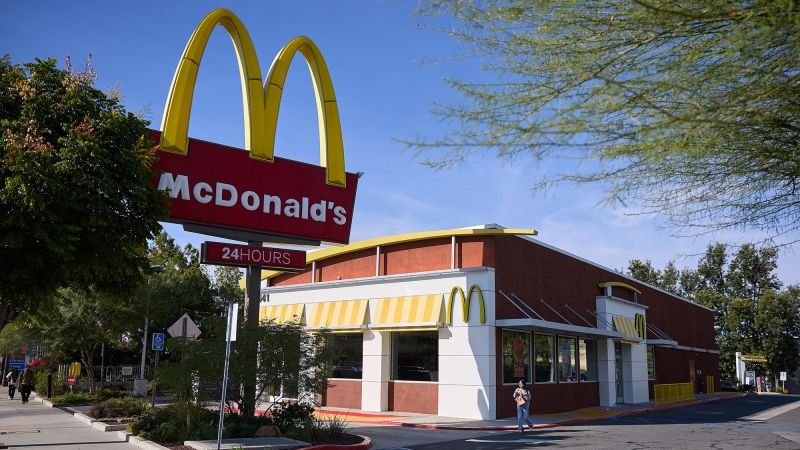
McDonald’s Plots $8.5 Billion Reinvention to Reclaim Fast-Food Dominance
McDonald’s is launching an unprecedented multibillion-dollar overhaul of its global franchise system, pledging $8.5 billion through 2036 to remodel stores, retrain its workforce, and revamp its menu in a sweeping bid to win back diners and reassert its position as the world’s leading fast-food chain.
The initiative, dubbed “Next”, arrives at a critical juncture for the Golden Arches. The company reported its slowest quarterly growth in years, watched its stock decline roughly 20% over the past year, and faced intensifying competition from resurgent rivals like Burger King, which posted an 8.5% increase in U.S. same-store sales last quarter — the widest gap over McDonald’s in more than a decade.
The “Next” Strategy: A Five-Year Blueprint for Reinvention
At the heart of the plan is CEO Chris Kempczinski’s vision to make McDonald’s “the first choice for more customers, more often — while making our restaurants stronger and easier to run.” The company expects to spend approximately $5 billion of the total $8.5 billion over the next three and a half years alone, combining direct capital support with rent relief for franchisees who are simultaneously shouldering the cost of mandatory renovations.
McDonald’s mandates that its franchise locations remodel every decade, and the “Next” initiative accelerates that timeline with an entirely redesigned restaurant experience. The investment covers both the physical transformation of dining spaces and the operational overhaul needed to execute it.
| Investment Area | Details |
|---|---|
| Restaurant Remodeling | Expanded dining rooms, larger play areas, improved lighting, redesigned kitchens |
| Employee Retraining | New program launching October 5 for 2 million workers worldwide |
| Menu Innovation | Protein-focused items, espresso machines, alternative milks, new value menu |
| Technology & AI | AI-powered kitchen tools targeting $100,000 additional cash flow per location |
Smarter Restaurants: AI, Design, and the $100,000 Promise
Images revealed alongside the announcement showcased expansive dining rooms, significantly larger play areas for children, and redesigned kitchens equipped with new AI-powered tools. According to the company, these AI-driven improvements are expected to boost speed and efficiency — translating to an estimated $100,000 in additional cash flow per restaurant through operational savings.
The redesigned interiors represent more than cosmetic upgrades. They reflect a broader strategy to transform McDonald’s locations into destinations that encourage longer stays, repeat visits, and a premium dining experience that differentiates the brand from quick-service competitors.
“Customers want more protein, greater portion flexibility and food that leaves them feeling satisfied without feeling like too much.”
— Skye Anderson, McDonald’s USA President, at the company’s investor day
Rewriting the Menu: Protein, Coffee, and a New Value Play
McDonald’s is aggressively reshaping its menu to tap into two powerful consumer trends. First, the chain is targeting the growing market of protein seekers — a demographic the company estimates at 60 million Americans, plus an additional 30 million users of GLP-1 weight-loss medications who increasingly prioritize high-protein, portion-controlled meals.
To serve these diners, the chain is testing burger and chicken bowls, egg bites, and expanded grilled chicken options including wraps. The push into protein is a direct response to shifting consumer preferences toward healthier, more substantial fast-food options.
On the beverage side, McDonald’s is doubling down on coffee. Beyond previously announced drink offerings, the chain is installing new espresso machines and stocking alternative milks — a clear effort to compete with specialty coffee chains and capture more of the morning daypart.
Meanwhile, a new value menu is under discussion with franchisees and would replace the recently launched “$3 and Under” menu. Kempczinski acknowledged that the previous promotional strategy had backfired, saying restaurants “were overwhelmed by too many deployments in the quarter, which led to less efficient restaurant operations and impacted customer service times.”
Mounting Competitive Pressure
McDonald’s challenges are not happening in a vacuum. The broader dining industry faces headwinds including rising food prices, inflation-weary consumers dining out less frequently, and a rapidly shifting competitive landscape.
Burger King’s recent resurgence has been particularly stark. The rival chain’s 8.5% jump in U.S. same-store sales last quarter represents the largest margin over McDonald’s in over a decade — a milestone that underscores how vulnerable McDonald’s has become to well-executed competitive strategies.
Beyond Burger King, McDonald’s is contending with fast-growing beverage upstarts, chicken-centric chains rolling out nugget and tender-focused menus, and an increasingly crowded fast-casual market that has eroded McDonald’s traditional value proposition.
Retraining 2 Million Workers: The Human Side of “Next”
On October 5, McDonald’s will launch a comprehensive retraining program for its 2 million employees worldwide. The initiative responds to a growing industry concern: customers are increasingly frustrated by self-service technology and are seeking more human interaction and consistent service quality.
McDonald’s USA President Skye Anderson was candid about the chain’s shortcomings, stating plainly: “While there is so much our customers love, we are falling short when it comes to consistent execution.” The new training program is designed to address that gap head-on, equipping workers with the skills and confidence to deliver the kind of service that builds loyalty.
Rivals are moving in a similar direction. Both Burger King and Starbucks have rolled out comparable retraining efforts, signaling that the industry as a whole recognizes the human element as a competitive differentiator that technology alone cannot replace.
Financial Realities and Market Reaction
The scale of McDonald’s investment reflects the severity of the challenges it faces. The company’s stock has fallen approximately 20% over the past year, and last quarter’s results marked its slowest growth period since 2025. Leadership attributed the decline to a combination of factors: an overabundance of promotions that confused customers, inadequate service levels, and a World Cup marketing campaign that failed to resonate with diners.
The $5 billion earmarked for near-term spending will be split between capital support and rent relief for franchisees — a recognition that the burden of modernization cannot fall solely on independent operators who already operate on thin margins.
What “Next” Means for the Future of Fast Food
McDonald’s “Next” strategy represents one of the most ambitious corporate transformations in recent fast-food history. At its core, the plan seeks to answer a fundamental question: in an era of rising competition, changing consumer tastes, and economic pressure, how does the world’s largest restaurant chain stay relevant?
The answer, according to McDonald’s leadership, involves a three-pronged approach: make the restaurants better places to visit, give customers menus that align with how they actually want to eat, and empower employees to deliver consistent, high-quality service. The $8.5 billion price tag is the cost of that reinvention.
Whether the strategy succeeds will depend on execution, franchisee buy-in, and whether consumers respond to the new offerings with renewed enthusiasm. The stakes could not be higher — not just for McDonald’s, but for the entire fast-food industry watching to see if a legacy giant can successfully transform itself.
Key Takeaways
- McDonald’s is investing $8.5 billion through 2036 under its “Next” strategy to revamp restaurants, retrain staff, and innovate its menu.
- Approximately $5 billion will be deployed over the next three-and-a-half years through capital support and rent relief for franchises.
- Remodeled locations will feature expanded dining areas, AI-powered kitchens, and redesigned layouts — with each restaurant potentially gaining $100,000 in additional annual cash flow.
- The chain is targeting 60 million protein seekers and 30 million GLP-1 users with new bowl, wrap, and grilled chicken options.
- Burger King’s 8.5% same-store sales surge highlights the competitive urgency driving McDonald’s transformation.
- A new retraining program for 2 million employees launches October 5, reflecting a broader industry shift toward human-centered service.
- The upcoming value menu will replace the current “$3 and Under” offering, which management acknowledged created operational confusion.
Arts, Business, Finance, Food, News, Online, Society, Transportation

