

China has just celebrated a major milestone in spaceflight.
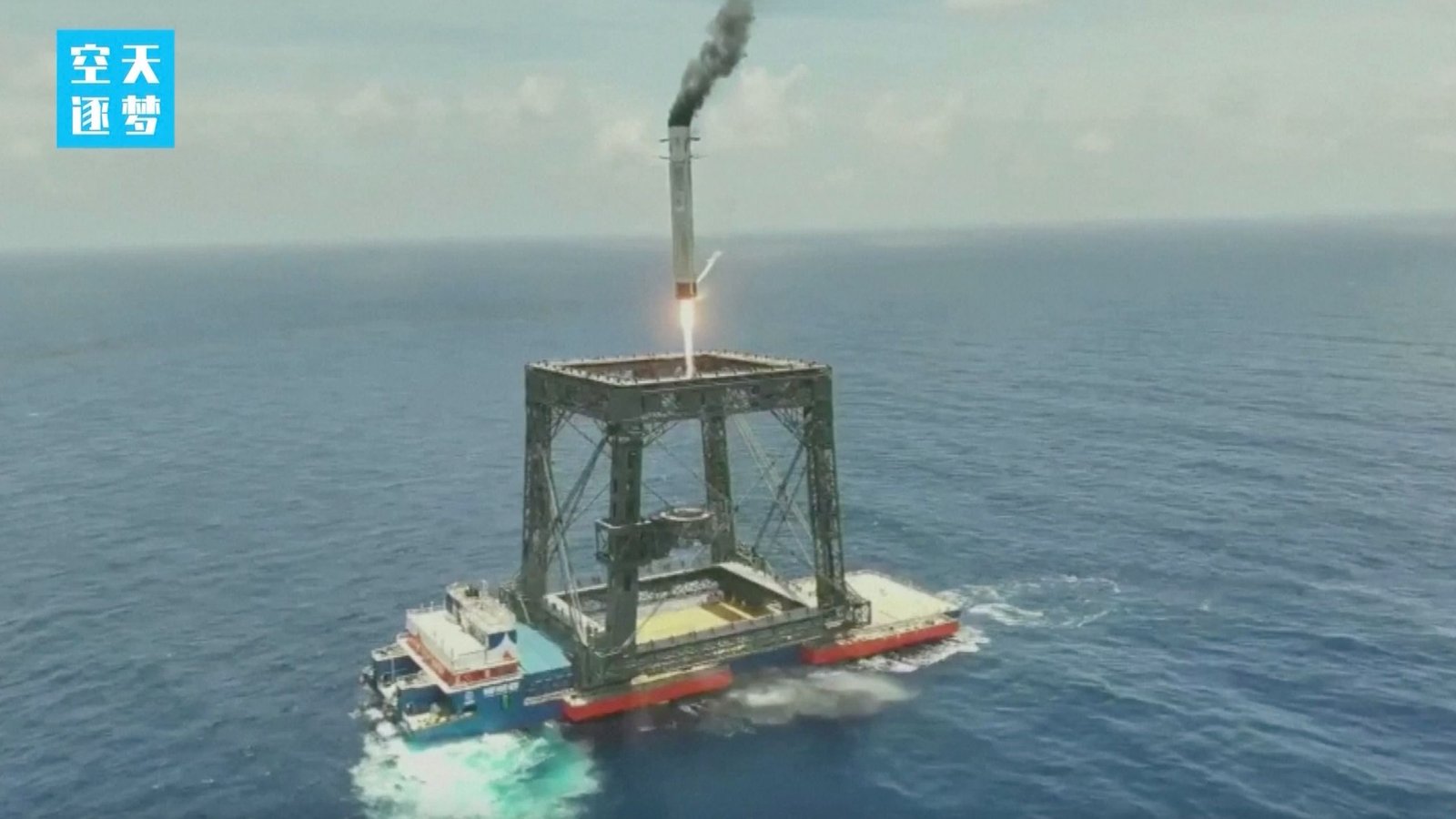
The country returned a rocket during an orbital launch for the first time in history, achieving the feat during the maiden liftoff of Long March 10B on Friday (July 10). And this recovery was unique: the first stage of the rocket was gently pressed against the mesh structure that the ship carried at sea.
“This mission marks my country’s first successful controlled recovery of a launch vehicle and the world’s first networked recovery of a launch vehicle,” China Aerospace Science and Technology Corporation (CASC) announced on social media shortly after the launch. (Translated by Google) “This marks a historic breakthrough for my country in reusable rocket technology and will lay a strong foundation for accelerating improvements in my country’s access capabilities to space.”
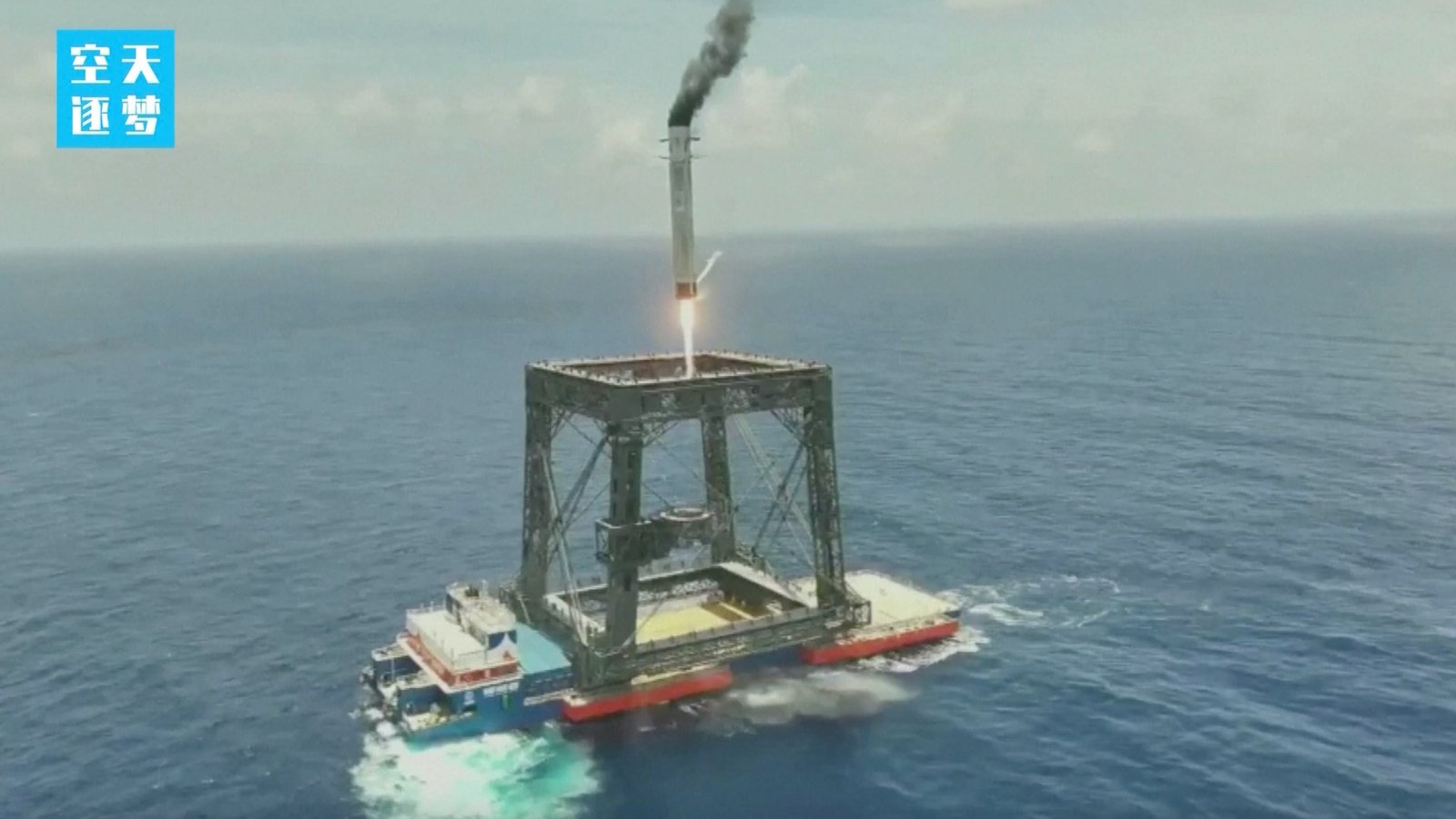
The first stage of a Chinese Long March 10B rocket lands in the sea after successfully sending a satellite into orbit on July 10, 2026. (Image credit: CCTV)
The Long March 10B is a two-stage rocket that stands about 207 feet (63 meters) tall, according to state-owned CASC, the main contractor for China’s space program.
The vehicle’s first stage burns kerosene and liquid oxygen (LOX), while the second stage uses LOX and liquid methane. In reusable mode, Long March 10B can launch about 16 tons of payload into low Earth orbit.
You may like
And the rocket flew with a payload on its debut liftoff—a satellite that successfully reached “its predetermined orbit,” according to the CASC update. The message did not provide any details about the spacecraft or its orbit. However, it provided a summary of the first phase of recovery.
“Approximately 6 minutes after separation of the first and second stages, the first stage returned vertically and was successfully recovered on the offshore recovery platform using the network system,” CASC officials wrote, noting that the launch occurred from the Hainan Commercial Satellite Launch Center on Friday at 12:15 pm ET (04:15 GMT; 12:15 Beijing time). “The first stage launch and recovery missions were completely successful.”

China plans to return the first stage by the end of the year, they added.
Until now, vertical landings of orbital-class rockets have been carried out only by SpaceX, which does them regularly. Indeed, Elon Musk’s company has launched orbital rockets more than 600 times to date.
This widespread reuse has allowed SpaceX to fly cheaper and more efficiently than its competitors and dominate the launch market—something China is working hard to achieve.
“The reusable configuration of the Long March 10B significantly reduces launch costs while offering the benefits of high payload capacity and high cost efficiency,” CASC officials wrote in a post-launch update.
Other partially reusable Chinese rockets are in development, including CASC’s Long March 12A and the Zhuque-3, a vehicle built and operated by Beijing-based Landspace. Both of these rockets debuted last December with similar results: They reached orbit as planned, but their first stages failed to land.
Chinese companies CAS Space, Galactic Energy and Deep Blue Aerospace are developing their own reusable vehicles – Kinetics-2, Pallada-1 and Nebula-1, respectively. So Chinese rockets could soon return to Earth at a frequency that rivals SpaceX’s workhorse Falcon 9.