

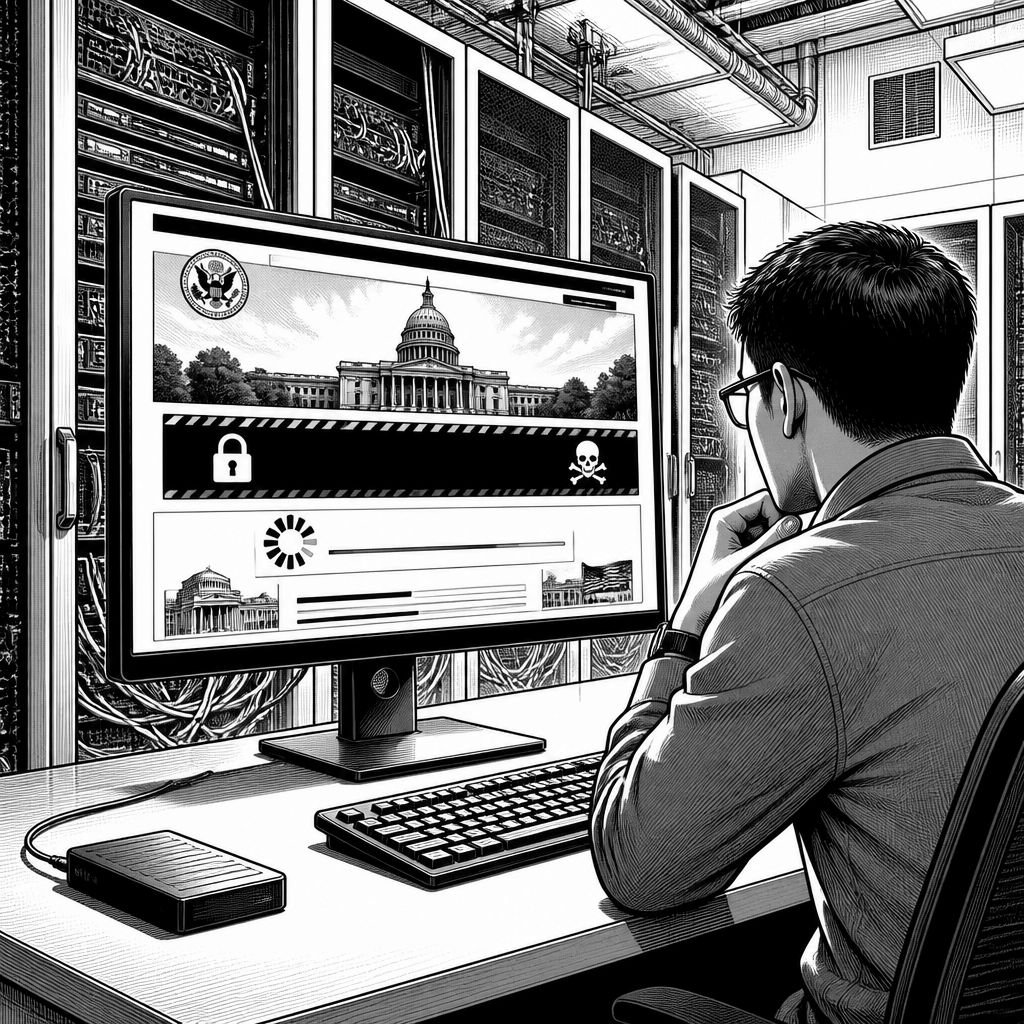
NAIROBI/LONDON (BREAKING) – The Kenyan government is investigating a cyber attack that briefly blocked President William Ruto’s website on July 18. The attackers replaced the content with derogatory messages and demanded five bitcoins as a ransom or threatened to leak data. Authorities temporarily cut off public access to investigate the cause and possible security vulnerabilities. At the same time, forensic investigations are being carried out with NC4 and other technical partners.
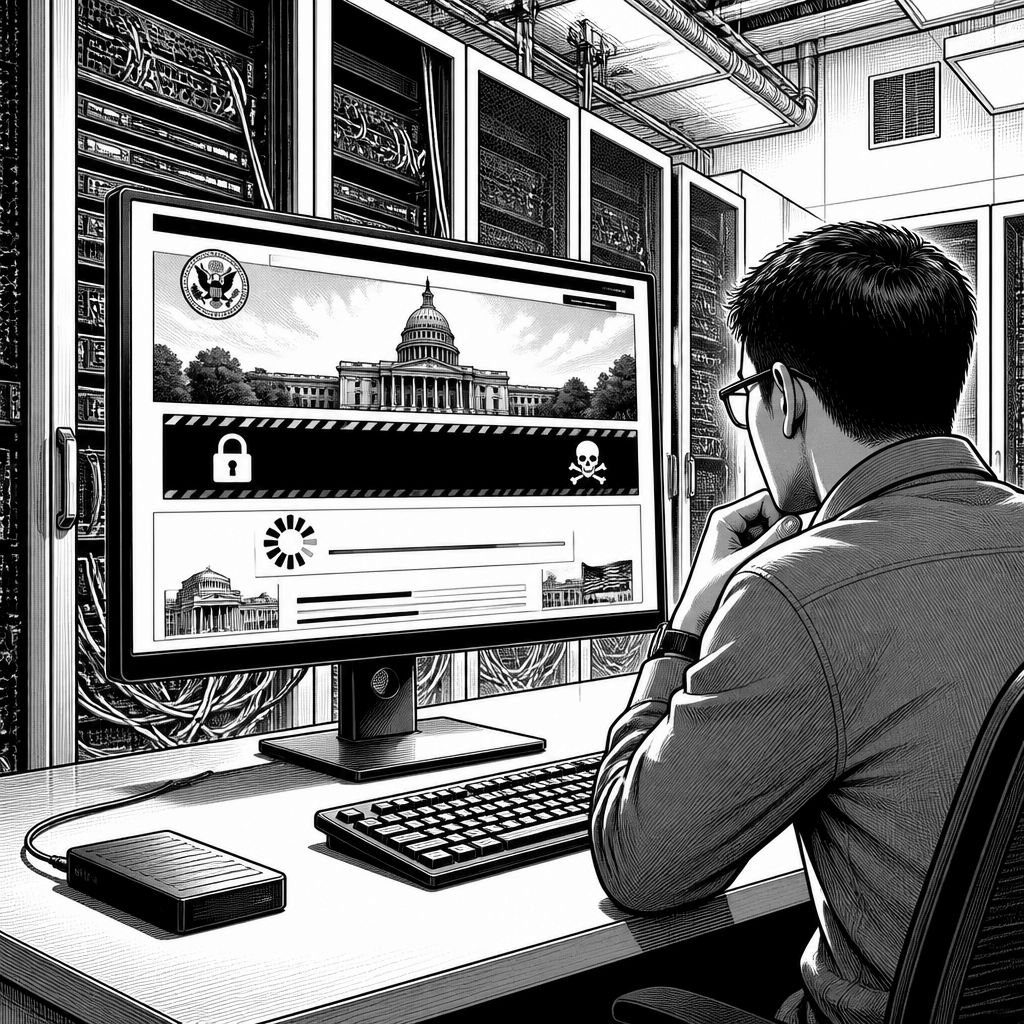 Kenyan government is investigating the hacking of President Ruto’s website after Bitcoin blackmail (Photo: IT BOLTWISE)
🧠 Subscribe to artificial intelligence and robotics news on Google News.
The Kenyan government is taking the digital attack on President William Ruto’s official website seriously: President.go.ke was temporarily deactivated on July 18 after unknown individuals manipulated the home page and made demands for Bitcoin extortion. The site was said to have replaced content, including insulting messages directed at Ruto, accompanied by a threat to reveal “unidentified” information if payment was not made by Saturday evening. Cabinet Minister William Kabogo confirmed that government ICT authorities responded immediately to the incident while the technical damage situation was being investigated.
From a technical perspective, the scheme is a mixture of corruption and extortion via web-based ransomware, albeit without verifiable evidence of theft of sensitive data. According to Kabogo, at that time there was “no indication” of unauthorized access to confidential data, data leakage or loss of information. At the same time, public access was temporarily limited to isolate the system and make room for forensics. Such measures are critical in the event of web incidents: they reduce the risk of further manipulation, but do not necessarily stop the entire operation.
The link to NC4 and engagement with State House teams shows that Kenya is in the process of institutionalizing cybercrime investigations. A recent situation report states that billions of cyber threats have been reported against critical infrastructure and government systems in just a few months. The current crisis should not be viewed in isolation, but rather fits into a larger picture of an increase in automated attacks on public administrative components. This is true for companies with similar vendor structures—for example, web interfaces, hosting partners, or content management partners—each vulnerability in the attack surface can act as an “entry point” into the entire digital services space.
This approach can also be compared to the way blackmail groups typically use web interfaces for visibility: even if the actual compromise is not public, the defacement serves to increase pressure. In the industry, such tactics are often discussed in the context of ransomware ecosystems, with groups like LockBit or similar entities gaining attention not only through encryption, but also through reputational and control threats. However, when assessing a specific case, it is still important to determine which systems were affected: log integrity, access tokens, web server configuration, deployment pipelines, and rights assignments in content configuration are the most likely turning points here.
Market and Industry Context: This incident is reportedly the second high-profile cyberattack on Kenyan government interfaces in a year. In November 2025, the websites of several ministries were briefly affected, intensifying debate about the sustainability of digital government services in East Africa. For CIOs and security teams in peer markets, this means that “digital government services” are only as reliable as their foundation—from the authentication model to the secure updating of web content. Analysts also often classify such events as a warning sign that attackers are increasingly targeting “low-friction targets”: public portals with large numbers of users and high political symbolism.
From a regulatory and data protection perspective, the sentence “no evidence of data breach” is justifiable, but not sufficient for a definitive risk assessment. Once a website provides unauthorized content, authorities and operators must check that session tokens have not been misused, permissions on databases or internal APIs have been changed, and the integrity of protocols is guaranteed. For forensic investigations, this means in practice: memory and process analysis, web server logs, WAF events, DNS changes, and inspection of staging and production pipelines. Complete documentation for supervisors and potentially affected parties (depending on liability) is an important part of compliance, especially in government services.
Translated for the future, this means: Kenya must consistently move from an “incident response” to a “preventive security architecture.” The central lever is standardization of investigative processes and standardization of evidence preservation – which is what the aforementioned nationwide effort to standardize cybercrime investigations suggests. The second lever is segmentation: when web interfaces have clearly defined boundaries, the likelihood that a misinformation incident will turn into a serious system breach is reduced. Securing the content supply chain is equally important: write permissions, deployment frequency, and automated integrity checks can make manipulation more visible.
The next development step is for experts to figure out how the security perimeters were actually connected: was it a compromised account, a token leak, a vulnerability in a CMS plugin, or a misconfigured server component? The timing of the status (“Website is still down” at 1:51 pm EST) indicates that recovery is likely occurring in parallel with root cause analysis. This has obvious implications for developers and operators of such portals: security measures such as least privilege, tamper-proof logs and routine vulnerability hygiene are not just “IT governance”, but directly reduce risk to government service operations. Until the final assessment is completed, ongoing coordination with NC4, State House and external partners remains a critical pace-setter.


💳 Order an Amazon credit card with a limit of 2000 euros!
🔥 Today’s Hot Deals on Amazon: Up to 80% Off!
🎉 Amazon Haul Store for true bargain hunters!

Bestseller No. 1 ᵃ⤻ᶻ “KI Gadgets”
Bestseller No. 2 ᵃ⤻ᶻ “KI Gadgets”
Bestseller No. 3 ᵃ⤻ᶻ “KI Gadgets”
Bestseller No. 4 ᵃ⤻ᶻ “KI Gadgets”
Bestseller No. 5 ᵃ⤻ᶻ “KI Gadgets”
Bestseller No. 6 ᵃ⤻ᶻ “KI Gadgets”


Please send any additions and information to the editor by email at de-info(at)it-boltwise.de. Since we cannot rule out AI hallucinations, which rarely happen with AI-generated news and content, we ask that you contact us by email and let us know in case of false claims or misinformation. Don’t forget to include the title of the article in your email: “Kenya Government Investigates President Ruto’s Website Hacked Following Bitcoin Extortion”.