
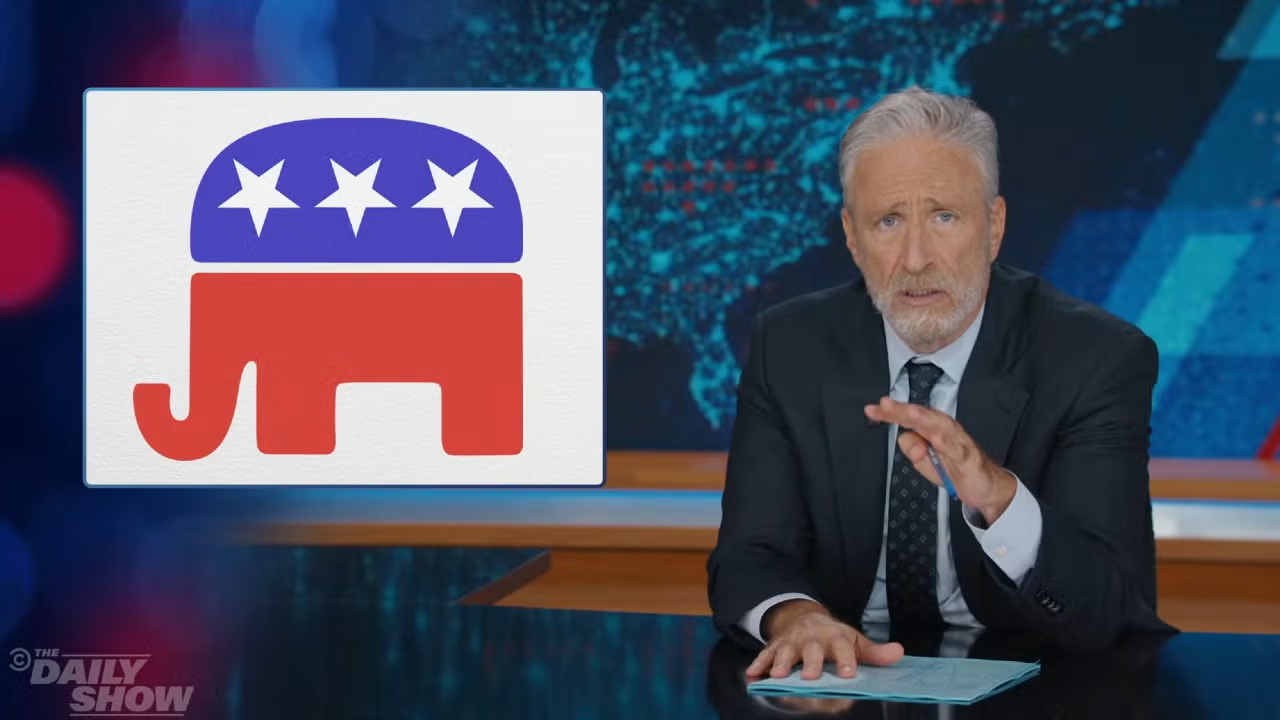
Jon Stewart Warns Against Media Exaggeration of Republican Party Divisions
Mainstream Media Portrayals of Internal Party Conflict
The Daily Show host Jon Stewart delivered a scathing critique of mainstream media narratives suggesting deep fractures within the Republican Party during his recent appearance. Stewart argued that the constant emphasis on potential splits between Donald Trump and his base constitutes “cruel” misinformation that undermines voter confidence.
During his segment, Stewart opened with a humorous yet pointed observation about Chinese President Xi Jinping’s recent visit to Washington, D.C., mocking Trump’s boastful comment about the new granite helipad. The joke served as a vehicle to highlight what Stewart saw as manufactured drama around the Republican Party.
Geopolitical Context and Its Political Implications
Stewart did not limit his critique to domestic party dynamics. He drew connections between international affairs and domestic political messaging, noting that China reportedly supplied over 1,000 drone and missile components to Iran between January and June of the current year. This arms transfer, he implied, provided ammunition for media outlets seeking to frame the Republican Party as internally divided.
“I seem to remember the Republican Party used to frown on the idea of selling weapons to Communist enemies who are supplying said weapons to other enemies we are currently at war with,” Stewart observed. “Does anybody on that side have an opinion on this summit?”
The response from various Republicans was largely muted, offering only mild expressions of displeasure toward Xi’s Washington visit. Stewart questioned whether these reactions truly indicated deeper schisms within the MAGA movement.
Challenging the Narrative of Republican Fragmentation
Central to Stewart’s argument is the assertion that media outlets persistently exploit perceived cracks in the Trump coalition. He criticized outlets for leveraging the Iran conflict and Republican opposition to Xi Jinping’s diplomatic efforts to paint a picture of internal discord.
“It is not the first time the media has tried to make a meal of Republicans’ dissatisfaction with Donald Trump,” Stewart declared. “Why in God’s name would we continue to fall for this? Why are we constantly believing that there are cracks in the MAGA fortress? We do, because that’s what we are told.”
Stewart concluded his segment by urging readers to abandon the notion that the Republican Party faces existential challenges. “Let’s stop pretending that the overwhelming majority of Republican politicians will ever stand up or break from Donald Trump. They’re in the f—king car, and the news media would be doing everyone a favor if you didn’t try and play up every empty gesture of independence from Republican lawmakers.”
The host called for an end to narratives that suggest Republican leaders are actively rebelling against their president, arguing instead that such stories serve primarily to distract from substantive policy debates.
By juxtaposing Trump’s grandiose self-promotion about infrastructure projects with the quiet demeanor of many Republican lawmakers, Stewart illustrated his point about selective outrage in political reporting.
He further warned against the psychological impact of perpetually expecting betrayal from within the party, suggesting that this mindset creates unnecessary anxiety among supporters.
Stewart’s commentary reflects broader concerns about media framing in contemporary American politics, where partisan narratives often overshadow nuanced policy discussions.
Through his signature blend of satire and serious analysis, Stewart challenged viewers to reconsider the credibility of media-driven conspiracy theories surrounding the Republican Party’s cohesion.
In examining the intersection of foreign policy developments and domestic political discourse, Stewart demonstrated how global events can be weaponized to shape perceptions of national unity.
His message resonated with audiences seeking clarity amid polarized political environments, emphasizing the importance of critical media consumption.
Ultimately, Stewart’s segment serves as both entertainment and political commentary, inviting reflection on how media narratives influence public perception of democratic institutions.
Categories: News, Politics, Government, Entertainment, Society

