

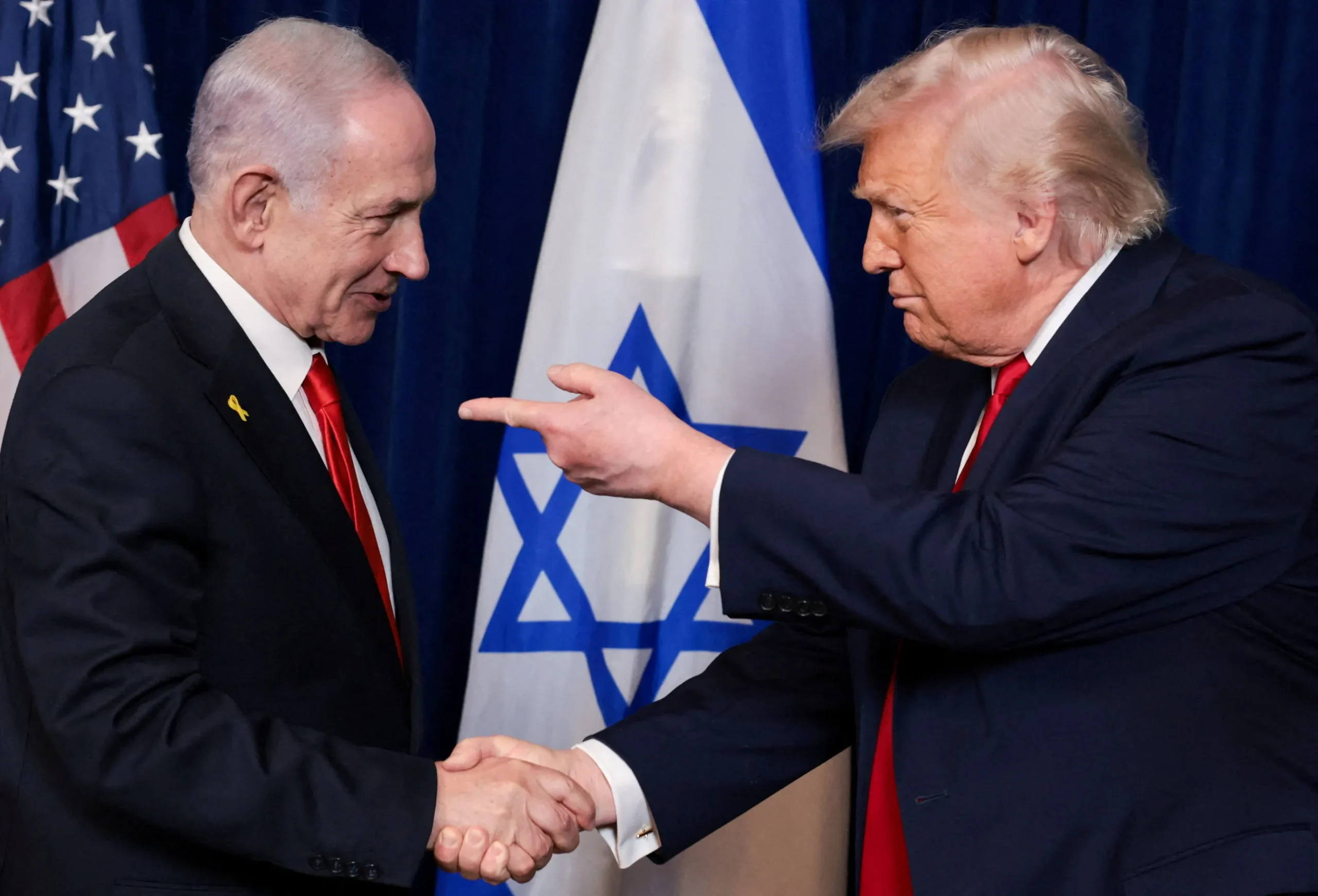
Claims that the United States has “integrated” its military forces with Israel have become widespread since the House of Representatives passed the Fiscal Year 2027 National Defense Authorization Act (NDAA). This phrase is dramatic, but it does not accurately describe what Congress approved.
The legislation does not merge the two armies, create a unified command or create a NATO-style mutual defense treaty. The US and Israeli militaries will continue to operate under separate national command structures.
Instead, the bill seeks to integrate what may be even more important in the long term: the U.S. and Israeli defense innovation ecosystems. The shift has received little attention in India, despite its potential implications for one of New Delhi’s closest defense partnerships.
The House approved the NDAA by a narrow margin of 216–212. The bill must still pass the Senate before the two chambers agree on their versions and send the final version of the law to the president for his signature. Regardless, the House vote marks an important milestone and provides insight into how Washington increasingly intends to structure defense cooperation with trusted partners.
New model
The law is based on the US-Israeli Defense Technology Cooperation Initiative. He directs the Ministry of Defense to create a permanent framework for cooperation with Israel in the field of new defense technologies.
The identified areas are indicative. Artificial intelligence, autonomous systems, cybersecurity, electronic warfare, missile defense, directed energy, quantum technologies, advanced manufacturing and next-generation sensors all feature prominently. The initiative encourages joint research, joint development, testing, evaluation, procurement and industrial collaboration in these sectors.
Congress supported these ambitions with resources. The House version would provide approximately $750 million for joint defense programs with Israel in fiscal year 2027. This includes $500 million for missile defense, $100 million for counter-drone programs, $100 million for anti-tunnel technologies and $50 million for new defense technologies.
For decades, the U.S.-Israel defense relationship has been largely based on military funding and equipment supplies. The new initiative goes beyond this model and focuses on co-innovation, co-production and long-term industrial integration.
Why did this happen now?
Three events explain the timing.
First, there is Israel’s recent combat experience. Since October 2023, Israeli forces have waged sustained campaigns against Hamas and Hezbollah, intercepted repeated rocket and drone attacks from Iran, and responded to threats from the Houthis. These conflicts have produced an unprecedented amount of operational experience in the areas of missile defense, counter-drone warfare, electronic warfare, and artificial intelligence targeting. Pentagon planners increasingly view Israel as a valuable source of lessons for future wars.
The second driving force is America’s strategic competition with China. Washington believes technological superiority will determine military advantage in the coming decades. Israel’s strengths in cybersecurity, autonomous systems, missile defense and artificial intelligence complement American priorities in the Indo-Pacific region and strengthen the broader US defense industrial base.
The third factor is institutional stability. Annual aid packages depend on political negotiations and budget cycles. Collaborative research programs, integrated production lines, and shared technology ecosystems create relationships that are more resilient and less vulnerable to political changes. The legislation reflects a focused effort to promote collaboration across agencies rather than annual appropriations.
Where did the initiative come from?
The proposal has unusually broad bipartisan support.
Its origins lie in the US-Israel Futures Act, introduced by Representative Ronny Jackson, a Republican from Texas, and Representative Don Davis, a Democrat from North Carolina. Related legislation in the Senate was sponsored by Senators Ted Budd and Kirsten Gillibrand. The House Armed Services Committee subsequently incorporated many of these ideas into the NDAA.
The initiative also received strong support from the American Israel Public Affairs Committee (AIPAC), Washington’s most influential pro-Israel advocacy organization. Thanks to its political action committee and extensive donor network, candidates supported by AIPAC make up a large majority of members of the current Congress. His influence stems less from formal lobbying and more from his ability to mobilize bipartisan political support for legislation affecting Israel.
The coalition supporting the initiative is united by different motives.
Many members of Congress see the legislation as strengthening America’s long-term commitment to Israel.
The Pentagon sees an opportunity to leverage Israeli military innovation and accelerate the development of technologies needed to compete with China.
The defense industry expects greater cooperation programs, sharing of development costs and expanded manufacturing capabilities. Thus, each constituency is supporting this initiative for its own strategic reasons.
Why “military integration” is not true
The phrase “US-Israeli military integration” has become popular because it attracts attention. It also hides a larger story.
The legislation brings together research institutions, defense companies, industrial networks and technology development. Military command, operational planning and political decision-making remain completely separate.
This distinction matters because military power increasingly depends on the speed at which countries innovate, rather than simply on the number of platforms they possess. Artificial intelligence, software, sensors, autonomous systems and manufacturing capabilities have become as important as planes, tanks and ships. The initiative aims to ensure that American and Israeli innovation develops within a common institutional framework.
This is important for India
Israel has become one of India’s most important defense partners. According to SIPRI, Israel has accounted for approximately 10-15% of India’s arms imports in recent years, making it the country’s third-largest supplier after Russia and France. Since 2000, India has contracted for defense equipment worth over US$10 billion, including Phalcon airborne early warning systems, Barak air defense systems, Heron UAVs, Harop loitering munitions, advanced radars, electronic warfare equipment and numerous subsystems for indigenous programs.
Closer integration of the American and Israeli defense industries creates both challenges and opportunities.
The problem lies in future export controls and industrial priorities. Technologies developed jointly with US funding or using US intellectual property may attract stricter US oversight. In times of crisis, Israeli production capacity can also more closely match US military needs.
These concerns are worth considering, but they do not tell the whole story.
American investment is likely to greatly accelerate Israeli innovation. Increased research budgets, access to American laboratories and deeper industrial cooperation could lead to technologies that would be difficult for Israel to develop on its own. India could benefit from access to more advanced systems emerging from this expanded innovation ecosystem.
Israel also has good reasons to strengthen cooperation with reliable partners. Growing diplomatic isolation in parts of Europe and the Middle East has increased the value of long-term relationships with countries such as India, which combine large defense needs with expanding technological capabilities.
India is already part of history
Little attention is paid to an equally important point.
The United States has already begun to create a similar institutional structure with India.
In 2023, Prime Minister Narendra Modi and President Joe Biden launched the Initiative on Critical and Emerging Technologies (iCET) to deepen cooperation in artificial intelligence, semiconductors, quantum technologies, space, telecommunications and defense innovation. That same year, the INDUS-X project was launched, bringing together startups, industry, investors and governments to promote defense co-development and co-production.
At the same time, India expanded its technology partnership with Israel. The India-Israel Industrial Research, Development and Technological Innovation Fund (I4F) supports joint research projects between companies from both countries. More recently, New Delhi and Jerusalem, under the leadership of their national security advisers, launched the Critical and Emerging Technologies Initiative, covering many of the same sectors identified in US law.
These three partnerships present an intriguing opportunity.
Today, India has institutional mechanisms for cooperation in the field of advanced technologies with both Washington and Jerusalem. Only a few countries occupy this position.
If managed effectively, India could benefit from knowledge flows, collaborative research, industrial partnerships and technology development in all three respects. Indian firms can partner in software integration, advanced manufacturing, testing, maintenance and production of future defense systems.
Unusual opportunity
The law’s broader implications extend far beyond Israel.
Major powers are increasingly organizing defense cooperation around innovation ecosystems rather than simple buyer-seller relationships. Governments, private businesses, universities, laboratories and startups are becoming part of integrated networks that collaborate to develop military technologies.
The United States is deepening such an ecosystem with Israel while expanding another with India through iCET and INDUS-X. China is taking a similar approach with Pakistan through co-production and industrial cooperation.
Thus, India’s goal must go beyond maintaining access to Israeli weapons. It must strive to become an indispensable contributor to these overlapping innovation ecosystems while continuing to strengthen local capabilities in propulsion, sensors, electronic warfare, artificial intelligence, advanced manufacturing and autonomous systems.
Debate over the US-Israeli bill has focused on military integration. The larger story concerns the emergence of a new model of strategic competition in which defense innovation ecosystems become as important as military alliances. India already has a place in this rapidly evolving paradigm. The challenge facing New Delhi is to turn this position into a sustainable technological and strategic advantage.
(The author is a Research Fellow in the Geostrategy Program at the Takshashila Institute)
Disclaimer: This is the personal opinion of the author.