
California’s Groundwater Crisis: Why Mountain Snow Matters More Than Rain
For the first time, scientists have established a direct connection between the snow that blankets California’s mountain peaks and the groundwater that sustains the vast agricultural operations of the Central Valley. The finding underscores a sobering reality: as climate change shrinks the state’s snowpack, the future of one of America’s most productive farming regions hangs in the balance.
How Sierra Snowmelt Feeds the Central Valley’s Underground Water
Using two decades of measurements from NASA satellites, researchers discovered that after a snowy winter in the Sierra Nevada, the gradual melt of that snowpack substantially raises water levels in the aquifers beneath Central Valley farmlands. The study makes clear that years of heavy accumulation are critical for replenishing these vital underground reserves.
By contrast, a winter that delivers rain but little snow provides far less benefit to the state’s buried water supply. Rain tends to run off the landscape quickly, while snow sits through the cold months and releases its moisture slowly over spring and summer — a steady, infiltrating trickle that soaks deep into the ground.
“It really does seem that the snow, rather than the rain, is what drives the groundwater recharge,” said J.T. Reager, the study’s lead author and a water scientist at NASA’s Jet Propulsion Laboratory. “If it rains, a lot of that rain is going to run right off, whereas if it snows, that snow sits there and slowly melts over the entire spring and summer, and provides this nice steady, infiltrating trickle.”
Two Decades of Satellite Data Reveal a Troubled Pattern
Reager and his colleagues analyzed data from two U.S.-German satellite missions — the Gravity Recovery and Climate Experiment (GRACE) and its successor, GRACE-Follow On — to estimate how much groundwater recharge has occurred annually across California since 2004.
The results paint a stark picture. Over 18 years of monitoring, the state’s aquifers recorded a net gain in only six years: 2005, 2006, 2011, 2016, 2019, and 2023. In most years, heavy pumping led to measurable declines.
“It’s still coming down,” Reager said. “It just doesn’t naturally recharge the amount that we take out.”
The standout year was 2023, when a series of atmospheric rivers delivered one of the largest snow accumulations ever recorded in the Sierra Nevada. As the deep snowpack melted, runoff flooded reservoirs and canals, inundated roads and fields, and allowed farmers to turn off their wells. The study found that 2023 brought the biggest rise in California’s aquifers in two decades — enough to recover the groundwater lost during the severe drought of 2020-22. But that gain represented only a fraction of the water depleted over decades of chronic overpumping.
A Valley Dependent on a Shrinking Resource
The Central Valley has been losing groundwater for decades. Wells and pumps draw enormous volumes to irrigate orchards, vineyards, and field crops, and the depletion has been described by researchers as exceeding the total volume of Lake Tahoe. That kind of loss cannot be reversed quickly — or easily.
The study also confirmed what many farmers have observed firsthand for years: water levels in their wells tend to rise during the months following heavy mountain snowfall. But the research went further, quantifying the relationship and revealing that an average snow year is not sufficient to raise aquifer levels. The researchers calculated that a net gain in underground water occurred only when the peak snowpack reached at least 120% of average.
“Measuring groundwater recharge over large areas is extremely difficult,” said Jay Famiglietti, a hydrologist at Arizona State University and co-author of the study. He noted that the satellite data enabled a month-by-month analysis — a capability he described as essential for tracking progress under California’s groundwater law.
Climate Change Is Cutting Away California’s Snow Advantage
The findings carry an ominous warning for the future. With climate change, droughts are growing more severe, winters are becoming warmer, and average snow lines in the mountains have moved steadily higher. As warming winters shift more precipitation from snow to rain, the natural recharge mechanism that California depends on is weakening.
“We’re really going to lose these recharge-capable years,” Reager said. “That’s kind of a red flag for the future.”
The implications extend beyond hydrology into food security and economics. The Public Policy Institute of California has estimated that as many as 900,000 acres of farmland in the San Joaquin Valley may need to be left dry by 2040 if groundwater decline continues at its current pace.
Policy Efforts and On-the-Ground Responses
In 2014, California legislators passed the Sustainable Groundwater Management Act (SGMA), designed to halt chronic aquifer declines by empowering local agencies to develop their own management plans. Many of these agencies are now planning and building dedicated recharge sites — locations where surface water can be directed into canals and allowed to percolate down into depleted aquifers.
However, research suggests these efforts may offset only a small fraction of the unsustainable extraction occurring in the valley. The gap between what is being pumped and what is being recharged remains enormous.
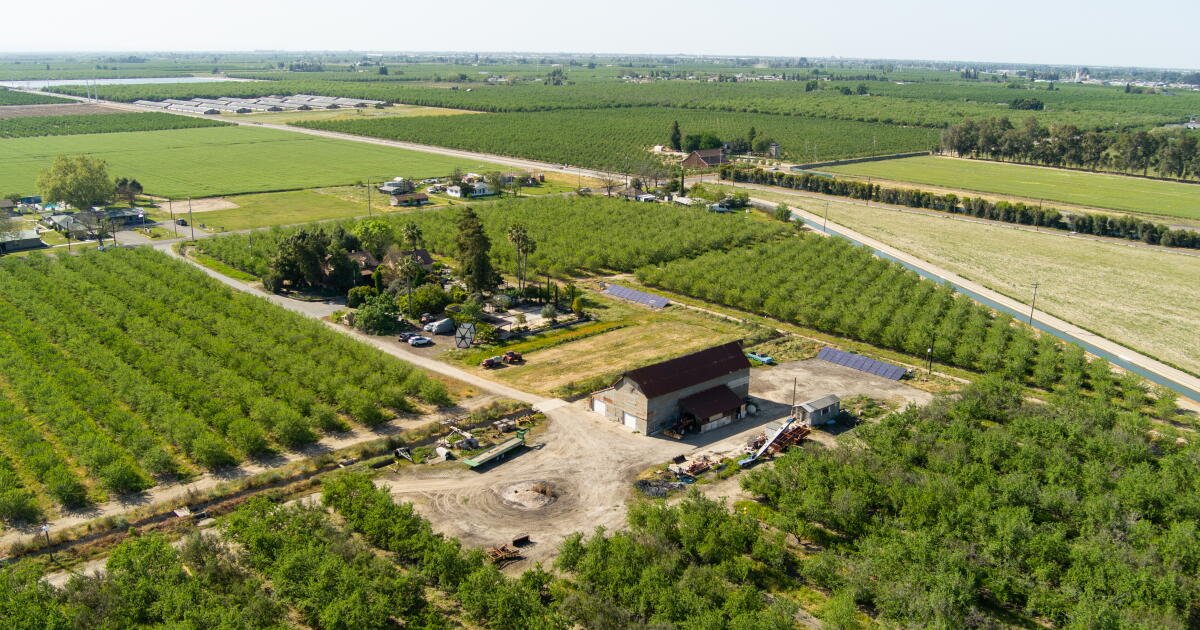
On the ground, some farmers are already adapting. Christine Gemperle, an almond farmer near Modesto, said she has noticed water levels rising in her wells after snowy winters and has set aside portions of land — including areas where she removed an old almond orchard — to absorb excess water and help recharge the aquifer.
“I want to be able to put back in more, or at least the same amount that I’ve taken out,” she said.
The Bottom Line
The NASA study provides the most comprehensive picture to date of how California’s snowpack drives the recharge of its groundwater aquifers. It confirms that heavy snow years are not merely beneficial — they are essential. But with warmer winters shrinking the snowpack and climate change accelerating, the state faces an increasingly difficult challenge: maintaining the water supply that millions of residents and a vast agricultural industry depend upon.
The satellite data offers a powerful tool for monitoring the problem month by month, but the real test lies in whether policy, infrastructure investment, and farmland management can keep pace with a rapidly changing climate. Without sustained, significant recharge, the Central Valley’s groundwater reserves will continue to shrink — and the consequences will be felt across the country and beyond.
News, Science, Government, Society, California, Groundwater, Sierra Nevada, Central Valley, Climate Change, Drought, Agriculture, Irrigation, Sustainable Groundwater Management Act, Atmospheric Rivers, NASA, Snowpack, Groundwater Recharge, Hydrology, Water Resources, San Joaquin Valley

