
 Save
Save
You have reached the maximum number of items saved.
Remove items from the saved list to add new ones.
AAA
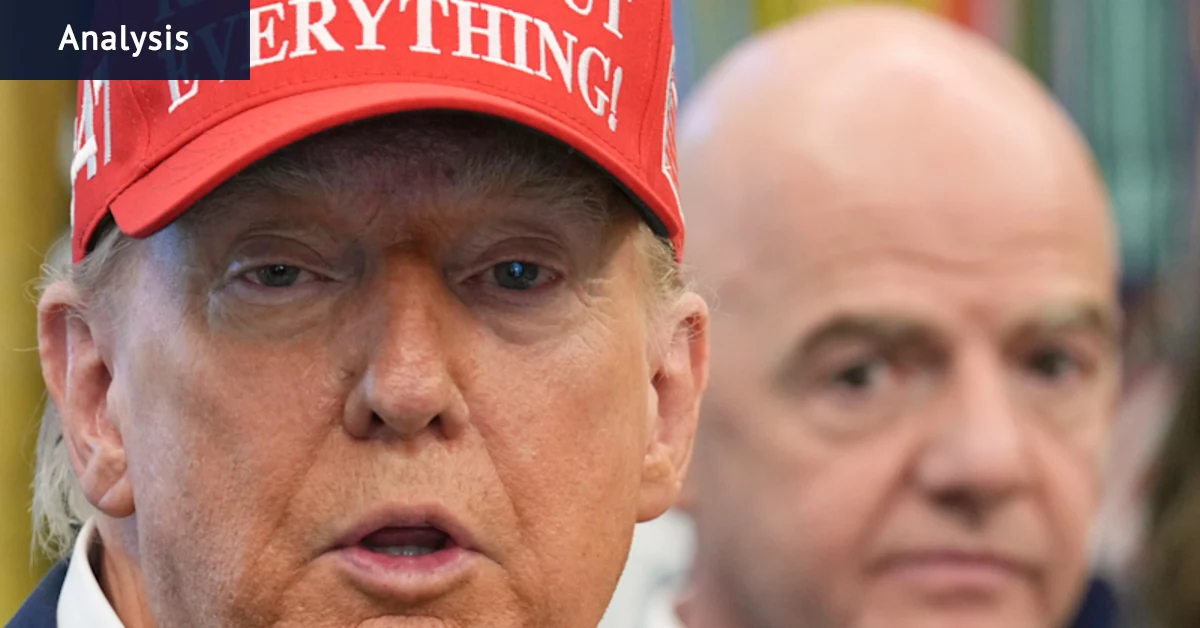
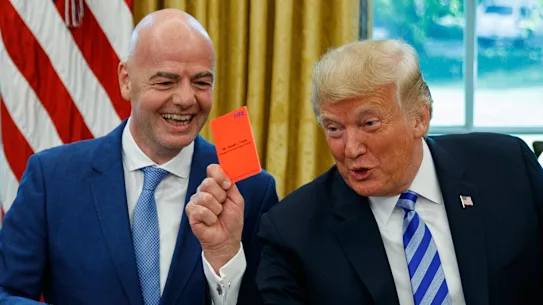
Donald Trump lifted the lid on how power works – at least in his America and the world of FIFA – in his candid account of how he called Gianni Infantino to “ask” for a review of Folarin Balogun’s red card.
This is hardly a shock. This is Trump’s America. And this is FIFA – the same organization that last year created the ridiculous “FIFA Peace Prize” to further stroke the ego of the US president. However, it is sometimes a shock to see it done so brazenly and with such little attempt to hide it.
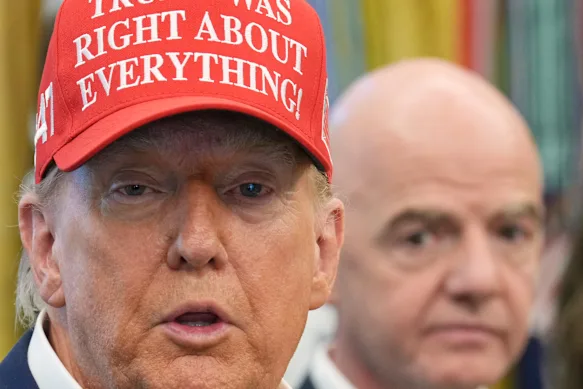 Donald Trump and Gianni Infantino.AP Photo/Jacqueline Martin
Of course, Trump may not have directly ordered Infantino to rescind Balogun’s suspension. “I can’t tell him what to do,” he said. He was at least vaguely aware of the irrelevance of the whole story.
But when the President of the United States – the host of the rest of the World Cup – calls you and makes it clear what he wants, he doesn’t have to tell you twice. Especially when it’s Infantino on the other end of the line.
The FIFA Disciplinary Committee said it independently decided to suspend Balogun’s one-match ban, using its powers under Article 27 of the FIFA Disciplinary Code.
Even if true, the phone call—and Trump’s account of it—makes it nearly impossible to accept.
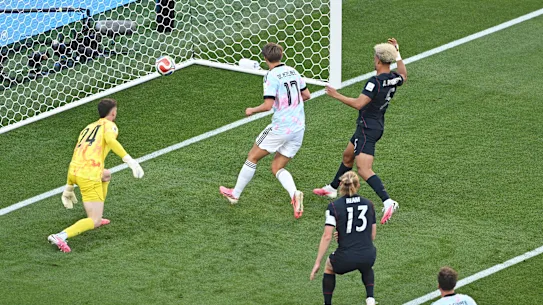
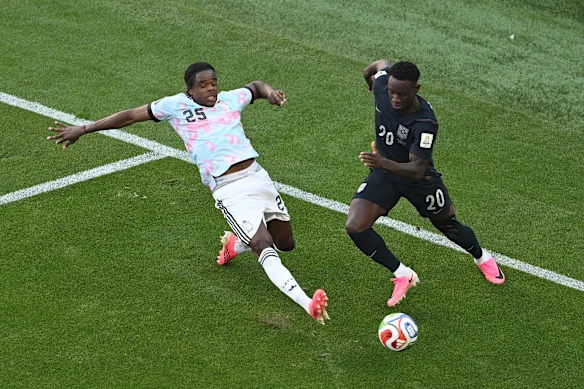 American World Cup star Folarin Balogun (right) and Belgian Nathan Ngoy compete for the ball. The Americans lost and were eliminated from the tournament.Getty Images
But it was instructive for Trump’s worldview. Not only did he express disdain for the concept of a one-match suspension (“You can’t do that,” he said), but he seemed to argue that it shouldn’t apply to Balogun because he was one of the US’s best players. According to Trump, removing a top player puts competition on the back burner.
Secretary of State Marco Rubio made a similar argument. He told reporters that if Balogun did not play and Belgium won, it would “ruin” the victory. Belgium must want him to play, Rubio said.
It doesn’t matter how his presence on the field might “ruin” the US victory. In Trump’s America, there is one rule for the elite – “the best” – and another rule for everyone else.
Related article
The US President also noted how successful the World Cup held in the US was, in particular the large number of spectators and television audience. That might be true, but he seemed to suggest that the US’s role as host should earn them a reprieve when it comes to removing Balogun.
There is also a certain irony in Trump’s attempt to protect the star American forward from the rules.
Folarin Balogun was born in New York in 2001 to Nigerian parents. They were not immigrants – they came to the United States. His mother was reportedly told she was too pregnant to fly home to London.
Balogun was born in a Brooklyn hospital and is therefore a US citizen. That is why he is eligible to play for the US men’s national team.
Related article
It is birthright citizenship, protected by the 14th Amendment since 1868 and now affirmed—albeit narrowly—by the most conservative U.S. Supreme Court in a century.
But if Trump had his way, Balogun would not be an American citizen and would not be able to play for the US national soccer team at all.
The president has been campaigning to abolish birthright citizenship since his first term, although he only tried to do something about it during his second term.
Last week, the nation’s Supreme Court narrowly ruled that stripping birthright citizenship under Trump’s executive order would be unconstitutional.
Related article
This does not mean that it does not have a normative argument. Most countries do not grant citizenship by birthright. Australia is not. According to the Pew Research Center, only 32 other countries do so as generously as the United States.
Trump had the right to take his order to the Supreme Court, review it, and accept the result (which he did, albeit reluctantly).
And Balogun – despite his skill – is hardly the best argument for birthright citizenship. He is an accidental American, born there by circumstance, not because one or both of his parents sought a better life in the United States by scrap metal and toil, as generations of immigrants did.
However, supporters of birthright citizenship might point to Balogun and ask what other talent the country would give up if the system were changed.
And there’s some irony in the fact that Trump stepped in to save this guy from the rulebook, when if the president had written the citizenship rules, he wouldn’t have been setting America’s goals at all.
Receive a note directly from our overseas correspondents about what makes headlines around the world. Sign up for our weekly What in the World newsletter.
Read more about our coverage of Trump and FIFA here.
Save
You have reached the maximum number of items saved.
Remove items from the saved list to add new ones.
 Michael Koziol is a North America correspondent for The Age and the Sydney Morning Herald. He is a former Sydney editor, deputy editor of the Sun-Herald and a federal political reporter in Canberra.Connect via X or e-mail.