
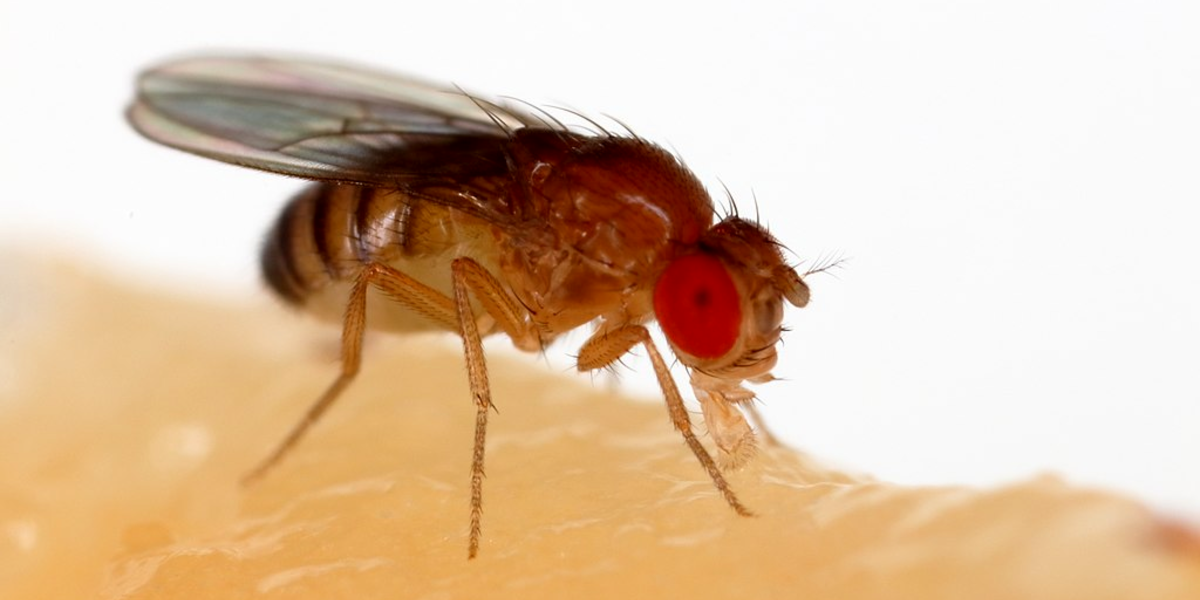

The Fruit Fly Brain Connectome Is Being Used for Remarkable Things
When neuroscientists announced the completion of a full central nervous system connectome for the Drosophila melanogaster — the common fruit fly — it was a landmark moment. But what has truly captured the imagination of the tech and science communities is what people are doing with it next. From cryptocurrency trading to video game control, the mapping of roughly 160,000 neurons into a working graph has become a sandbox for experimentation that sheds light on both biology and artificial intelligence.
The significance of this research extends well beyond entomology. By understanding how even a tiny brain processes information, rewards, and decisions, researchers and hobbyists alike are gaining glimpses into the building blocks of intelligence itself.
What the Fly Brain Connectome Actually Is
A connectome is essentially a complete wiring diagram of a nervous system — every neuron, every synaptic connection, mapped and catalogued. The recent achievement involved not just one but two full brain maps of D. melanogaster: one for the female and one for the male. This comparative approach proved especially revealing.
When researchers laid the two connectomes side by side, they discovered sexually dimorphic neural circuits — clusters of neurons that differed between males and females in ways directly linked to mating behavior. These differences ensured that, at least in the model, courtship signals were routed through circuits specific to biological sex, while the vast majority of the brain’s architecture remained effectively identical between the sexes.
This finding matters because it demonstrates how relatively small structural changes can produce dramatically different behavioral outputs. It also provides a foundational dataset that other researchers and developers can build upon.
How People Are Putting the Connectome to Work
Once the fly brain connectome was made publicly available, the creative applications came quickly. Some of the most fascinating projects demonstrate the unexpected versatility of biological neural architecture.
Crypto Trading with Stonkfly
One notable project, Stonkfly, created by developer [Nftechie], repurposed the fly connectome’s reward circuits for cryptocurrency stock trading. The idea is rooted in the brain’s dopamine-driven reinforcement learning pathways: when a neural circuit “rewards” a particular output, it adjusts future behavior toward that outcome. In the context of financial markets, this principle was applied to trading decisions.
However, it is worth noting that [Nftechie] has openly stated that the project has not yet been verified for actual profitability. The experiment demonstrates the concept — that biological neural network dynamics can be transplanted into financial algorithms — rather than proving that a simulated fruit fly reliably beats the market. As [Nftechie] put it, the stonks are happening, whether or not they are wise ones.
Controlling DOOM and Beat Saber
Over at PC Gamer, a summary of additional connectome-powered projects highlighted some even more playful applications. Researchers and enthusiasts have wired the fly brain’s neural output to control classic games, including DOOM and Beat Saber.
In these setups, each game frame stimulates the sensory input neurons of the connectome, and the resulting neural activity is mapped to game controls in real time. Dopamine-producing reward circuits are wired in to provide reinforcement learning signals, meaning the simulated fly brain gradually learns which actions lead to positive feedback within the game environment.
The results range from the amusing to the genuinely instructive. Watching a network of 160,000 neurons fumble through a first-person shooter may be entertaining, but it also illustrates how reward-based learning can emerge from even the simplest nervous systems.
| Project | Application | Key Mechanism |
|---|---|---|
| Stonkfly | Crypto trading | Reward circuit reinforcement |
| DOOM Control | Game navigation | Sensory input + dopamine feedback |
| Beat Saber | Rhythm game control | Motor output mapping + reward |
What This Means for Artificial Intelligence
The D. melanogaster brain contains only about 160,000 neurons — a vanishing fraction of the roughly 86 billion neurons in the human brain. Yet it is enough to make the fly navigate complex environments, find food, avoid predators, and locate mates. That efficiency is precisely what makes it so compelling for AI research.
Traditional artificial intelligence has largely relied on massive artificial neural networks trained on enormous datasets. The fly connectome suggests a different path: biologically inspired computing where the architecture of real neurons — with their sparse connectivity, localized processing, and chemical reward signals — provides a more efficient blueprint.
As researchers unravel how this tiny connectome produces such sophisticated behavior, the implications extend to robotics, autonomous systems, and machine learning. If even a 160,000-neuron network can drive complex decision-making, understanding its principles could lead to AI systems that are smaller, faster, and more energy-efficient than today’s behemoth models.
The Broader Significance for Neuroscience
Beyond the tech-world experiments, the completed fly connectome represents one of the most important milestones in modern neuroscience. Mapping an entire brain at synaptic resolution has historically been a herculean task. The fact that it has now been accomplished — and for both sexes — opens doors that were previously theoretical.
Researchers can now study how neural circuits encode behavior with unprecedented precision. Why does a male fly pursue a mate while a female does not? Which specific synapses change, and how? These questions move from speculation into empirical investigation. The connectome also provides a reference framework for studying neurological diseases, aging, and neural development in model organisms.
Furthermore, the open-access nature of much of this research allows citizen scientists, indie developers, and students to participate in cutting-edge neuroscience. The barrier between a specialized lab and a curious hobbyist has never been lower.
Looking Ahead
The fruit fly brain connectome is more than a scientific achievement — it is a platform. Whether it ends up trading crypto, winning rhythm games, or inspiring the next generation of neural networks, it demonstrates a fundamental truth about biology: intelligence does not require complexity measured in billions of neurons. It requires the right architecture, the right connections, and the right incentives.
As connectomics advances and more brains are mapped — from mouse to primate — the lessons learned from Drosophila will remain foundational. The flying pests may be small, but the ideas they generate are anything but.
Science, Computers, Internet, Games, Entertainment, Education, Neuroscience, Artificial Intelligence, Connectomics, Technology
