
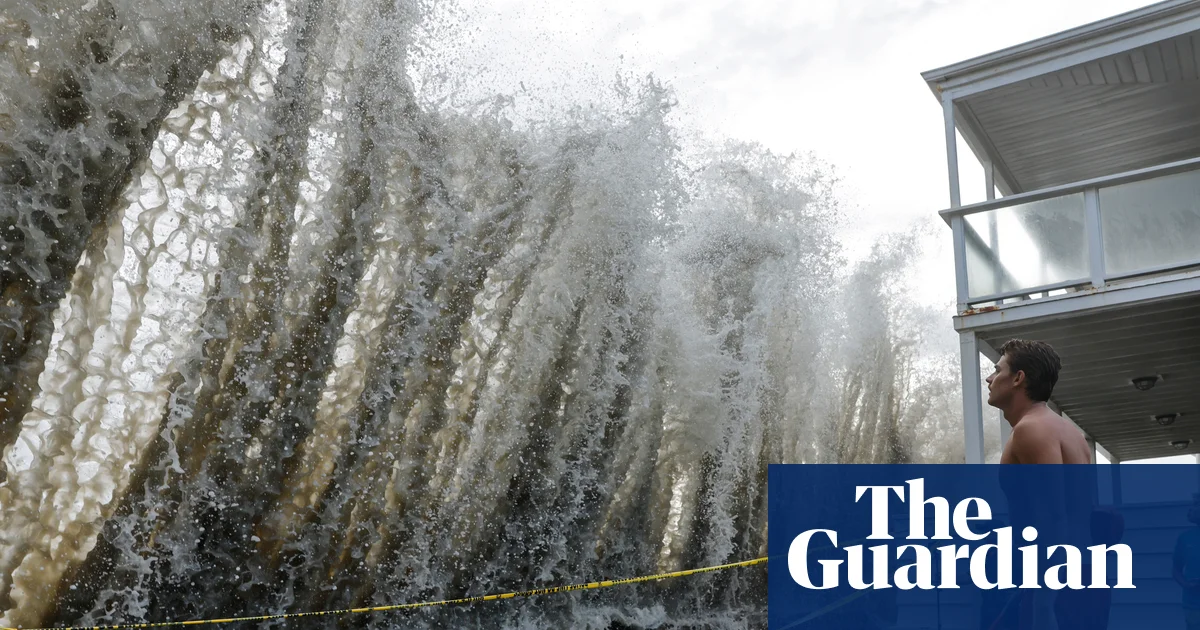
El Niño‑Driven Kelvin Wave Raises California Sea‑Level Concerns
In late August 2024 a massive, slow‑moving Kelvin wave began traversing the Pacific Ocean, ushering unusually warm water toward the western coast of North America. Scientists warned that, when the wave reached California, it could elevate sea levels by as much as a foot for several months, amplifying the threat of storm surges and coastal flooding already heightened by a strong El Niño event. As of September 2025 the immediate Kelvin‑wave influence has waned, but the episode remains a vivid illustration of how climate variability and long‑term sea‑level rise intersect to endanger coastal communities.
Understanding the Kelvin Wave Phenomenon
A Kelvin wave is not a breaking surf wave; it is a planetary‑scale bulge of warm water that propagates eastward along the equator when the usual trade winds weaken or reverse. During El Niño years the reduction of wind‑driven surface stress allows the warm water piled up in the western Pacific to “slosh” back toward the Americas. The wave can stretch thousands of miles and move at a leisurely pace of a few kilometres per day, delivering a broad, elevated layer of ocean that lifts sea levels wherever it contacts the shore.
As NASA oceanographer Severine Fournier explained, once the wave reaches a coastline it cannot continue eastward, so the excess water is diverted north and south, spreading the sea‑level rise along adjacent coasts. In the case of the August 2024 wave, the leading edge arrived off the California coast within days, setting the stage for a temporary but notable increase in ocean height.
Current ENSO Status and the Late‑2024 El Niño
The El Niño that fueled the 2024 Kelvin wave peaked in boreal winter 2024‑25, with the Oceanic Niño Index (ONI) reaching values above +2.0 °C—indicating a strong event. However, the latest update from NOAA’s Climate Prediction Center (issued September 2025) shows ENSO‑neutral conditions prevailing across the tropical Pacific, with a ~55 % probability of La Niña developing later in the year. This transition means the anomalous warm‑water surge associated with the Kelvin wave has largely dissipated, and ocean heights along California have returned to near‑normal seasonal levels.
Nevertheless, the episode underscores how even a short‑lived El Niño‑driven wave can sit atop a steadily rising baseline. Global mean sea level has increased roughly 8 inches (≈20 cm) over the past century, and regional factors such as coastal subsidence add further vulnerability. When a Kelvin wave adds an extra foot (≈30 cm) on top of that baseline, the combined effect can push coastal water levels well beyond historic norms.
Impacts on California Coastal Communities
During the winter of 2024‑25, the elevated sea level from the Kelvin wave coincided with several high‑tide episodes and a series of storm systems fueled by the energetic El Niño pattern. Coastal observers reported:
- Increased frequency of minor flooding in low‑lying neighborhoods of San Francisco, Oakland, and Long Beach.
- Enhanced erosion at vulnerable cliffs and dunes, particularly along the Central Coast.
- Higher storm‑surge heights that exacerbated damage to seawalls, piers, and coastal infrastructure.
Scientists from the Southwest Fisheries Science Center noted that the wave’s influence was most pronounced when it aligned with the highest astronomical tides—typically around Thanksgiving and Christmas—creating a “stacked” effect where the ocean’s baseline was already elevated before storm‑driven surge arrived.
State Preparedness and Response Measures
Anticipating the heightened risk, California Governor Gavin Newsom declared a state of emergency in early December 2024. The proclamation activated:
- Pre‑positioning of road‑closure and snow‑removal equipment along major highways prone to coastal flooding.
- Readiness of the California National Guard for search‑and‑rescue operations.
- Streamlining of permitting processes to accelerate emergency repairs.
The California Coastal Commission issued guidance urging homeowners to inspect drainage systems, reinforce vulnerable shoreline protections, and consider elevating critical utilities. By mid‑2025, as the Kelvin‑wave signal faded and ENSO conditions shifted toward neutrality, the emergency declaration was allowed to expire. However, many of the preparedness measures—such as updated flood‑plain maps and enhanced monitoring stations—remain in place as part of the state’s long‑term climate‑adaptation strategy.
Scientific Perspectives and Future Outlook
Researchers emphasize that Kelvin waves are a natural, recurring feature of the Pacific Ocean, documented by NOAA and NASA for decades. What has changed is the background context: rising sea levels, intensifying El Niño events in a warming climate, and increased coastal development. As Nate Mantua of NOAA’s Southwest Fisheries Science Center observed, “We can predict a lot of the impacts, but not all.” The interplay between oceanic waves, atmospheric storms, and secular sea‑level rise creates a complex hazard envelope that challenges deterministic forecasting.
Looking ahead, climate models project that the frequency of strong El Niño episodes may increase, potentially delivering more Kelvin‑wave‑like warm‑water pulses to the Americas. Coupled with an anticipated additional 0.5 m (≈20 in) of global sea‑level rise by 2050, California’s coastal zones could face compounded flooding risks that exceed those seen during historic El Niño winters such as 1982‑83, 1997‑98, and 2015‑16.
Continued investment in ocean observing systems—such as the TAO/TRITON buoy array and satellite altimetry—combined with improved coastal‑zone modeling will be essential for providing early warning and guiding adaptive responses. For now, the immediate Kelvin‑wave threat has subsided, but the lesson remains clear: even transient oceanic phenomena can become significant hazards when they ride atop a rising sea.
| Year (Peak) | ONI (°C) | Est. Coastal Sea‑Level Added (ft) |
|---|---|---|
| 1982‑83 | +2.3 | ≈1.0 |
| 1997‑98 | +2.4 | ≈1.0 |
| 2015‑16 | +2.6 | ≈1.0 |
| 2024‑25 | +2.1 | ≈1.0 |
Sources: NOAA Climate Prediction Center, NASA Jet Propulsion Laboratory, Southwest Fisheries Science Center, California Coastal Commission, Governor’s Office of Emergency Services (data accessed September 2025).
Science, Government, News, Society, El Niño, Kelvin wave, Sea level rise, California coast, Coastal preparedness

