


Listen to this article
Approximately 2 minutes
The audio version of this article was created using artificial intelligence technology. Pronunciation errors may occur. We work with our partners to continually analyze and improve results.
The federal government on Sunday said it would deny entry to foreign nationals who have been in the Democratic Republic of Congo in the past 21 days as part of new temporary border measures to combat the spread of Ebola.
The measures will come into effect on Monday at 11:59 pm ET and will last until August 29, the Public Health Agency of Canada (PHAC) said in a statement.
“Restricting the entry of foreign nationals who have been in the DRC within the previous 21 days can reduce the public health risks to Canadians and is intended to improve the effectiveness and sustainability of border measures that can safely process travelers arriving in Canada, including our returning humanitarian workers,” the statement said.
The Congolese government’s travel health notification risk level is currently orange (or level 3 out of 4), meaning non-essential travel should be avoided. PHAC says the risk of Ebola to Canadians remains low and no travel-related cases have been reported in Canada.
The statement said the measures taken so far “are out of an abundance of caution.”
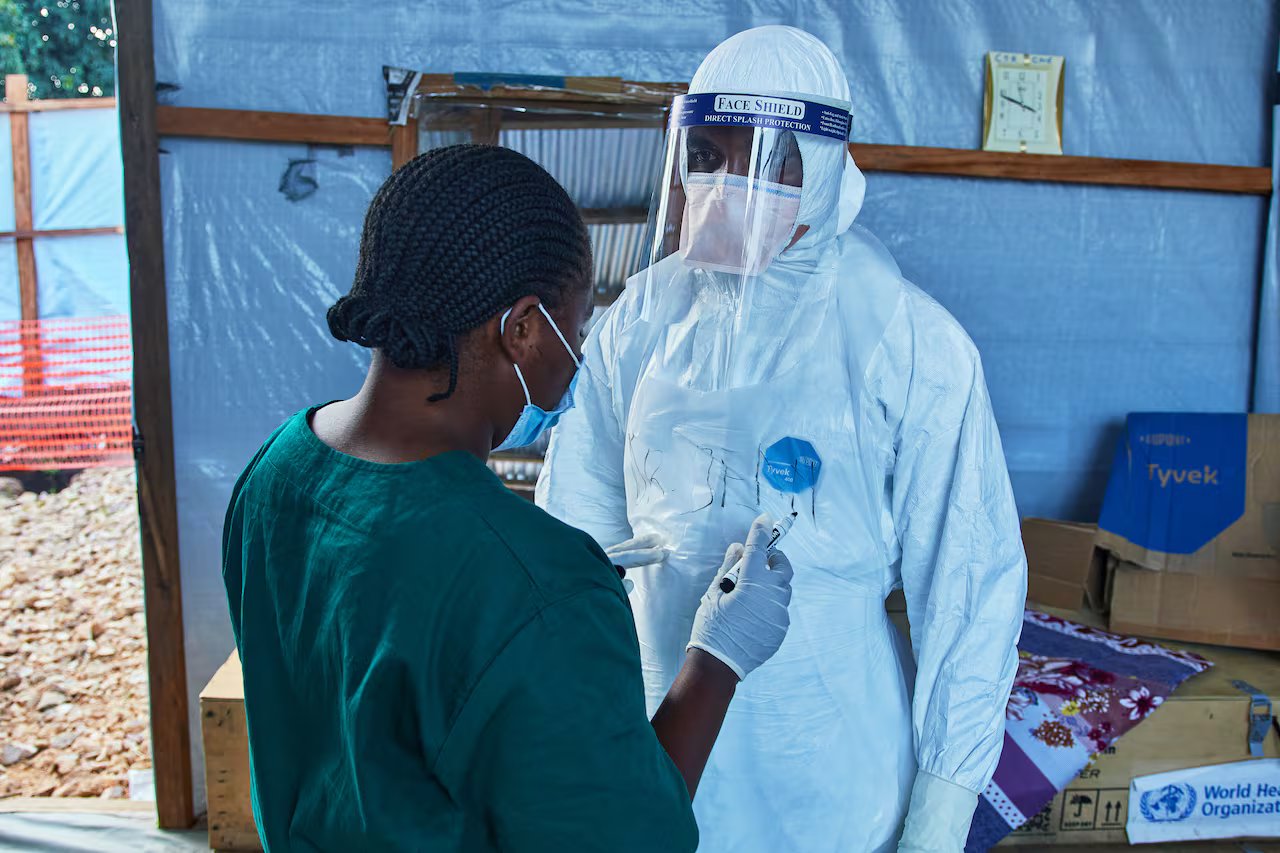 Health workers talk July 3 at the Evangelical Medical Center in Bunia, eastern Congo, where Ebola clinical trials were to take place. (Dirol Lotsima Dieudonne/Associated Press)
At the end of May, the federal government imposed restrictions on travel and immigration from Congo, Uganda and South Sudan, suspending the issuance of immigration documents for citizens of these countries.
Canadian citizens, permanent residents and persons registered under the Indian Act who have been in these countries within the last 21 days can still travel to Canada, but will undergo a health screening upon arrival and must quarantine for 21 days.
The number of confirmed Ebola cases in Congo has reached 2,011, including 754 deaths, according to government data released earlier this month. The World Health Organization (WHO) says more than 100 health workers have been infected since the outbreak began.