
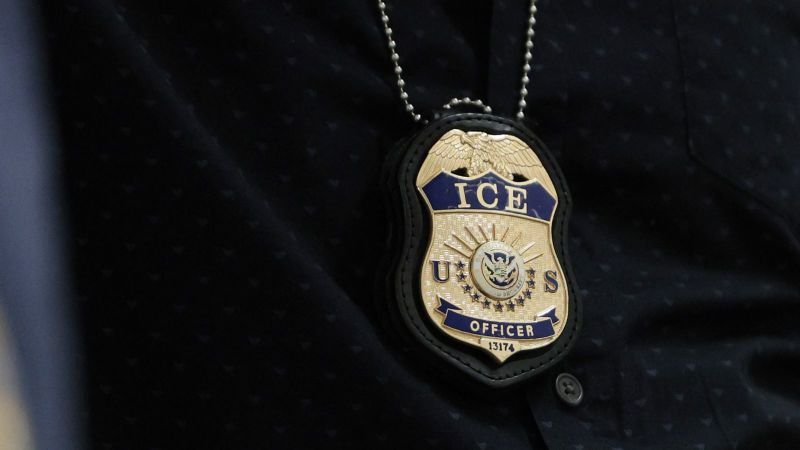
ICE Agents Mistakenly Detain U.S. Citizen in Evanston, Leaving Him Injured on the Ground
Federal immigration enforcement agents wrongfully detained a U.S. citizen during an operation in Evanston, a suburb north of Chicago, leaving the man on the ground with injuries to his head, neck, and teeth. The incident, reported by the Evanston Police Department, has reignited debate over the scope of Immigration and Customs Enforcement authority and the risks of mistaken identity in federal immigration operations.
What Happened During the Evanston Incident
According to the Evanston Police Department, officers responded to a report on Sunday morning after a witness heard two men arguing and heard someone say that an individual would be taken into custody. When officers arrived, they found a man on the ground while several bystanders were assisting him. The man reported injuries to his head, neck, and teeth, prompting police to call for emergency medical services.
Witnesses told officers they believed the men who had detained the injured individual were agents of ICE, the Department of Homeland Security agency responsible for immigration enforcement. A responding Evanston officer, although not present at the exact scene of the initial confrontation, located two sport utility vehicles near an intersection and spoke with a person who identified himself as a federal agent conducting an investigation into a fugitive. The individual was dressed in civilian clothing and wore a vest marked “POLICE” along with federal law enforcement badges, police said.
Conflicting Accounts of the Detention
The narrative presented by federal authorities differs significantly from the local police account. The Evanston Police Department reported that agents later determined the man they had detained was not the person they were seeking and confirmed he was a U.S. citizen. The man was subsequently released.
However, a spokesperson for the Department of Homeland Security told CNN a different version of events. According to the DHS account, ICE agents encountered an individual who resembled their target during a specific enforcement operation and “immediately identified themselves as law enforcement.” The spokesperson stated that agents gave the individual lawful orders, but he “did not cooperate and refused to identify himself.” The DHS said agents relied on their training and “eventually left the scene without further incident” once the individual finally identified himself.
Key Discrepancy: The Evanston Police Department’s account describes a physical detention that left the man injured, while DHS stated the encounter ended without incident once the individual cooperated. DHS’s account also made no reference to the man’s injuries.
The Legal Framework Behind ICE Operations
In its statement, the DHS invoked the legal authority under which ICE operates. Federal immigration agents have the power to carry out arrests under 8 USC § 1357, which authorizes immigration officers to make arrests without warrants in certain circumstances. The DHS spokesperson noted that law enforcement officers use “reasonable suspicion” to investigate immigration status and “probable cause” to make lawful arrests, consistent with the Fourth Amendment of the U.S. Constitution.
The Fourth Amendment protects individuals against unreasonable searches and seizures, requiring law enforcement to have a legitimate basis for detentions. Legal experts have long debated how these standards apply in the immigration context, particularly when enforcement actions take place in locations far from border areas and involve individuals who are U.S. citizens.
Community Response and Broader Implications
The Evanston incident underscores the growing tension between federal immigration enforcement and local communities. An agent from the federal operation told Evanston police that the team withdrew from the area because they feared being attacked by a gathering crowd of protesters, according to the police department’s statement.
The episode raises serious questions about several fronts:
- Mistaken identity: The fact that federal agents detained the wrong person — and a U.S. citizen at that — highlights the risks inherent in enforcement operations that rely on physical resemblance as a factor.
- Use of force and injuries: The man’s reported injuries to his head, neck, and teeth are unaccounted for in the DHS’s account, creating a gap between the two official narratives that demands clarification.
- Federal-local coordination: The involvement of five agents operating in separate vehicles suggests a planned operation of considerable scale, yet local authorities appeared to have no advance notice of the activity in their jurisdiction.
- Public trust: The presence of protesters and the agents’ decision to withdraw due to safety concerns reflect the deep polarization surrounding immigration enforcement in communities across the country.
What Comes Next
The Evanston Police Department’s detailed account of the incident stands in contrast to the brief DHS statement, and the discrepancies between the two narratives are unlikely to go unnoticed. Local authorities, civil liberties organizations, and the public will be watching for any further investigation into how the detention unfolded and whether any corrective or disciplinary measures follow.
For residents of Evanston and communities nationwide, the incident serves as a stark reminder that the intersection of federal immigration authority and local law enforcement remains one of the most consequential and contested issues in American public life. The safety and constitutional rights of all individuals — citizens and non-citizens alike — depend on clarity, accountability, and transparency from every agency involved.
News, Government, Law, Society, Communities, People, Immigration, Chicago, Evanston, ICE, DHS, Civil Rights, Wrongful Detention, Law Enforcement

