
PressSplit
Follow us on Google
VW boss Oliver Blume is considering spinning off the core brand, according to a report. The plan could undermine VW’s law and is facing resistance.
Munich – Europe’s largest car manufacturer is experiencing the most profound turning point in its nearly 90-year history. VW boss Oliver Blume is considering the possibility, according to report Magazine Managerseparate the main Volkswagen brand from the group and turn it into an independent company. The component division must also be independent.
The plan could undermine VW’s law, which has been in force since 1960 and is already facing massive resistance from unions, the works council and the Lower Saxony state government.
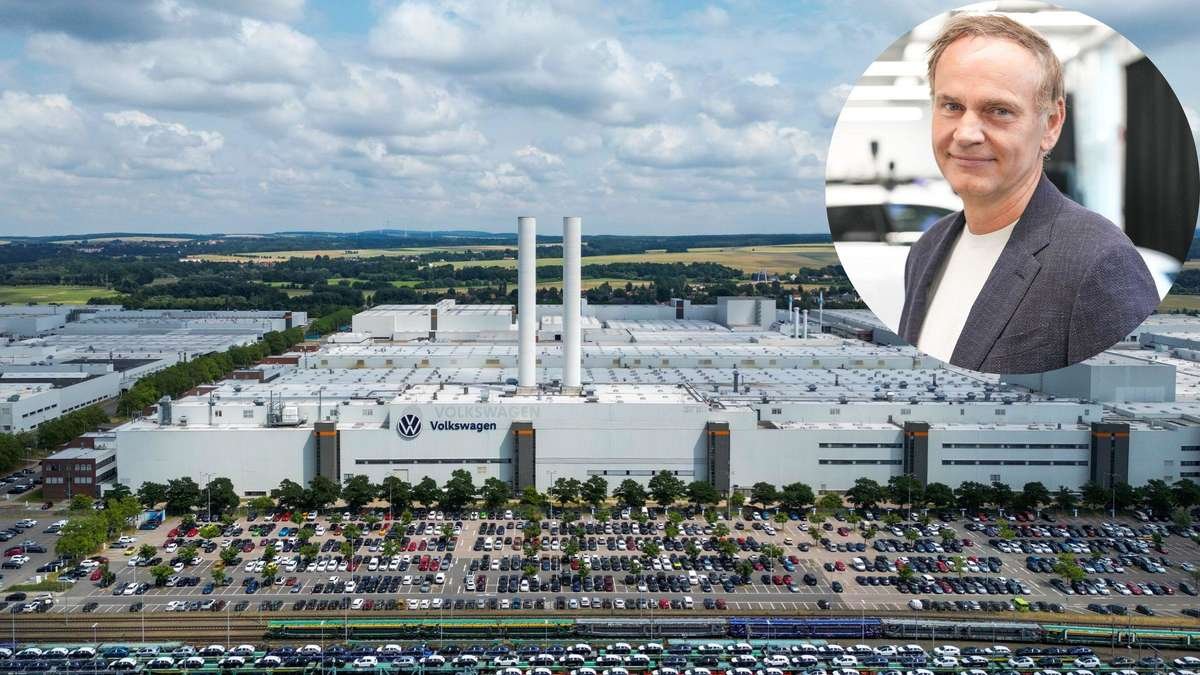
According to the report, Volkswagen is facing a possible restructuring of the group. VW boss Oliver Blume is apparently considering spinning off the main brand. © photo alliance/dpa | Sven Kauler/Hendrik Schmidt
VW boss Blume is apparently considering spinning off the main brand
Volkswagen’s share price is at its lowest level in 16 years. Investors are losing patience. Ulrich Hocker, president of the German Association for the Protection of Securities Rights and a representative of small shareholders, speaks of “overdetermination” that is unique in the world.
“It only works when we are in the growth phase,” he said. “At some point, everyone has to realize that there needs to be a major transformation to ensure the survival of this company.”
Investors insist on deep conversion of VW
At the same time it is reported Magazine Manager up to 100,000 jobs could be lost at VW in the next few years. This will be twice as much as previously agreed. Production at the plants in Emden, Zwickau, Hannover and Neckarsulm is at risk.
According to its own data, the VW factory council has not yet received specific figures from the concern’s board of directors. An internal message on the group’s intranet said specific job reduction targets were not included in the package of responses received, although the possible impact on staff numbers was “of course part of the questions”. However, the Executive Board has already informed the group’s operating committee that it believes the currently agreed job cuts will not be sufficient.
VW could lose up to 100,000 jobs
At the center of the conflict is the VW Law of 1960. It effectively gives the state of Lower Saxony, which owns 20 percent of the shares, a blocking minority. The creation and relocation of production facilities requires a two-thirds majority of the members of the supervisory board. At Volkswagen, decisions requiring a three-quarters majority under the Companies Act must be made by a four-fifths vote.
If Blume spins off its core brand, it could be the first step toward circumventing those rules, according to financial and legal circles. The European Commission’s attempt to overturn the VW law in the European Court of Justice has already failed in the past.
VW Law is at the center of a power struggle
The Prime Minister of Lower Saxony, Olaf Lis, clearly opposed such plans. His state will not vote on measures that reduce co-determination – this is “an integral part of Volkswagen’s success story.”
Instead, he advocated the production of Chinese-designed Volkswagen models in German factories, an idea that Blum himself also implemented.
Lower Saxony opposes interference in the co-determination process
The employees also react sharply. IG Metall chief Christiane Benner, works council head Daniela Cavallo and IG Metall regional manager Thorsten Greger jointly said: “Attacking the VW law, the co-determination and our location is an irresponsible threat.”
Analysts see the situation in more detail. UBS expects a compromise and expects Volkswagen to lower its profit forecast given the necessary conditions for the restructuring.
Analysts see possible benefits from the spin-off
Citi analysts, on the other hand, see financial benefits in spinning off a core brand. They compared the model to a “bad bank,” into which weaker businesses could be spun off, and the holding itself would become less dependent on geopolitical turmoil and economic downturn.
To illustrate the difference in valuations, Citi analysts cite a startling figure: VW’s controlling stakes in commercial vehicle holding company Traton and sports car maker Porsche are worth a total of around 44 billion euros, while the market value of the entire VW group is just 37.6 billion euros. (Sources used: Manager Magazin, NTV, Zeit) (mare)