

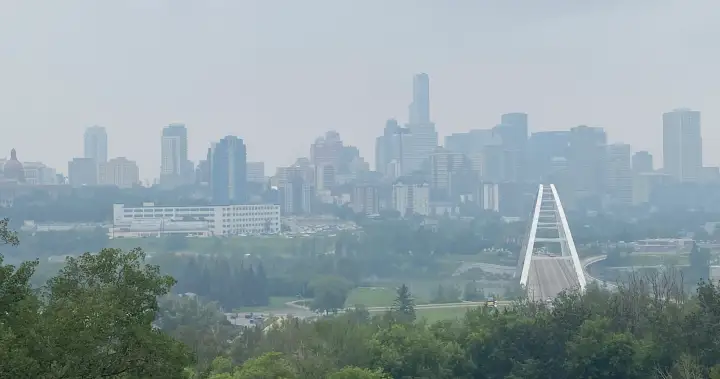
As Edmonton heads into the weekend with hot weather and smoky skies, local organizations are paying special attention to some of the city’s most vulnerable residents.

Meals on Wheels Edmonton, which delivers more than 300 meals every day across the city, says extreme weather conditions have made regular health checks even more important.
Many of the organization’s clients are older adults who may be at greater risk during periods of prolonged heat and poor air quality.
Executive Director Adam Zawadiuk said delivering meals gives volunteers the opportunity to check on clients and provide them with the support they need to stay safe and comfortable.
“It becomes an opportunity to build that connection and just make sure that your neighbors and your community, people are doing well and being taken care of, and that’s the most important thing to us,” Zavadiuk said.
Story continues below advertisement
People age 65 and older are among the population groups more susceptible to experiencing the effects of smoke and/or heat from wildfires.
Environment Canada issues heat warnings when very high temperatures are expected to create an increased risk of heat illnesses such as heat stroke or heat exhaustion.
When it comes to high temperatures, the Met Office advises that you should be on the lookout for symptoms of heatstroke or heat exhaustion, such as high body temperature, lack of sweating, confusion, fainting and loss of consciousness.
Fine particulate matter in the air from wildfire smoke is known to commonly cause eye, nose, and throat irritation, headaches, or mild coughing. More serious but less common symptoms include wheezing, chest pain, or a severe cough.
5:36
Wildfire smoke and your health: expert advice from a pulmonary surgeon
Edmonton officials activated their extreme heat response earlier this week and extended it until Sunday.
Story continues below advertisement
The response is triggered when temperatures are predicted to reach at least 29 C for three consecutive days or longer.

Receive weekly health news
Get the latest medical news and health information every Sunday.
City officials are urging residents to check on older family members, friends and neighbors during the heat.
City officials are also advising people to call 211 if they encounter someone who may need assistance due to the heat.
Anyone experiencing a medical emergency or serious distress should be reported to 911.
Long-term exposure to wildfire smoke harms health
In conditions of heavy smoke, the health of every person is at risk, regardless of his age and health status.
Poor air quality is associated with poor health outcomes and the development or worsening of some chronic diseases.
But you don’t have to wait until the sky turns a deep, apocalyptic orange and the air is filled with the smell of burning fires to take steps to protect your health. Damage may begin long before this.
An AQHI of five or more can still lead to damage and inflammation as fine particles from fires, chemicals and pollution—so small they can’t be seen—are inhaled deep into lung tissue, Alberta Lung said.
The health agency recommends that when the AQHI reaches five or higher, people should consider limiting time outdoors or wearing an N95 mask, and once inside, take steps to eliminate contaminants, such as changing clothes, washing your face and using air filters through HEPA or HVAC systems.
Story continues below advertisement
Health experts said very small particles can be absorbed into the bloodstream and affect a person’s brain.
Many people with asthma or other chronic illnesses, as well as infants, young children, pregnant women and older adults, are less exposed to smoke and other air pollution than otherwise healthy people.
Children are particularly susceptible due to their biology, both now and in the long term. Children have smaller respiratory systems and breathe faster than adults, so they have higher concentrations of pollution than adults, and over time this can affect their development or lead to asthma.
More about health More videos
In addition to asthma, studies have shown that wildfire smoke is associated with increased hospital visits in both children and adults with other lung diseases such as viral infections, pneumonia and chronic obstructive pulmonary disease (COPD), as well as heart attacks and strokes.
Some of the first signs that someone may be reacting to smoke particles include:
- Itchy eyes
- Sore throat
- Cough
- Nasal congestion
- Nasal congestion
- Headache
What is in forest fire smoke?
Although wildfires are a natural part of the boreal forest ecosystem, a growing body of research documents that climate change caused by the burning of fossil fuels is making them larger and more intense, and contributing to even more air pollution.
Story continues below advertisement
Fires release more fine pollution particles known as PM2.5, and this is a particularly harmful component of wildfire smoke. It is small enough to penetrate deep into the lungs and can have serious health effects in the long term. PM 2.5 comes from a variety of sources, including power plants and vehicles.
Canadians can track wildfire smoke concentrations by particle size using the Fire Works Canada Environment and Climate Change map.
A 2024 study estimates that the number of smoke-related deaths from wildfires linked to climate change has risen sharply since the 1960s.
The study estimates, based on mathematical modeling, that about 12,566 annual wildfire smoke-related deaths in the 2010s were linked to climate change, compared with about 669 in the 1960s, when there was much less carbon dioxide in the atmosphere.
1:59
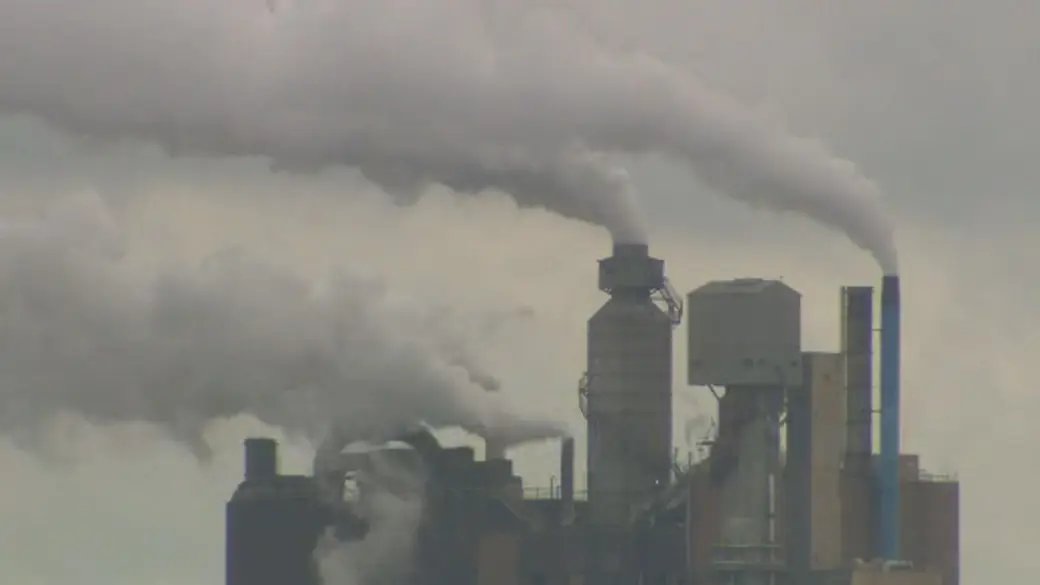
Study: Air pollution nanoparticles linked to brain cancer
Converted to the proportion of wildfire smoke deaths overall, the study estimates that about 13 percent of estimated excess deaths in the 2010s were attributable to climate change, compared with about 1.2 percent in the 1960s.
Story continues below advertisement
Last year, Environment Canada changed its color-coded air quality index to improve the way the public communicates and understands the health risks associated with air quality. The change was driven by a “record number” of AQHI 10+ scores in the 2023 bushfire season.
— with files from The Canadian Press and Emily Merz
© 2026 Global News, a division of Corus Entertainment Inc.