

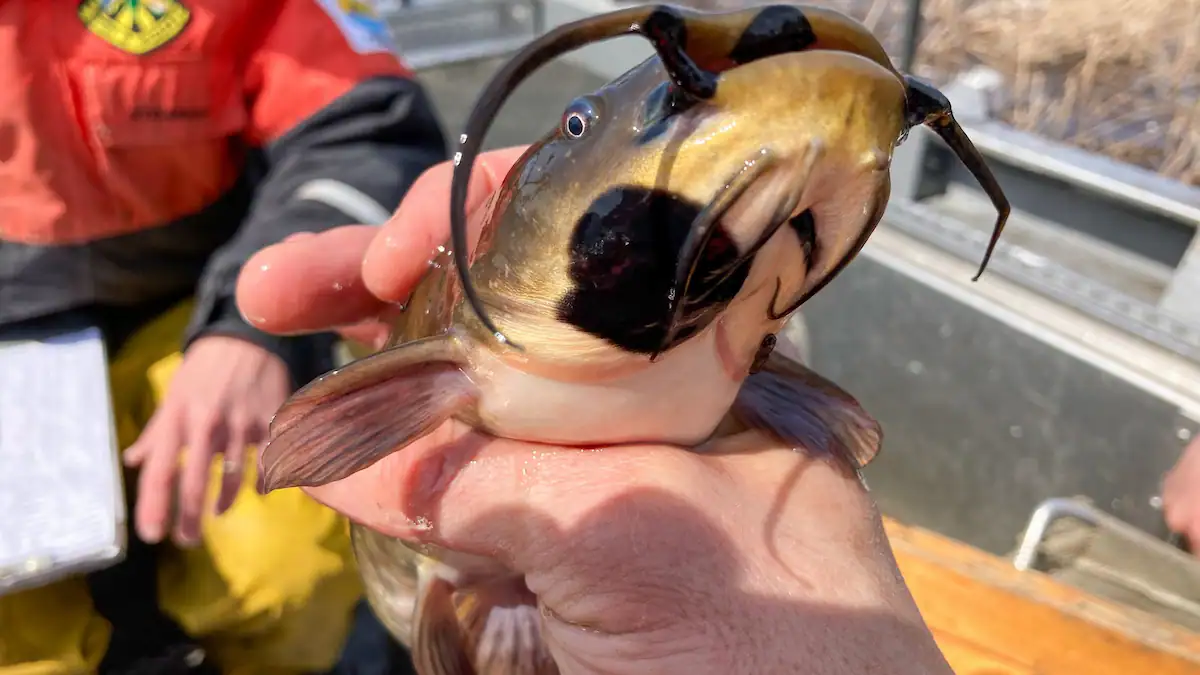
A major discovery in Lake Memphremagog has confirmed the presence of a type of vector-borne cancer in the brown sculpin: a world first for a freshwater fish that could revolutionize our understanding of cancer.
“By studying how cancer survives and spreads beyond its original host, we can learn a lot about the mechanisms that keep it locked in… and what happens when those barriers are broken down,” said Julie Dragon, a scientist at the University of Vermont and co-leader of the new study published in the scientific journal. Nature Wednesday.
It all started in 2012, when fishermen and biologists noticed black spots on brown gobies in a transboundary lake separating Quebec and Vermont, we read in a press release from the university establishment.
Two years later, almost a third of the fish were found to have the same lesions.
“At first we thought that this disease might be caused by a virus, but this was not confirmed,” the researcher said, explaining that the disease behaved “more like parasites (…) spreading from fish to fish,” we read.
Except when they looked at the abnormality more closely, the researchers concluded that it was actually melanoma, a type of skin cancer that doesn’t behave like normal tumors.
“It was amazing,” commented Julie Dragon. We sought to understand how bottom-dwelling fish can develop cancer, which is usually associated with excessive sun exposure. »
They first believed in environmental pollution that could explain the high incidence of fish disease, and then compared cancer cells from different fish to each other and found that they were related. This discovery means that this type of cancer is transmitted from fish to fish, like a virus.
Previous cases
This is the fourth type of transmissible cancer identified in the animal kingdom, and the first in fish or freshwater species, we read in the press release.
Previous cases include devastating facial tumors in the Tasmanian devil, which has wiped out nearly 90% of populations, a transmissible venereal tumor in dogs, and transmissible leukemia-like diseases in clams, mussels and other shellfish.
Fortunately, this contagious cancer poses no known risk to humans, the team confirmed, reassured by the state of Lake Memphremagog’s drinking water, which serves more than 175,000 people.
“Personally, I wouldn’t eat fish with tumors,” said biologist Mark Henderson, a fish specialist and co-leader of the study at the Rubinstein School of Environment and Natural Resources at the University of Vermont.
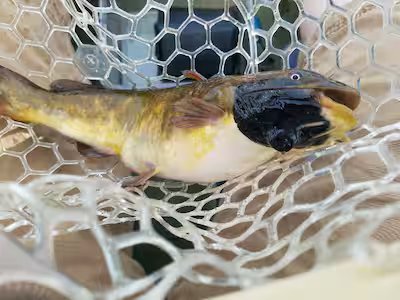
Screenshot taken from Facebook, Vermont Fish & Wildlife.
Currently, researchers are still trying to explain exactly how these tumors spread from fish to fish, as well as their origins, which may be related to pollution, environmental stress or climate change.
Naturally occurring arsenic may play a role, as the same cancer has been found in fish in other lakes and ponds in Vermont, New Hampshire, Maine and New Brunswick that are far from landfills or toxic releases.
“These fish provide an opportunity to observe the evolution of cancer,” concluded Julie Dragon.